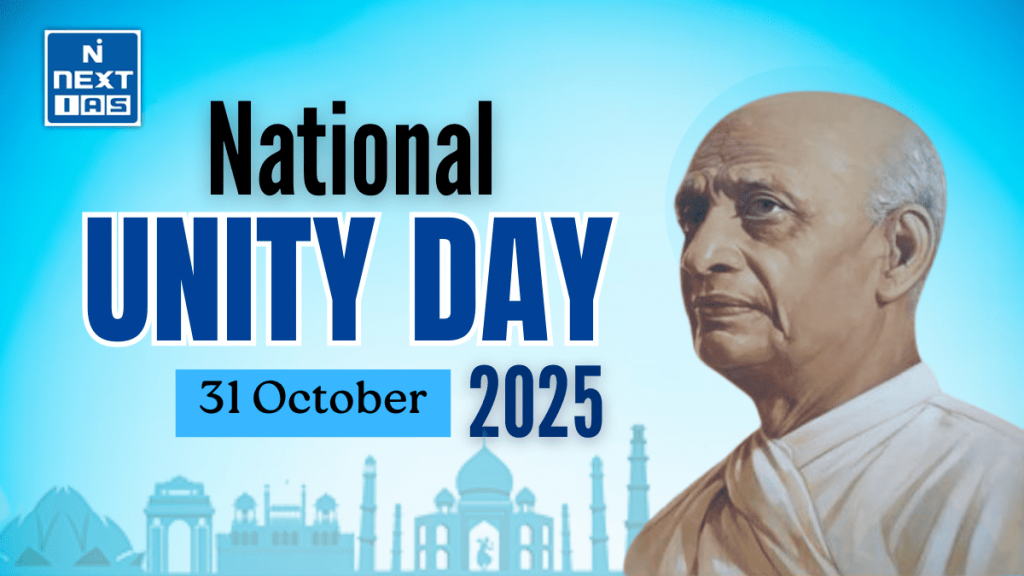
National Unity Day, or Rashtriya Ekta Diwas, is celebrated on October 31 in honor of Sardar Vallabhbhai Patel, the Iron Man of India, on his 150th birth anniversary, for his role in the unification of the country. Keeping in 2025, the day stresses Patel’s vision of India as one, while promoting brotherhood among people and creating integrity and strength for the citizenry.
Why in the News?
- National Unity Day, or Rashtriya Ekta Diwas, 2025, still lies in the limelight, while the 150th birth anniversary of Sardar Vallabhbhai Patel is commemorated by India; the famed “Iron Man of India”.
- This national-level observance commemorates the event wherein the integration of more than 560 princely states unto one India basically depicts the genesis of the country after independence.
- In 2025, however, the day assumes added significance while the matter of national integrity is still discussed amid diversities, with Patel’s message of “Ek Bharat, Shreshtha Bharat” being more relevant than ever.
- Main events, unity runs, and a variety of other educational activities are held across the country, which include paying tribute at the Statue of Unity in Gujarat.
- Rashtriya Ekta Diwas draws fresh generations towards the concepts of unity, tolerance, and patriotism, reiterating to every citizen that the legacy of Patel remains with us and that India is committed to harmony on a national level.
National Unity Day or Rashtriya Ekta Diwas 2025
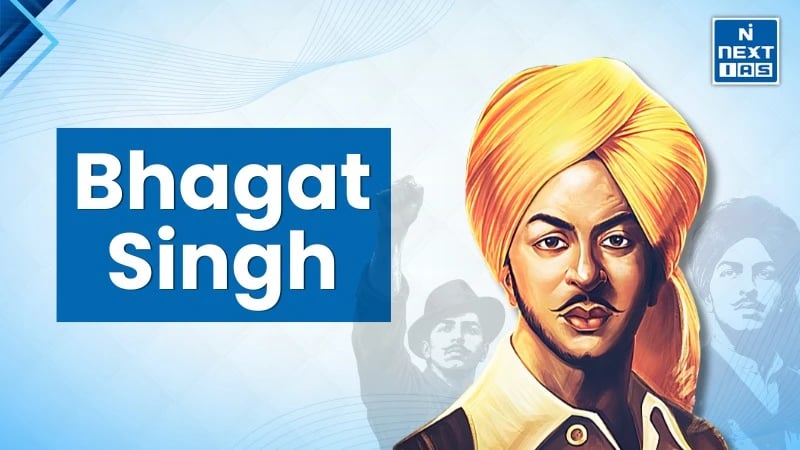
- The National Unity Day, or Rashtriya Ekta Diwas, is celebrated on every 31st of October to commemorate the 150th birth anniversary of Sardar Vallabhbhai Patel, whose sobriquet is “Iron Man of India.”
- The political integration of India was an enormously huge task, in which his role involved persuading more than 560 princely states to become united as a single country after independence.
- It was first celebrated in 2014 to reiterate the strength, unity, and resilience of the country against threats to its integrity in consideration by the Government of India.
- On this day, people actively participate in different events, with solemn pledges being made in keeping the nation united and secure, perpetuating the vision that Patel had about a united nation.
- Other celebrations include cultural programs, Run for Unity, and tribute ceremonies to recognize the unparalleled work of Sardar Patel in bringing about unity and independence to India.
- Rashtriya Ekta Diwas must remain as a reminder about the need for national integration and the love and spirit that binds together a diverse nation.
Biography or Early Life of Sardar Patel
- Sardar Vallabhbhai Patel, the Iron Man of India, was born on October 31, 1875, in Nadiad, Gujarat, to a land-owning Patidar family.
- He was always regarded as unambitious because of his matriculation at a late age of 22, but really, the young Patel was bent on the pursuit of the law.
- On his own, he studied the law, and then went off to England, becoming a barrister by passing all his examinations at Middle Temple in London.
- Then he came back to India and started a barrister’s practice, winning him the reputation of a skillful and fierce lawyer.
- Patel married at a young age and was completely devoted to family life, having two children of his own. Early life was full of incidents that showed the courage of the young Patel, like treating a boil on his own without batting an eyelid.
- Initially indifferent to politics, his meeting with Mahatma Gandhi in 1917 made him opt for the independence movement.
- Patel became a prominent leader of the Indian National Congress and worked vigorously toward uniting the princely states of India after independence.
- Being unifier and a man of steel, his legacy still serves as an inspiration.
Timeline of Sardar Vallabhbhai Patel
| Year | Event |
|---|---|
| 1875 | Born on 31st October in Nadiad, Gujarat, India |
| 1893 | Married Jhaverba at age 18 |
| 1910 | Traveled to London and qualified as a barrister from Middle Temple |
| 1913 | Joined the Indian National Congress |
| 1917 | Met Mahatma Gandhi; entered active politics |
| 1918 | Led Kheda Satyagraha, advocating for farmers’ rights during famine |
| 1922 | Arrested during Non-Cooperation Movement |
| 1928 | Led Bardoli Satyagraha; earned title “Sardar” |
| 1931 | Elected President of the Indian National Congress (Karachi session) |
| 1942 | Arrested during Quit India Movement |
| 1946 | Played key role in drafting Constitution of India |
| 1947 | Became first Deputy Prime Minister and Home Minister of independent India |
| 1947-48 | Led integration of princely states into Indian Union |
| 1948 | Directed Operation Polo to annex Hyderabad |
| 1950 | Passed away on 15th December in Bombay |
| 2018 | Statue of Unity inaugurated on his birth anniversary, largest statue in the world |
Ideology and Vision of Sardar Vallabhbhai Patel
Central to Patel’s ideology was a fusion of Gandhian philosophy and a pragmatic view of politics and governance:
- Purna Swaraj: Loving and believing in complete independence, Patel maintained the idea of self-reliance and governance.
- Satyagraha: He considered non-violent resistance the real transformative means for instituting social and political change.
- Equality and Secularism: Patel saw to it that he fought against untouchability, caste discrimination, and alcoholism, and strove hard for the Hindu-Muslim unity.
- Strong Democracy: He thought through, setting up a strong democratic structure for India, drawing attention to the necessity of constitutional governance.
Contributions of Sardar Vallabhbhai Patel in India’s Freedom Struggle
Sardar Vallabhbhai Patel rendered several unique services to “Bharat”.
Kheda Satyagraha, 1917-18
- Patel was a local leader in Kheda district of Gujarat while he assisted Mahatma Gandhi in conducting the Satyagraha against unfair land revenue taxes imposed by the British.
- He provided strong leadership in mobilizing the local populace and negotiating with government officials to arrive at an amicable settlement.
Non-Cooperation Movement, 1920-22
- Patel remained instrumental in the recruitment of some 300,000 members and raising one and a half million rupees for the Non-Cooperation Movement.
- He urged the boycotting of British goods and held many symbolic bonfires in protest of British colonial rule, all the while advocating for the use of Khadi as a symbol of economic independence.
Bardoli Satyagraha, 1928
- During the Bardoli Satyagraha, Patel stood by the starving people and increased land tax.
- It was during this non-violent resistance that he earned the title ‘Sardar,’ meaning ‘leader’.
Leadership in the Indian National Congress
- Patel was a very influential member of the Indian National Congress, operating in a wide variety of leadership capacities while actively participating in freedom movement activities.
- He had the honour to President the 46th Session of the INC during which the Gandhi-Irwin Pact was ratified and a resolution on Fundamental Rights was passed.
Civil Disobedience Movement 1930-34
- During the Salt Satyagraha, Patel participated in non-violent protests against the British monopoly on salt.
- He was arrested for encouraging boycott of British goods and civil disobedience along with Gandhi and sentenced to nine months’ imprisonment.
Quit India Movement, 1942
- Patel played a major role during the Quit India Movement in fomenting protests and strikes against British rule, delivering inspiring speeches to mobilise the masses, promote civil disobedience, and raise funds for the movement.
Read our detailed article on Quit India Movement (August 1942)
Contributions of Sardar Vallabhbhai Patel in Unification of India
Sardar Patel made enormous contributions to the integration of India post-independence:
Integration of Princely States
- Once independence was attained in 1947, there were at the time over 560 princely states not directly administered by the British.
- Through varied combinations of diplomacy, persuasion, and at times, the use of force, Patel managed to have these states integrated within the Indian Union, thereby safeguarding the territorial integrity of India.
Administrative Reforms
- Sardar Patel is also credited with having set up a unified administrative pattern for independent India, which included the Indian Administrative Service (IAS), the ‘steel frame’ of the country, as he called it.
Promotion of National Integration
- Patel promulgated the idea of a unified India and stressed the need for unity amidst its diversity.
- Thus, his enormously vast contributions came to be appreciated and he earned the epithet, ‘Iron Man of India’.
- The tall statue of Sardar, called the Statue of Unity, has been erected at Kevadia, Gujarat, in his honour.
Other Contributions of Sardar Vallabhbhai Patel
Constitutional Role
He headed several constitutional committees like the Advisory Committee on Fundamental Rights and the Provincial Constitution Committee.
Positions Held
Patel also served as the first Home Minister and Deputy Prime Minister of India.
Honours and Accolades
- Iron Man of India: Patel was bestowed with this title because of his unmatched efforts in ensuring India’s unity and integrity.
- Bharat Ratna: He was posthumously conferred the Bharat Ratna, India’s highest civilian award, in the year 1991.
- National Unity Day: In India, 2014 saw Rashtriya Ekta Diwas being inaugurated, with the day celebrating the anniversary of Patel’s birth.
- Statue of Unity: Inaugurated on October 31, 2018, this statue at Kevadia is declared the tallest in the world.
- Sardar Sarovar Dam: Named after him, it is constructed on the Narmada River in the state of Gujarat.
- Sardar Vallabhbhai Patel National Police Academy: This realm of high prestige where police officers undergo training is located in Hyderabad and is named after Patel.
Contemporary Relevance
- National Unity Day or Rashtriya Ekta Diwas 2025 carries critical contemporary relevance as it acts as a spirit of unity and integrity towards India, a highly diversified nation with big challenges pertaining to communalism, regionalism, and separatist tendencies.
- The day honors Sardar Vallabhbhai Patel-the “Iron Man of India” for his eminent role in uniting princely states into one sovereign nation, with his legacy inspiring people to come out of divisions and work for the harmony and progress of their country.
- These days, it stands as a powerful reminder to embrace inclusiveness, tolerance, and social cohesion, which are the pillars for India’s stability, development, and peace.
- It engulfs the nurturing of patriotism and unity into which the fissures generated by individual narrow interests are undermined to keep intact the territorial and cultural integrity of their country.
- Such hence are National Unity Day’s calls for all Indians to stand for one and strengthen India.
Government Schemes & Initiatives Associated with Sardar Vallabhbhai Patel
| Scheme/Initiative | Description |
|---|---|
| Sardar Patel Urban Housing Mission | Launched in 2014 as an affordable housing scheme aimed at providing homes for the urban poor by 2022; renamed to honor Patel’s legacy in urban development and nation-building. |
| Sardar Patel Awas Yojana | A Gujarat state housing scheme to provide affordable housing to economically weaker sections, named in honor of Patel. |
| Commemoration of 150th Birth Anniversary | Nationwide celebrations spanning 2024-2026 to honor Patel’s contributions, including programs emphasizing unity, democracy, and governance. |
| Sardar Patel District Economic Zone | An economic development initiative named after Patel to boost employment and regional development through public-private partnerships. |
| National Unity Day (Rashtriya Ekta Diwas) | Celebrated on October 31 every year since 2014 to honor Patel’s effort in unifying India and promoting national integration. |
| Sardar Patel Agriculture Research Award | Launched by the Government of Gujarat to encourage agricultural research and farmer welfare in Patel’s name. |
Way Forward
Path ahead for National Unity Day 2025 is to strengthen inclusive governance, create awareness among the youth about Sardar Patel’s dream, and promote cultural harmony. By promoting pluralism and empowering the local people while holding unity in discipline and practice, India can fulfill the legacy of the Iron Man and build a strong and united country.
Conclusion
Sardar Vallabhbhai Patel’s legacy has its roots in the history of India and has struggled to find commemoration through various institutions. The freedom, unification, and nation-building phases of India were deeply affected by him.
GS - 1