The Nawab of Bengal Siraj-ud-daulah gave the duty-free trade rights or Dastaks to Britishers but Britishers started misusing them for their personal benefit. Additionally, Britishers often bypassed the superiority of Nawab. They built defence walls around Fort William in Calcutta without the approval. This act was seen by the Nawab as a direct challenge to his sovereignty.
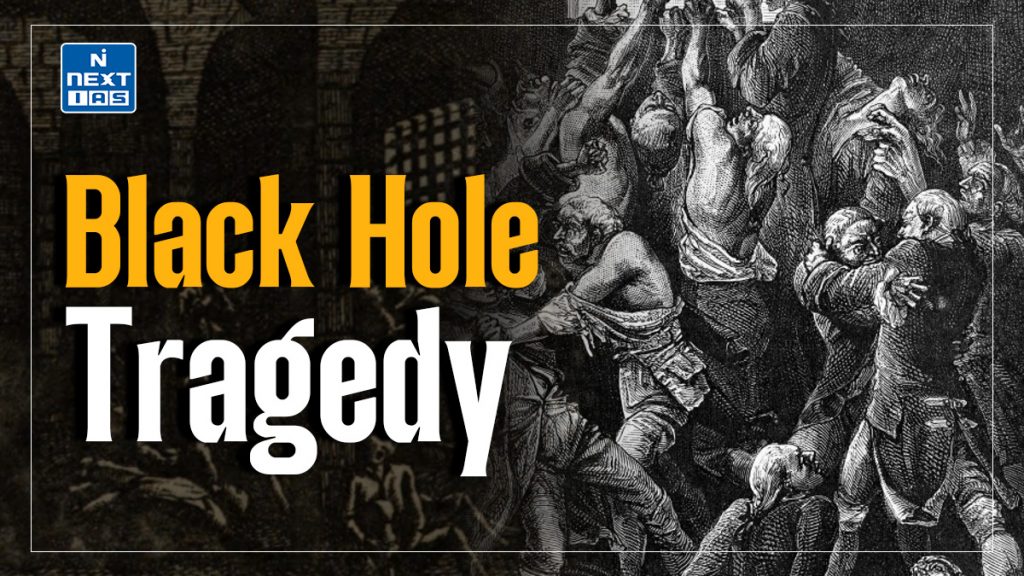
As a result, on 20 June 1756, Siraj-ud-daulah captured Fort William in Calcutta and imprisoned British civilians and soldiers in a small, suffocating room which led to the deaths of more than 100 people. This incident was famously named as the ‘Black Hole Tragedy’ where the small room is compared with a black hole where criminals were locked up in the dark overnight. The incident filled up Britishers with great anger and prepared the ground for the Battle of Plassey in 1757.
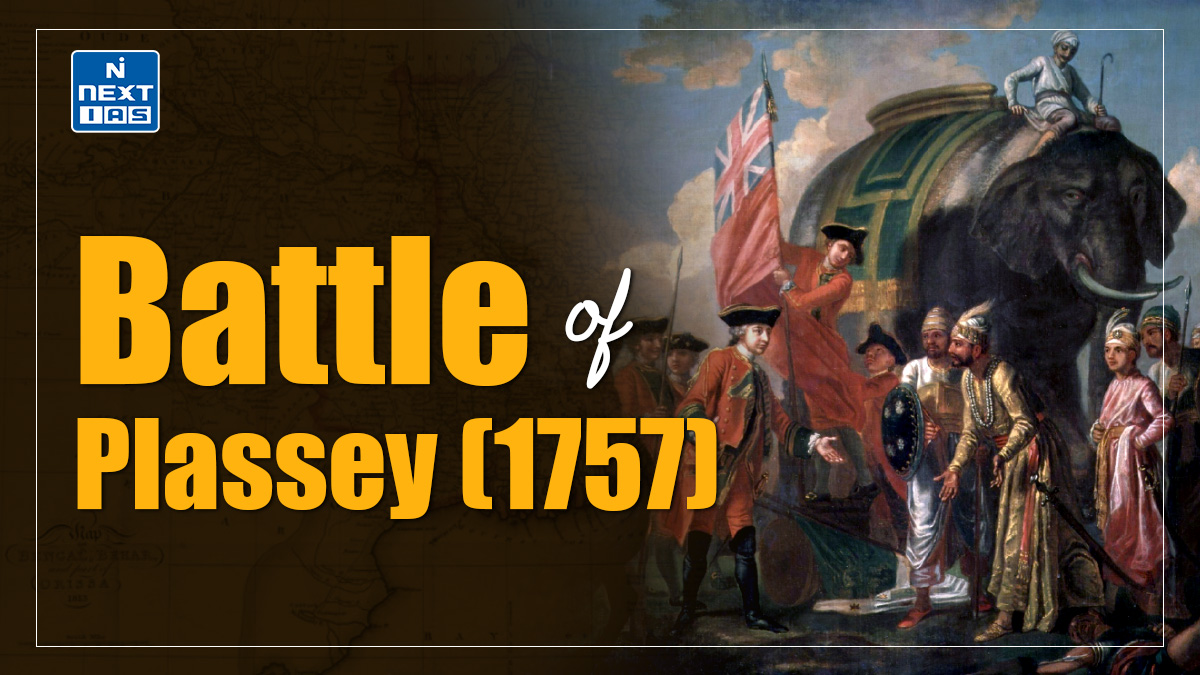
In the battle, the Nawab was defeated by Britishers with the betrayal of Mir Jafar, the military commander of Siraj-ud-daulah. The victory of Britishers in the decisive battle of Plassey consolidated the British dominance in India.
About Black Hole Tragedy
- The Black Hole Tragedy is one of the most infamous incidents in British India’s history. It occurred in June 1756 when the Nawab of Bengal, Siraj-ud-Daula, captured Fort William in Calcutta.
- The Black Hole Tragedy allegedly led to the confinement of British residents, including women and children, in a small, airless room overnight, resulting in numerous deaths due to suffocation and heat.
- The Black Hole Tragedy intensified the political tension between the British East India Company and the Nawab of Bengal, contributing to future confrontations shaping colonial rule in India.
Background of the Incident
- The Black Hole Tragedy did not occur in isolation but stemmed from escalating conflicts over political and economic interests.
- Siraj-ud-Daula resented the East India Company’s increasing fortification of Fort William and their commercial privileges, which he believed undermined his authority and threatened Bengal’s security.
- The Nawab viewed the British fortifications as a direct challenge to his power, primarily as they had been constructed without his permission.
- This, coupled with the British harbouring political opponents of the Nawab, led to his decision to capture the fort and confront the Company’s growing influence in his territory.
Black Hole Incident at Fort William
- In June 1756, Siraj-ud-Daula’s forces successfully took Fort William to Calcutta after a fierce siege.
- Following the capture, the Nawab’s forces imprisoned the British residents of the fort, including men, women, and children, in a small room.
- Conditions within the confined space, later known as the “Black Hole,” were reportedly horrific.
- The room lacked proper ventilation, and in the stifling heat of a Bengal summer, suffocation and dehydration claimed many lives by the time the doors were opened the following morning.
Casualties in Black Hole Tragedy
- According to accounts, 146 prisoners were held in the room, with only 23 surviving until morning.
- However, historians have widely debated this number. Many question the credibility of the initial reports, suggesting that the figures may have been exaggerated for political purposes.
- Some historians propose that the death toll was likely much lower, pointing out inconsistencies in contemporary accounts and the potential for the incident to have been amplified as part of British propaganda to justify retaliation against the Nawab.
Major Impact
- The Black Hole Tragedy quickly became a rallying cry for the British East India Company, who used it to justify their aggression against Siraj-ud-Daula.
- The incident fueled British resolve to reassert control, leading to military campaigns culminating in the Battle of Plassey in 1757.
- This victory marked a turning point, allowing the Company to establish dominance in Bengal and eventually across much of India.
- Additionally, the tragedy was seized upon in British propaganda, strengthening colonial narratives and demonising the Nawab, thus fostering public support for the Company’s military and political expansion in India.
Conclusion
The Black Hole Tragedy remains a powerful and controversial symbol in the history of British-Indian relations. It showcases how a single event, real or exaggerated, influenced policies and justified imperialism. Reflecting on the tragedy allows for a deeper understanding of how incidents were utilised within colonial narratives, ultimately shaping the course of British expansion in India. The Black Hole Tragedy thus highlights the complex interplay of power, propaganda, and policy that characterised the colonial experience.
FAQs about Black Hole Tragedy
What is the Black Hole Tragedy?
The Black Hole Tragedy refers to an incident in 1756, when British prisoners were allegedly confined overnight in a small prison cell (the “Black Hole”) in Fort William, Calcutta, by forces of the Nawab of Bengal, Siraj-ud-Daulah. Due to overcrowding and lack of ventilation, many prisoners reportedly died from suffocation.
Where did the so-called Black Hole Tragedy take place?
The Black Hole Tragedy took place at Fort William in Calcutta (now Kolkata), India.