The Vijayanagara is one of the greatest empires of Southern India. They prevented a win over south India by northern rulers for about 300 years. Founded by Harihara I and Bukka Raya I who came from the Sangama dynasty and established their capital city at Vijayanagara which exists today as Hampi. Religious awareness constructing temples like Trupati and Srisailam and economy as trading benchmark Varaha as gold coins.
The Vijayanagara Empire (1336–1646) preserved Hindu traditions as a bulwark against northern invasions, innovating with Nayankara (military land grants) and Ayagar (village self-rule) systems. It pioneered Raya Gopurams, Carnatic music via Purandara Dasa, global trade in spices/diamonds, and irrigation mastery.
Important Vijayanagara Dynasties
Sangama Dynasty (1336–1485)
- Founders: Harihara I (Hakka) and Bukka Raya I.
- Greatest Ruler: Deva Raya II (also known as Gajabetekara or the Elephant Hunter).
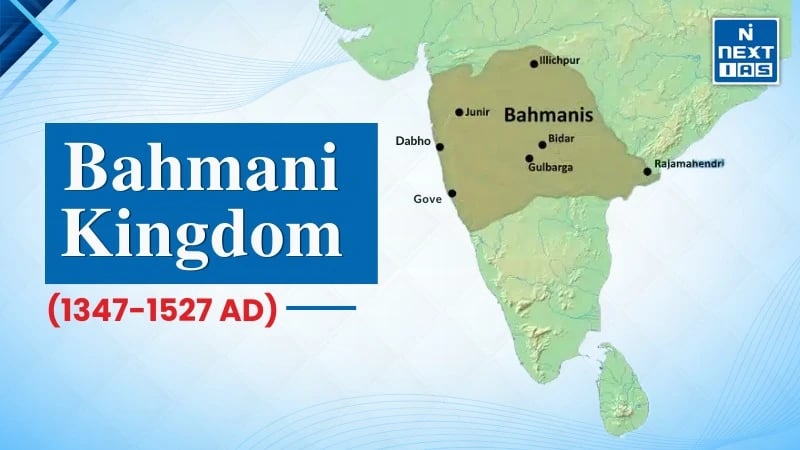
- Key Fact: Under this dynasty, the empire established its capital at Hampi and began its long-standing rivalry with the Bahmani Kingdom over the fertile Raichur Doab.
Saluva Dynasty (1485–1505)
- Founder: Saluva Narasimha Deva Raya.
- Significance: Saluva Narasimha, a powerful governor, led a “coup” to replace the weak later Sangama rulers. He spent his reign regaining lost territories and strengthening the military.
- Key Fact: This dynasty acted as a bridge, transitioning the empire from the instability of the late Sangamas to the glorious peak of the Tuluvas.
Tuluva Dynasty (1491–1570)
- Founder: Vira Narasimha Raya.
- Greatest Ruler: Krishnadevaraya (1509–1529).
- Key Fact: Under Krishnadevaraya, the empire reached its zenith. He was a polyglot, a poet (author of Amuktamalyada), and a military genius who defeated the Gajapatis of Odisha and the Adil Shahis of Bijapur. Most of Hampi’s iconic monuments (like the Vittala Temple) date to this era.
Aravidu Dynasty (1542–1646)
The final dynasty, which ruled during the empire’s slow decline following the catastrophic Battle of Talikota (1565).
- Founder: Tirumala Deva Raya.
- Capital Shift: After Hampi was razed by the Deccan Sultanates, the capital was shifted to Penukonda, then Chandragiri, and finally Vellore.
- Key Fact: Despite losing their primary capital, the Aravidu rulers (like Venkata II) maintained authority over parts of South India for another century until the empire finally disintegrated into smaller principalities like the Nayakas of Madurai and Tanjore.
Rise of the Vijayanagara Empire under Harihara and Bukka
- According to tradition, the founders of the Vijayanagara Empire, Harihara and Bukka, belonged to a family of five brothers who were feudatories of the Kakatiyas of Warangal.
- Later, they became ministers in the kingdom of Kampili in Karnataka.
- According to a legend, when Mohammad Bin Tughlaq conquered Kampili, the two brothers were also captured, taken to Delhi, and forcibly converted to Islam.
- However, due to the atrocities of Mohammad Bin Tughlaq, the people of Kampili revolted.
- At this juncture, Harihara and Bukka were appointed to deal with rebellion, but seeing the plight of their people, the two brothers were filled with the desire to free their homeland from Turkish bondage.
- At the instance of their Guru Vidyaranya, they re-converted into Hinduism and, in 1336 AD, founded the independent kingdom of Vijayanagara or Vidyanagar.
- The two brothers extended their empire to Rameshwaram in the South, including the Chera territories. Sixteen rulers of four dynasties:
- Sangama Dynasty,
- Saluva Dynasty,
- Tuluva Dynasty, and
- Aravidu Dynasty – ruled Vijayanagara from 1336 to 1646 AD.
Capital of Vijayanagara
- The capital of the Vijayanagara Empire was Vijayanagara, located on the banks of the Tungabhadra River in present-day Hampi, Karnataka.
- Founded in 1336 by Harihara I and Bukka Raya I of the Sangama Dynasty, Vijayanagara became a prominent cultural and political centre in South India.
- The city was renowned for its grand temples, palaces, and market streets that showcased the empire’s wealth and sophistication.
- Its architectural brilliance and urban planning attracted traders, scholars, and visitors worldwide.
- Though the city fell in 1565 after the Battle of Talikota, its ruins remain a UNESCO World Heritage Site and a testament to its historical and architectural legacy.
Important Kings of the Period
Harihara (1336-56 AD)
- Harihara I was the founder of the Sangama Dynasty. During the early part of his reign, he had to contend with Hoysala, ruler of Mysore and Sultan of Madurai.
- However, the Sultan of Madurai defeated Hoysalas, enabling Harihara I to annex Hoysala territories, and by 1346 AD, the entire Hoysala kingdom was incorporated into the Vijayanagara Empire.
- His brothers helped Harihara in ruling the kingdom. His brothers overlooked the administration of different parts of the empire.
- Kampana governed the Nellur region, Muddappa administered the Mulabagalu region, Marappa oversaw Chandragutti, and Bukka Raya was his second command.
- Thus, the Vijayanagara Kingdom was a cooperative commonwealth.
- Harihara I was famous for being the Karnataka Vidya Vilas (master of great knowledge and skills), Bhashegetappuvarayaraganda (punisher of feudatories who don’t keep their promises), and Arirayavibhada (fire to enemy kings).
Bukka (1356-77 AD)
- Bukka Raya succeeded his brother Harihara I. The kingdom prospered and continued to expand as Bukka Raya conquered most of the kingdoms of southern India, including Madurai, Arcot and Kondavidu.
- His son, Kumara Kampana, campaigned with him, and their efforts were recorded in the Sanskrit work Madhuravijayam, written by Gangambika, wife of Kamapna.
- The Vijayanagara kingdom faced a powerful enemy in the north, the Bahmani kingdom.
- Bukka ruled until 1377 AD and was succeeded by Harihara II (1377-1404). Under him, the Empire expanded towards the Eastern Sea Coast.
- He was able to maintain his Empire’s territorial position even against the combined forces of the Bahmani and Warangal kingdoms.
- He was also successful in capturing Belgaum and Goa from the Bahmani rulers.
- Harihara II was succeeded by Deva Raya I (1404-1422 AD). He was defeated by Bahman Firoz Shah and lost some territories of Tungabhadra doab.
- Only later, when the Reddi kingdom of Warangal defected to Vijayanagara’s side, Dev Raya I was able to defeat Firoz Shah. Dev Raya I is also famous for constructing various dams and canals for irrigation.
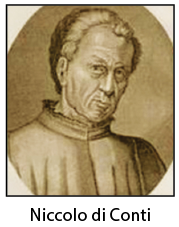
- Niccolo di Conti, an Italian traveller, visited Vijayanagara during his reign and left a thorough account of the state of affairs under him.
Krishna Deva Raya (1509-1530 AD)
- Krishna Deva Raya was a brave general and a good administrator. He attacked the Bahmani Kingdom, which had broken into five parts.
- He also suppressed the feudatory chiefs and conquered Raichur Doab. The rulers of Bijapur, Orissa, and Udaygiri were also defeated.
- Krishna Deva also established friendly relations with the Portuguese, allowing them to settle at Bhatkal and build a fortress. He constructed several dams to support irrigation for the people’s benefit.
- He also constructed several palaces and temples and was a great scholar of Sanskrit and Telugu. His death in 1530 ended Vijayanagara’s glory. Weak successors followed him.
- The last ruler of this dynasty was Sada Shiva, who was defeated by combined forces of Ahmednagar, Golconda and Bijapur at the Battle of Talikota or Rakshasha-Tangadi in 1565 AD.
- He built the Vijaya Mahal (House of Victory), the Hazara Rama temple and the Vithal Swami Temple.
- He took the titles of Yavanaraja Sthapnachrya (restorer of the Yavana Kingdom, i.e. the Bidar Kingdom) and Abhinava Bhoja. He is also known as Andhra Bhoj and Andhra Pitamaha.
- He was a gifted scholar in both Telugu and Sanskrit, of which only two works are extant: the Telugu work on Polity’ ‘Amuktamalyada’ and the Sanskrit drama ‘Jambavati Kalyanam’.
- His court was adorned by the ‘Ashtadiggajas’ (the eight celebrated poets of Telugu): 1. Peddana (Manucharitam) 2. Timmaya (parijata apaharanama) 3. Bhattamurthi 4. Dhurjati 5. Mallan 6. Raju Ramchandra 7. Surona 8. Tenali Ramkrisha (Panduranga Mahamatya).
- Krishna Deva Raya, a contemporary of Babur, was the most illustrious ruler of the Deccan.
- Duarte Barbosa and Domingo Peas, Portuguese travellers, visited Vijaya-nagar during the time of Krishna Deva Raya.
Polity and Administration of the Vijayanagara Empire
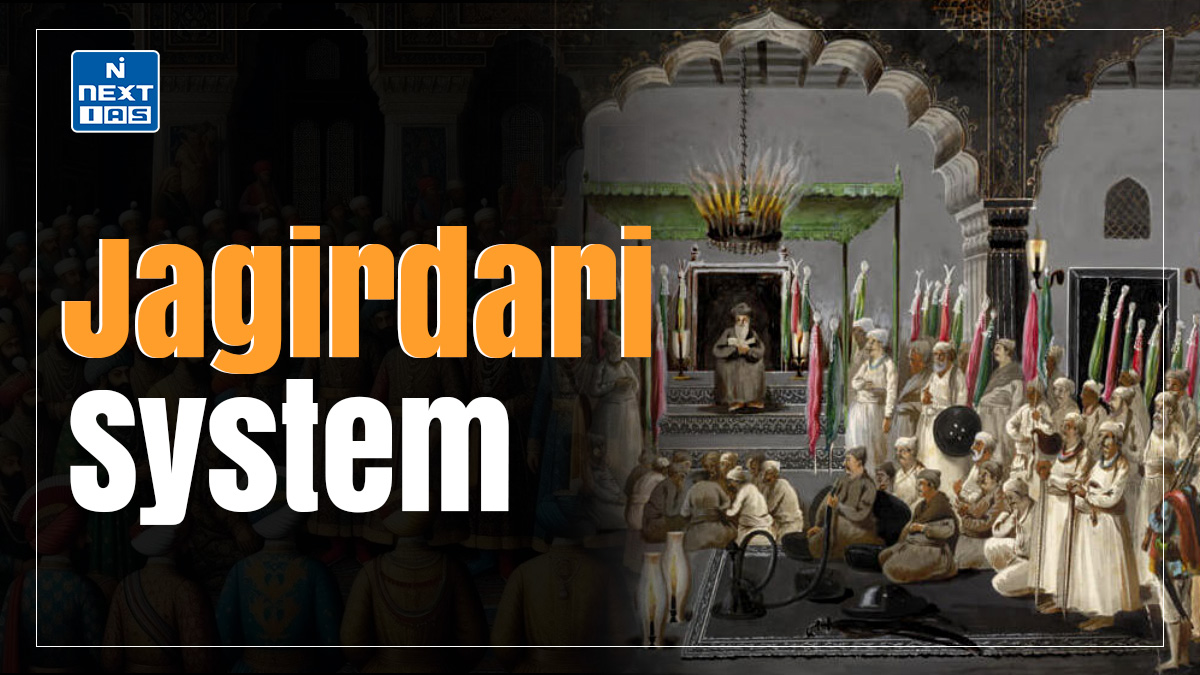
- The polity of Vijay nagar was based on the King being the power centre with a council of ministers to advise him.
- The kingdom was divided into Rajyas or Mandalam (provinces), which were further subdivided into Nadus (district), Sthala (sub-district) and grama (village).
- The village was managed by the village headman who headed the panchayat.
- The Governors of the provinces were royal princes or high-ranking nobles.
- They enjoyed high provincial autonomy, held their own courts, appointed their own officers, and even maintained their armies.
- They could impose new taxes and paid a fixed contribution to the central government. Thus, Vijayanagara was more of a confederacy than a centralised empire.
- The king also granted amaram, or territory with a fixed revenue, to military chiefs.
- These chiefs, who were called palaiyagars or Nayaks, had to maintain a fixed number of soldiers and pay a fixed revenue to the Central Government.
- Land revenue was the chief source of state income. Farmers paid taxes on between one-third and one-sixth of the produce after assessing the quality of the land.
- Other sources of revenue were customs duty, grazing tax, and import and export duties.
- Most of the money was spent on welfare schemes and maintaining a large army consisting of infantry, cavalry, and elephants. Good-quality horses were imported from Arabia.
Additional Information:
- The government of Vijayanagara made use of the Nayankara System and the Ayagar System in managing provinces and villages.
- In the Nayankara System, the military leaders (nayakas) were granted land in return for raising armies and generating revenue.
- In the Ayagar System, activities of the villagers were overseen by a panel of 12 officials who would be remunerated largely in terms of lands and crops.
Economic, Social & Religious Conditions
Economic Conditions
- Industries like textile, mining and metallurgy flourished under the patronage of Vijayanagar rulers.
- The trade was brisk, and external trade with Persia, Arabia and South East Asian countries like Burma, China and Sri Lanka. Ships carried rice, iron, sandalwood, sugar and spices to these countries.
- The main import items included ivory, horses and silk.
- Several gold and silver coins from the period have been found, reflecting the vibrant economy of the period.
Social Conditions
- Like all the other societies of the medieval period, the Vijayanagara society was divided into three main classes – the nobles, the middle class and the common people.
- The nobles lived in great comfort and luxury, while the middle classes were mainly businessmen and lived in cities.
- The common people lived an ordinary life and were taxed heavily.
- Women were respected, and some even participated in political and literary activities.
- Polygamy was common among the upper classes.
- Evils like child marriage and Sati existed.
- Brahmins were accorded high status as they performed religious ceremonies.
- The Vijayanagara rulers were Hindus but were tolerant towards other religions.
- According to Portuguese writer Nuniz, the women in the Vijayanagara Empire were experts in Wrestling, Astrology, Accounting, and Soothsaying.
Religion of Vijayanagara
- The Sangama rulers were mostly followers of Shaivism, and Virupaksha was their family deity.
- Later dynasties were influenced by Vaishnavism, but Shiva continued to be practised.
- Srivaishnavism of Ramanuja attained high popularity. However, all kings were tolerant towards other religions and their practices.
- Many Muslims were part of the Vijayanagara administration. They were also allowed to build mosques and worship.
- Many temples were built during this period, and numerous festivals were celebrated.
- Epics and Puranas were greatly popular among the masses, especially among women, as they were a means of their education.
Art and Architecture, Literature of Vijayanagara Kingdom
- The rulers of the Vijayanagara empire built many temples and palaces.
- The temples were adorned with beautiful sculptures. According to Domingo Paes, a Portuguese traveller, the city of Vijayanagara was surrounded by seven walls covering an area of about 96 kilometres.
- Inside the city, there were magnificent palaces and temples.
- The temple enclosures became more spacious.
- The temple walls exhibited scenes from Ramayana and Mahabharata.
- The chief characteristics of the Vijayanagara architecture were the construction of tall Raya Gopurams or gateways, the Kalyana mandapam with carved pillars in the temple premises, the Garbhagriha and the Amman shrine.
- The Amman shrine is a subsidiary temple enshrining the consort of the chief deity of the Garbhagriha.
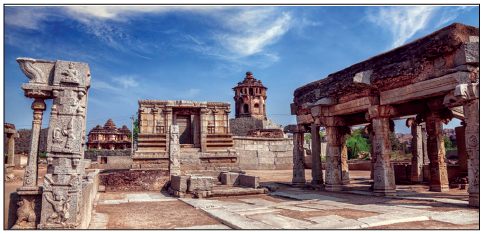
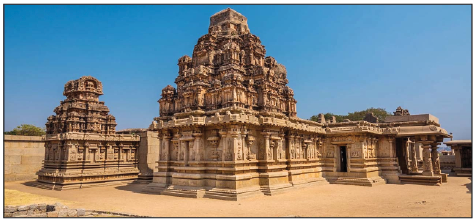
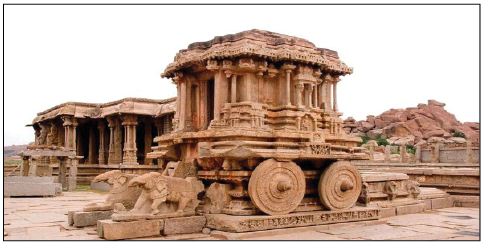
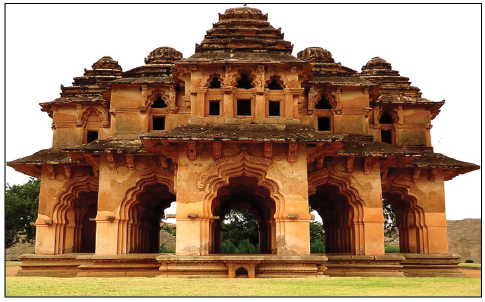
- The most important temples of the Vijayanagar style were found in Hampi’s ruins.
- Vittalaswami and Hazara Ramaswamy temples, constructed by Krishna Deva Raya, are some of the best examples of their architectural style.
- The Varadharaja and Ekamparanatha temples at Kanchipuram, built during Vijayanagara rule, are known for their magnificent temple architecture.
- The Raya Gopurams at Thiruvannamalai and Chidambaram speak about the glorious era of Vijayanagara.
- The rulers of Vijayanagar also patronised music and dancing.
- The sculptures were carved on the pillars with distinctive features. The horse was the most common animal found on these pillars.
- The mandapams, containing hundreds of pillars, were used for seating the deity on festival occasions.
- Also, many Amman shrines were added to the existing temples during this period.
Additional Information:
- Carnatic music has its origins in South India and evolved from devotion to music and worship.
- It followed the teachings of Vedism and Bhakti philosophy & developed into a well-defined musical system of ragas and talas during the medieval period.
- The 16th-century Haridasa saint Purandara Dasa is regarded as the ‘Father of Carnatic Music’ because he codified its teaching system.
- He devised progressive lessons like sarali varisai, alankaras, and basic ragas such as Mayamalavagowla, which are the core components of initial training today.
- His numerous devotional songs, written in vernacular Kannada, have made intricate music understandable to the common man.
Literature of Vijayanagara Empire
- The Vijayanagara rulers patronised Sanskrit, Telugu, Kannada and Tamil literature.
- The empire was at the peak of its literary achievement during the rule of Krishna Deva Raya. Known as the ‘Andhra Bhoja’, Krishna Deva Raya wrote ‘Amuktamalyada’, a book on polity in Telugu which explains how a king should rule.
- He also wrote a Sanskrit drama, ‘Jambavati Kalyanam’.
- Eight celebrated poets adorned his court, called ‘Ashtadiggajas’ of which Peddana and Madhava were the members.
- Achyuta Raya patronised Rajanatha and the poetess Tirumalambadevi, who wrote Vardambika Parinayam.
- Narahari (Kumaravalmiki) composed a popular Ramayana version of Torave Ramayana, in Kannada.
- The Vijayanagara rulers also patronised saints like Namadeva and Jnanadeva.
Additional Information:
- The Foreign travelers have also made records about the grandeur of Hampi.
- An Italian traveler named Nicolo Conti paid his visit to the Vijayanagara Empire during the 15th century.
- He noted the fortified nature and militaristic prowess of its capital city.
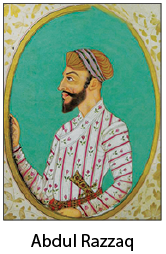
- The Persian envoy, Abdur Razzak, was another individual who visited this place during the same time and recognized the city as magnificent, characterized by abundant wealth.
- Moreover, the Portuguese travelers Domingo Paes and Fernao Nuniz visited this city under the rule of Krishnadeva Raya and Achyuta Deva Raya.
Reasons for the Decline of the Vijayanagara Kingdom
Some of the reasons for the decline of the Vijayanagara Empire were:
- The Empire was engaged in continuous battles with rivals such as Bahmani rulers, Madurai, Warangal, etc. These wars drained the empire’s resources and impoverished the economy.
- The Empire was based on provincial autonomy. This led to too much power in the hands of Governors engaged in infights. As soon as the central authority weakened, they asserted their independence.
- There was no firm rule of primogeniture, so after a ruler’s death, princes and nobles fought for the throne.
- Weak successors after Krishna Deva Raya needed help to hold on to such a large Empire.
- The Battle of Talikota is generally considered to mark the end of the Vijayanagara Empire.
- Although the kingdom lingered on for almost one hundred years under the Aravidu dynasty, founded by Tirumala Raya and with its capital at Penukonda, it came to an end in 1646.
Additional Information: Hampi Utsav 2026
- Hampi Utsav 2026 promises to rejuvenate interest in this UNESCO World Heritage Site by highlighting the rich culture and history of Hampi.
- It highlights the culture through various activities such as heritage walks, cultural events, and a digitally enhanced Hampi 3D mapping event featuring narratives of the Vijayanagara Empire on the ruins.
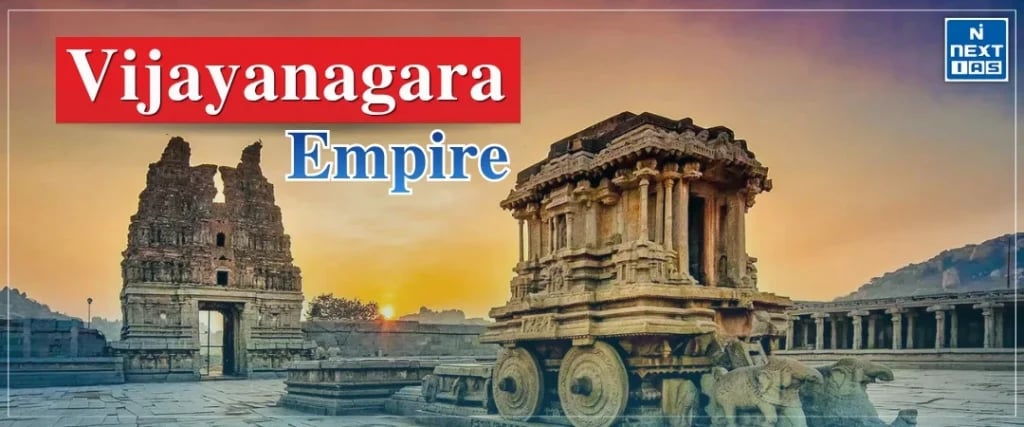
- People visiting the area will have an opportunity to walk around the legendary Stone Chariot of Hampi, witness the Musical Pillars in the Vittala Temple, and offer prayers at the Virupaksha Temple, which is the oldest active temple in the town.
- The architecture of the Lotus Mahal and Elephant Stables shows a fusion of Hindu and Indo-Islamic styles, whereas the Mahanavami Dibba (House of Victory) represents the grand structure serving as a ceremonial podium.
Conclusion
The Vijayanagara Empire provided an era of growth and stability in the South when the empires in North India were disintegrating. It left a rich legacy in its unique architectural style, the Vijayanagara Style, which had elements of both Central and Southern India. This synthesis inspired architectural innovation in Hindu temple construction. Efficient administration and vigorous overseas trade brought new technologies, such as water management systems for irrigation. The empire’s patronage enabled fine arts and literature to reach new heights in Kannada, Telugu, Tamil, and Sanskrit, while Carnatic music evolved into its current form. The Vijayanagara Empire created an epoch in South Indian history that transcended regionalism.
FAQs about Vijayanagara Empire
Who founded the Vijayanagara Empire?
The Vijayanagara Empire was founded by Harihara I and Bukka Raya I of the Sangama Dynasty in 1336.
Who was the famous ruler of Vijayanagara?
Krishna Deva Raya is considered the most famous ruler of the Vijayanagara Empire, known for his military conquests, administrative reforms, and patronage of the art.
What are the 4 dynasties of the Vijayanagara Empire?
The four dynasties that ruled the Vijayanagara Empire were the Sangama, Saluva, Tuluva, and Aravidu dynasty. Each contributed to the empire’s expansion, governance, and cultural achievements.