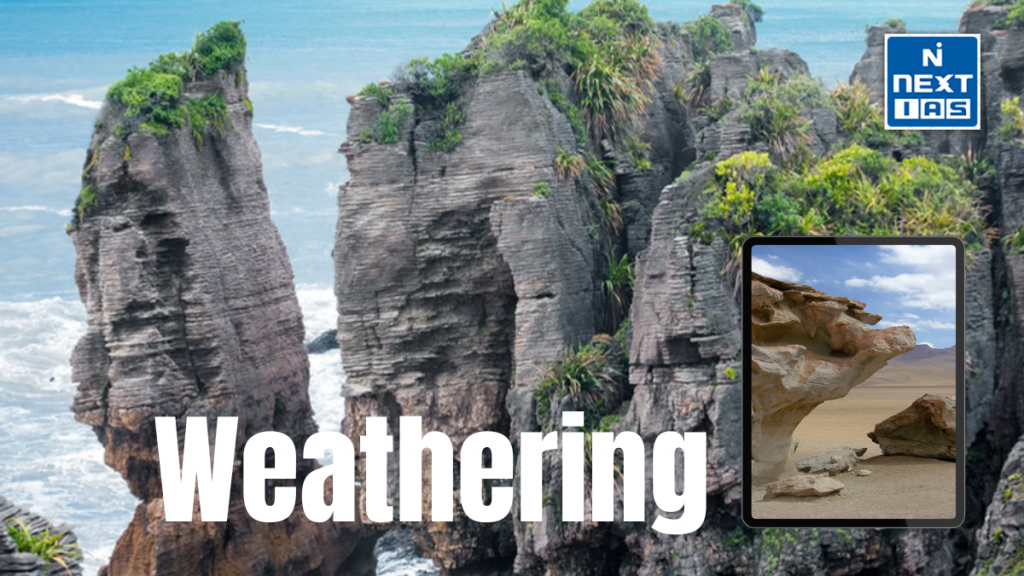
Weathering is the natural process that breaks down rocks and minerals on Earth’s surface into smaller particles through physical, chemical, or biological means. It occurs due to factors like temperature changes, water, wind, and living organisms. Weathering shapes landscapes and contributes to soil formation, influencing ecosystems and Earth’s surface features.
About Weathering of Rocks
Weathering is the process of breaking down rocks, minerals, and other materials on Earth’s surface into smaller particles through physical, chemical, and biological means. It plays a key role in shaping landscapes and contributing to soil formation. Weathering occurs in three main forms:
- Physical Weathering: Also known as mechanical weathering, it involves the breakdown of rocks into smaller fragments without altering their chemical composition. This can occur due to temperature fluctuations, frost action, or abrasion by wind, water, or ice.
- Chemical Weathering: This involves the alteration of a rock’s chemical composition through reactions with water, oxygen, carbon dioxide, or acids. Processes like oxidation, hydrolysis, and carbonation fall under this category.
- Biological Weathering: Living organisms, such as plants, fungi, and microorganisms, contribute to weathering by producing acids, growing roots into cracks, or other biological activity.
This process is essential for creating fertile soils and recycling Earth’s materials.
3 Main Types of Weathering
Weathering is classified into three main types based on the processes involved:
Physical (Mechanical) Weathering
- Definition: Breaks rocks into smaller pieces without changing their chemical composition.
- Processes:
- Frost Wedging: Water freezes in cracks, expands, and breaks rocks apart.
- Thermal Expansion: Repeated heating and cooling cause rocks to crack.
- Abrasion: Rocks are worn down by friction from wind, water, or ice.
- Exfoliation: Layers peel away due to pressure release.
Note: In Salt Weathering, salt minerals in rocks swell up due to heat effects, hydration, and crystallization. Salts such as calcium, sodium, magnesium, potassium, and barium have a property of swelling. The swelling effect of these salts depends on the temperature and the heat properties. High temperatures, which range from 30 to 50 degree Celsius at the surface in deserts, are suitable for this process of swelling up of salts. The salt crystals found in near-surface pores lead to splitting of single grain pieces in rocks, which end up falling apart. This process of falling down can either cause granular disintegration or foliation. Salt crystallisation is the most effective of all salt-weathering processes.
Chemical Weathering
- Definition: Alters the chemical composition of rocks through chemical reactions.
- Processes:
- Oxidation: Reaction with oxygen forms oxides (e.g., rust).
- Hydrolysis: Water reacts with minerals to form new compounds.
- Carbonation: Carbon dioxide in water forms carbonic acid, dissolving rocks like limestone.
- Dissolution: Soluble minerals dissolve in water.
Biological Weathering
- Definition: Involves living organisms breaking down rocks.
- Examples:
- Plant roots growing into cracks.
- Microorganisms producing acids that degrade minerals.
- Animals burrowing and exposing rocks to other weathering processes.
These types often work together, shaping landscapes over time.
Significance of Weathering
Weathering plays a vital role in shaping Earth’s surface and influencing ecological and geological processes. Its significance includes:
| Soil Formation | Weathering breaks down rocks into smaller particles, providing the foundation for soil development. Nutrients released from weathered minerals enrich the soil, supporting plant growth. |
| Landform Development | Weathering contributes to the formation and modification of landscapes, such as valleys, cliffs, and caves. Unique features like arches and spires result from differential weathering. |
| Nutrient Cycling | Chemical weathering releases essential minerals like calcium, potassium, and magnesium, which are vital for ecosystems. These nutrients enter water and soil systems, sustaining life. |
| Erosion and Sedimentation | Weathering provides materials for erosion, which transports sediments to form deltas, beaches, and floodplains. |
| Climate Regulation | Chemical weathering processes, like carbon sequestration, help regulate atmospheric carbon dioxide levels, influencing the global climate. |
What are the Factors Affecting it?
Several factors influence the rate and extent of weathering processes. These factors include:
Climate
- Temperature: Extreme temperature fluctuations enhance physical weathering (e.g., frost wedging).
- Precipitation: High rainfall accelerates chemical weathering and increases water-based processes.
- Humidity: Moist climates promote both chemical and biological weathering.
Rock Type and Composition
- Rocks composed of hard minerals (e.g., quartz) resist weathering, while softer minerals (e.g., calcite) weather more quickly.
- Rocks with more joints or fractures weather faster due to increased surface exposure.
Surface Area
- Smaller fragments or fractured rocks have more exposed surface area, accelerating weathering processes.
Topography
- Steep slopes promote physical weathering due to gravity and erosion.
- Flat areas allow water accumulation, enhancing chemical weathering.
Time
- Longer exposure to weathering agents increases the degree of rock breakdown.
Biological Activity
- Plants, animals, and microorganisms contribute to biological weathering by breaking rocks mechanically or chemically.
Presence of Water
- Water is essential for many weathering processes, including frost action, dissolution, and hydrolysis.
Each of these factors interacts, determining the intensity and nature of weathering in different environments.
Benefits to the Earth’s Ecosystems and Geological Processes
Weathering provides numerous benefits to the Earth’s ecosystems and geological processes. Its advantages include:
Soil Formation
- Weathering breaks down rocks into smaller particles, creating soil, which is vital for agriculture and plant growth.
- It enriches soil with essential minerals and nutrients.
Nutrient Release
- Chemical weathering releases nutrients like calcium, potassium, and magnesium from rocks, supporting ecosystems.
- These nutrients are essential for the growth of plants and microorganisms.
Landform Creation
- Weathering shapes unique natural landscapes, such as caves, valleys, and cliffs, which often have ecological and aesthetic value.
- It contributes to the formation of diverse habitats for various species.
Material Supply for Construction
- Weathering produces sediments like sand, clay, and gravel, which are used in construction and industrial applications.
Water Filtration
- Weathered rocks and soils help filter and purify groundwater, ensuring clean water supplies.
Climate Regulation
- Chemical weathering of silicate rocks reduces atmospheric carbon dioxide, playing a role in climate regulation.
Weathering is a natural process that sustains life, contributes to Earth’s beauty, and supports human activities.
Weathering and Erosion
- The earth’s surface is transformed by weathering and erosion through interrelated actions.
- Rocks are broken down in their original location through the action of physical, chemical, and biological means to produce sediments without transportation.
- The sediments are then transported by the forces of nature such as wind, water, ice, or gravity, where rivers form valleys, glaciers form fjords, and the waves cause coastal erosion.
- Sediment carriers such as streams create deltas as the sediments settle.
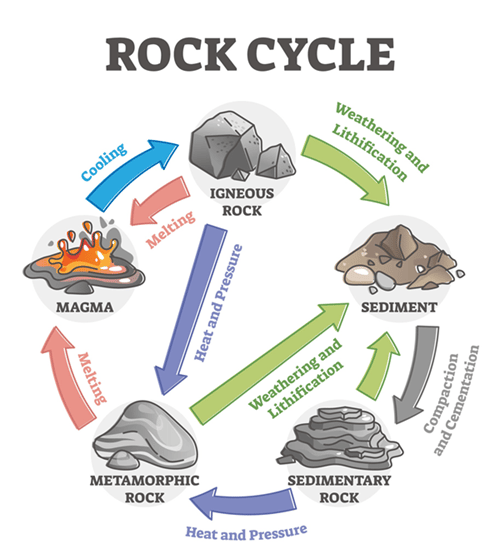
- Through these interactions, the rock cycle occurs, as the weathering process breaks down the rocks, while erosion acts as a transporter to allow soil development and landscape modification.
- Human influences, including deforestation, speed up both actions to create landslides and desertification.
Way Forward
To optimize weathering benefits, focus on preserving ecosystems, reducing deforestation, and minimizing soil erosion through sustainable practices. Promote research into carbon sequestration via weathering for climate mitigation. Educate communities about weathering’s importance in soil fertility and landscape formation, ensuring balanced development while protecting natural geological and ecological processes.
Conclusion
Weathering is a fundamental natural process that shapes Earth’s surface, supports ecosystems, and sustains life. By breaking down rocks, it aids in soil formation, nutrient cycling, and climate regulation. Weathering’s interaction with erosion and deposition drives geological changes, highlighting its vital role in maintaining the planet’s dynamic and balanced systems.
FAQs
What is the current status of restructured weather based crop insurance schemes?
The government has approved the continuation of Restructured weather based crop insurance scheme (RWBCIS) until 2025-26 with the outlay of ₹69,515.71 crore from 2021-22 to 2025-26.
What is the Atmospheric Circulation and Weather System?
It is the circulation or global air movement of air within the atmosphere due to uneven heating, forming winds, cells & pressure systems that shape weather.
What is the Doppler weather radar?
It is a special type of radar that uses the Doppler effect to determine the velocity and direction of precipitation, identifying storm activity, wind currents, and tornadoes for accurate weather prediction.
What is the difference between weather and climate?
Weather refers to short-term atmospheric changes (lasting a few hours to several days), such as rainfall or temperature whereas Climate pertains to long-term averages of long years.