


Dengue Vaccine Safety Concerns
Syllabus: GS2/ Health
Context
- Brazil recently suspended the administration of its dengue vaccine, Butantan-DV, after reports of severe adverse events, including two deaths, during a large-scale vaccination campaign.
What is Dengue?
- Dengue is a viral infection caused by the dengue virus (DENV), transmitted to humans through the bite of infected mosquitoes.
- DENV is an RNA virus of the Flaviviridae family with four serotypes (DENV-1, DENV-2, DENV-3, and DENV-4).
- Infection with one serotype provides lifelong immunity against that serotype but only temporary protection against the others.
- Symptoms: High fever, severe headache, pain behind the eyes, muscle and joint pains, nausea, vomiting, swollen glands, rash.
- Transmission: The virus is transmitted to humans through the bites of infected female mosquitoes, primarily the Aedes Aegypti mosquito.
- There is a possibility of maternal transmission of Dengue (from a pregnant mother to her baby), transmission via blood products, organ donation and transfusions.
- Prevention: There is no specific antiviral treatment for dengue, so prevention relies on controlling mosquito populations and raising public awareness.
- The mosquitoes that spread dengue are active during the day. The best way of protection is to protect yourself from mosquito bites.
Why are the concerns?
- The development has raised concerns regarding the safety of India’s upcoming dengue vaccine, DengiAll, as both vaccines are based on similar scientific platforms.
- Both vaccines are live attenuated tetravalent vaccines. They contain weakened forms of all four dengue virus serotypes.
- Both are based on vaccine candidates (TV003 and TV005) originally developed by the U.S. National Institutes of Health (NIH).
- A vaccine candidate is a vaccine that is being tested for safety and effectiveness before receiving full regulatory approval.
- The technology was later licensed to:
- Instituto Butantan in Brazil (for Butantan-DV).
- Panacea Biotec in India (for DengiAll).
Antibody-Dependent Enhancement (ADE)
- ADE is a phenomenon in which antibodies produced after a previous dengue infection or vaccination fail to fully neutralise the virus during a subsequent infection.
- Instead of protecting the body, these antibodies can help the virus enter immune cells more easily, leading to a more severe infection.
How Does It Occur?
- A dengue vaccine aims to generate immunity against all four serotypes.
- After vaccination, the body produces:
- Type-specific antibodies, which provide strong protection against a particular serotype.
- Cross-reactive antibodies, which can recognise multiple serotypes but may provide weaker protection.
- Over time, the level of cross-reactive antibodies may decline.
- If a person is later infected by a different dengue serotype, these weakened antibodies may fail to stop the virus. Instead, they can assist the virus in entering immune cells, allowing it to multiply more rapidly.
Source: TH
GI Recognition for Jharkhand’s Traditional Heritage
Syllabus: GS1/ Culture, GS3/ Economy
Context
- Eleven traditional products of Jharkhand have recently been granted the Geographical Indication (GI) Tag.
GI-Tagged Products of Jharkhand
- Bhagaiya Silk: Bhagaiya Silk is produced in the Bhagaiya region of Godda district. It is known for its traditional handloom weaving techniques and high-quality silk fabric.
- Kuchai Silk: It is cultivated naturally on Asan and Arjun trees in the village of Seraikela-Kharsawan (historically known as Kuchai).
- Kesaria Kalakand: It is a traditional sweet that forms an important part of the region’s culinary heritage.
- Dokra Craft: It is one of the oldest surviving metal-casting traditions in India. It employs the traditional lost-wax casting technique to produce decorative and utility items.
- Tumka Chadar: It is a uniquely crafted shawl or bedspread sheet (chadar) woven by local tribal and artisan communities in Jharkhand.
- Baroni Paintings: It is traditional folk paintings of Jharkhand depicting local customs, nature, and tribal cultural traditions.
- Pancho Saree and Fabric: The traditional handwoven textiles of Jharkhand known for their distinctive patterns and cultural significance among local communities.
- Jadopatia Painting: It is a traditional scroll-painting art practiced by the Santhal community, depicting folklore, mythology, social customs, and cultural narratives.
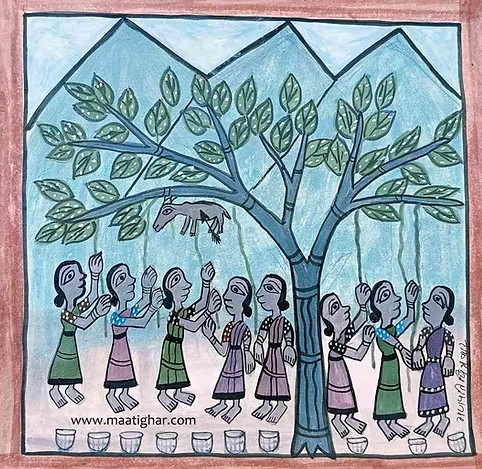
- Bhoya Saree and Fabric: It is a traditional handwoven textiles of Jharkhand.
- Munda Jewellery: It is a traditional ornament crafted by the Munda tribal community. It reflects the artistic traditions and social customs of Jharkhand’s tribal population.
- Jharkhand Bamboo Craft: Bamboo Craft utilizes locally available bamboo to create utility and decorative products.
Geographical Indication (GI)
- A geographical indication (GI) is a sign used on products that have a specific geographical origin and possess qualities or a reputation that are due to that origin.
- In order to function as a GI, a sign must identify a product as originating in a given place.
- Geographical indications are typically used for agricultural products, foodstuffs, wine and spirit drinks, handicrafts, and industrial products.
GI Tags and India
- The Geographical Indications of Goods (Registration and Protection) Act,1999 seeks to provide for the registration and better protection of geographical indications relating to goods in India.
- The Act is administered by the Controller General of Patents, Designs and TradeMarks, who is the Registrar of Geographical Indications.
- The registration of a geographical indication is valid for a period of 10 years.
Source: AIR
India and Slovakia Elevate Ties to Comprehensive Partnership
Syllabus: GS2/IR
Context
- India and Slovakia elevated their ties to a comprehensive partnership and inked 11 agreements to expand bilateral cooperation.
About
- The visit was the first by an Indian Prime Minister to Slovakia since its independence in 1993.
- The agreements have been signed in a range of areas such as migration, digital technology and defence.
- The two leaders also agreed to work towards the earliest implementation of the India-European Union free trade agreement.
- The two sides also established a joint working group in counter-terrorism and a consular dialogue.
- The Slovak President presented The Order of the White Double Cross (1st Class), the highest state honour of Slovakia, to Prime Minister Narendra Modi.
Slovakia
- Slovakia is a landlocked country in Central Europe. It became an independent state on January 1, 1993, after the peaceful dissolution of Czechoslovakia.
- Slovakia is bordered by Poland to the north, Ukraine to the east, Hungary to the south, Austria to the southwest and the Czech Republic, lies to the west.
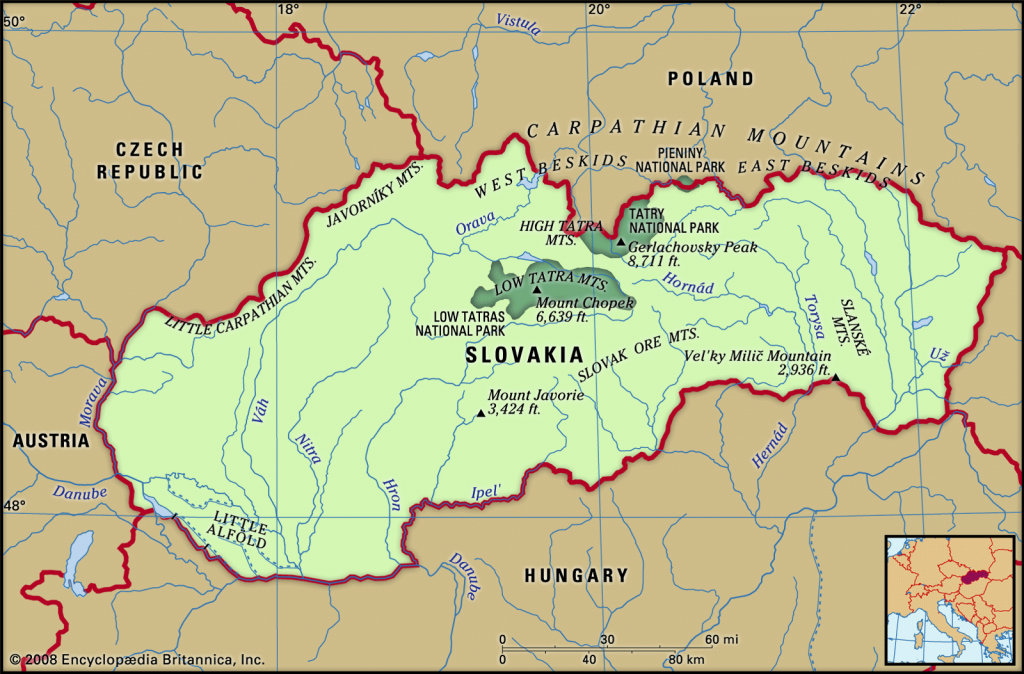
- Bratislava, the capital of Slovakia, is the only national capital in the world that directly borders two separate countries i.e. Austria and Hungary.
- Official Language: Slovak.
- Currency: Euro (€).
- It is a member of both the European Union and NATO (the North Atlantic Treaty Organization).
Source: PIB
BRICS Indore Declaration
Syllabus: GS2/Regional Grouping
Context
- The BRICS Agriculture Ministers and officials-level meetings were held in Indore in which the ‘BRICS Indore Declaration’ was unanimously adopted.
- The decisions were taken at the end of a meeting of agriculture ministers and officials from BRICS countries held under India’s Presidency.
Major Highlights
- The declaration has been adopted amid ongoing geopolitical tensions and focuses on four main priorities: Farmers, food security, climate and technology.
- BRICS countries represent nearly half of the world’s population, possess about 42% agricultural land and contribute nearly 42% to world foodgrain production.
- Separately, four institutional initiatives have also been proposed. It includes:
- Centres of Excellence on Agro-Ecology and Regenerative Agriculture: A platform for joint research, experience sharing and capacity building on natural, organic and regenerative agricultural practices.
- The Indian Institute of Farming Systems Research, Modipuram, has been given an important role.
- BRICS Network on Digital Agriculture: For the cooperation in the fields of artificial intelligence, geospatial technology, digital public infrastructure and data-based agricultural solutions. IIT Delhi in India will coordinate this network.
- Global Forum on Farmers’ Rights in Seed Systems: It will protect farmers’ seed rights, the diversity of indigenous seeds and traditional knowledge.
- BRICS AgriN (Agro Input, Genetic Resources and Information Network): This will strengthen cooperation among member countries in areas of agricultural inputs, seeds and genetic resources.
- Centres of Excellence on Agro-Ecology and Regenerative Agriculture: A platform for joint research, experience sharing and capacity building on natural, organic and regenerative agricultural practices.
About BRICS
- BRICS is an acronym that refers to a group of five major emergingnational economies:Brazil, Russia, India, China, and South Africa.
- Egypt, Ethiopia, Iran, Indonesia, and the United Arab Emirates have joined BRICS as new full members.
- The term was originally coined by economist Jim O’Neill in 2001.
- Origin: As a formal grouping, BRIC started after the meeting of the Leaders of Russia, India and China in St. Petersburg on the margins of the G8 Outreach Summit in 2006.
- The grouping was formalized during the 1st meeting of BRIC Foreign Ministers on the margins of UNGA in New York in 2006.
- Initially, the grouping was termed BRIC as South Africa was inducted in 2010 and from there on it has been referred to as BRICS.
- Summits: The governments of the BRICS states have met annually at formal summits since 2009.
- New Development Bank: Formerly referred to as the BRICS Development Bank, is a multilateral development bank established by the BRICS states.
- The Bank shall support public or private projects through loans, guarantees, equity participation and other financial instruments.
Source: IE
U.S. and Iran reach Agreement to end war, re-open Hormuz Strait
Syllabus: GS2/IR
Context
- The U.S. and Iran have reached a preliminary agreement to end the war.
About
- The pact includes an immediate halt to military action, including in Lebanon, and a 60-day negotiation period.
- The US has announced the removal of the US naval blockade, authorizing the reopening of the Strait of Hormuz for global shipping.
- The move would allow international maritime traffic to resume.
Strait of Hormuz
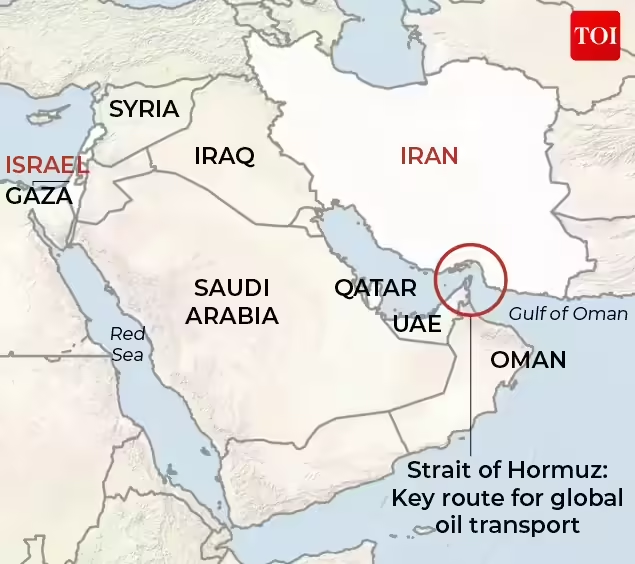
- The Strait of Hormuz lies between Iran to the north and Oman and the United Arab Emirates to the south, linking the Persian Gulf with the Gulf of Oman and the Arabian Sea.
- At its narrowest point it is about 33 kilometres wide, with shipping lanes just a few kilometres across in either direction.
- Nearly half of India’s crude oil and around 60% of its natural gas imports pass through the strait.
Persian Gulf
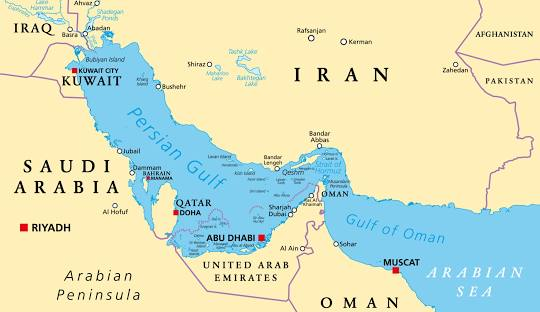
- The Persian Gulf lies between Iran (north) and the Arabian Peninsula (south).
- It connects to the Arabian Sea through the Strait of Hormuz, one of the world’s most critical maritime chokepoints.
- The Persian Gulf is the most important source of oil and gas for India.
- Around 90% of India’s imports of LPG, 40% of its LNG and 35% of its crude oil came from the Persian Gulf in 2025.
Source: TH
DRDO Demonstrates Multi-Layered Ballistic Missile Defence Capability
Syllabus: GS3/ Defence
Context
- The Defence Research and Development Organisation (DRDO) successfully conducted three consecutive flight tests validating India’s multi-layered Ballistic Missile Defence (BMD) system and the Naval Anti-Ship Missile-Medium Range (NASM-MR).
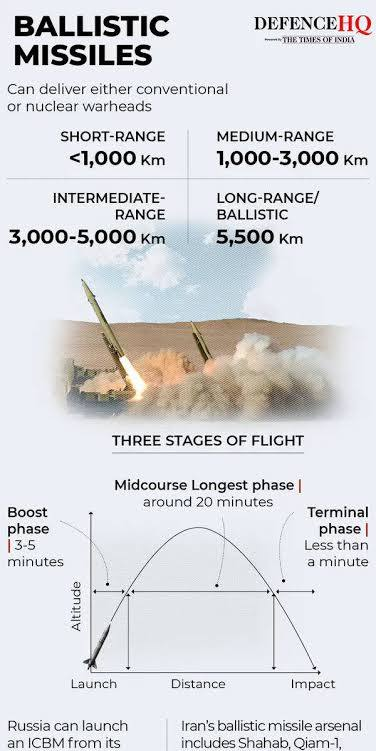
What are Ballistic Missiles?
- A ballistic missile is a missile that is launched by a rocket and then travels mainly under the influence of gravity along a curved path called a ballistic trajectory.
What is a missile defence system?
- Missile defence refers to an integrated military system designed to detect, track, intercept, and destroy incoming missiles before they reach their intended targets, thereby protecting civilian populations, military installations, and critical infrastructure.
- Missile defence systems rely on a network of satellites, radars, command centres, and interceptor missiles that work together in real time to neutralise threats.
India’s Missile Defence Architecture
- Multi-layered Ballistic Missile Defence (BMD) system under DRDO:
- The Prithvi Air Defence (PAD) interceptor is designed for exo-atmospheric interception to intercept incoming missiles at altitudes of 50 km to 180 km.
- The Advanced Air Defence (AAD) interceptor is intended for endo-atmospheric interception during the terminal phase to neutralise threats within the Earth’s atmosphere at altitudes up to 30 km.
- Layered Air Defence Shield:
- The S-400 Triumf is a highly advanced, mobile, Russian-developed surface-to-air missile (SAM) system inducted by India to enhance long-range air defence capability.
- Medium-Range (70–100 km): The Barak-8 (MRSAM/LRSAM), co-developed with Israel, provides 360-degree protection for both land and naval assets.
- Short-Range (25–50 km): The indigenous Akash system and Israel’s SPYDER protect strategic points and mobile army units.
- Mission Sudarshan Chakra: Announced as a comprehensive vision for 2035, Mission Sudarshan Chakra aims to create an all-encompassing, AI-enabled national shield.
Source: IE
India Likely to Add Cervavac to National Immunisation Programme After 2027
Syllabus: GS2/ Health
In News
- The HPV vaccine developed by the Serum Institute of India (SII), with support from the Department of Biotechnology (DBT), is likely to be included in the national vaccination programme after 2027.
More about the news
- Cervavac, India’s first indigenously developed HPV vaccine, is currently administered in a two-dose schedule, which limited its inclusion in the national HPV vaccination programme.
- An ongoing clinical trial is assessing the effectiveness of a single-dose regimen, with results expected next year.
- Earlier this year, the Ministry of Health and Family Welfare launched a nationwide HPV vaccination campaign targeting 14-year-old girls using MSD’s Gardasil vaccine.
Human papillomavirus (HPV)
- HPV is a common sexually transmitted infection. Most infections are asymptomatic and self-limiting.
- Nature: HPV is a DNA virus from the Papillomaviridae family.
- Diseases Caused by HPV:
- Cervical cancer (over 95% of cases linked to HPV).
- Other cancers: anal, vaginal, vulvar, penile and oropharyngeal cancers.
- Genital warts (non-cancerous).
- High-Risk and Low-Risk Types: HPV types 16 and 18 are high-risk strains responsible for the majority of cervical cancer cases (over 80% in India).
- Types 6 and 11 are low-risk strains that primarily cause genital warts.
- HPV vaccination: It prevents infection from the most dangerous HPV types. Most effective when given before sexual debut (ages 9–14 years).
Do you know?
- Cervical cancer is the second most common cancer among Indian women, with approximately 1.25 lakh new cases and nearly 75,000 deaths reported each year.
Source: IE
Previous article
NCERT Dancing Girl Row
Next article
AI Falls Short on Extreme Weather Forecasting
