


Syllabus: GS3/ Inclusive Growth
Context
- The Government of India highlighted the progress made in improving the Ease of Living contributing to inclusive development and better quality of life of citizens.
What is Ease of Living?
- Ease of Living refers to the ability of citizens to access basic services, opportunities, infrastructure, and governance in a convenient, affordable, and dignified manner.
- It focuses on improving the quality of everyday life by ensuring access to housing, healthcare, sanitation, transportation, financial services, and digital governance.
- It is a key pillar of inclusive and sustainable development.
- India has taken various initiatives for enhancing ease of living through enhanced access to housing, sanitation, drinking water, electricity, financial services, connectivity, and citizen-centric governance.
Housing and Basic Amenities
- Pradhan Mantri Awas Yojna Urban (PMAY-U): India has significantly expanded access to affordable housing through the Pradhan Mantri Awas Yojana (PMAY).
- More than 1.25 crore urban houses have been sanctioned under PMAY-Urban, with over 98 lakh houses completed.
- Under PMAY-Gramin, over 3 crore rural houses have been completed, providing secure shelter to vulnerable households.
Universal Access to Essentials
- Pradhan Mantri Ujjwala Yojana (PMUY), launched in May 2016, transformed rural cooking practices by ensuring access to clean LPG connections.
- The Jal Jeevan Mission (JJM), with its goal of Har Ghar Jal, has delivered rapid expansion in piped water access. As of June 2026, over 15.86 (81.94%) crore households enjoy clean piped water.
- The Swachh Bharat Mission – Gramin, launched in 2014, provided toilets to all rural households, ensuring dignity and hygiene across villages.
- Swachh Bharat Mission‑Urban: Urban waste processing rose to 82 percent in 2026 compared to 16 percent in 2014.
Reliable, Affordable and Clean Energy
- Universal Household Electrification: The SAUBHAGYA Scheme connected approximately 2.86 crore households to electricity.
- Renewable Energy Expansion: Renewable energy capacity increased from 76 GW in 2014 to more than 274 GW in 2026.
- PM Surya Ghar Muft Bijli Yojana: It encourages rooftop solar adoption among households. More than 40 lakh households have already installed rooftop solar systems.
Financial Inclusion and Empowerment
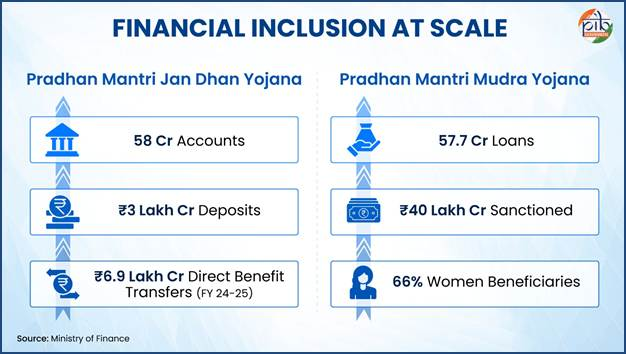
- The JAM Trinity of Jan Dhan, Aadhaar, and Mobile became India’s welfare delivery backbone.
- Pradhan Mantri Jan Dhan Yojna (PMJDY) was the first pillar, opening banking access for crores of excluded citizens.
- In FY 2024–25 alone, ₹6.9 lakh crore was credited directly under Direct Benefit Transfer (DBT) schemes.
- Pradhan Mantri Mudra Yojna (PMMY): More than 57 crore collateral-free loans have been sanctioned to micro and small entrepreneurs. Women account for nearly two-thirds of Mudra beneficiaries.
Transport and Connectivity
- Road Infrastructure: National Highways increased from about 91,000 km to more than 1.46 lakh km.
- Projects such as the Atal Tunnel, Sudarshan Setu, and Delhi–Dehradun Economic Corridor have improved regional connectivity.
- Railway Modernisation: Railway electrification expanded from about 20% to nearly 100%. Vande Bharat Express trains have improved speed, comfort, and efficiency.
- The indigenous Kavach safety system has enhanced passenger safety and reduced accidents.
- Regional Air Connectivity: Under the UDAN Scheme, operational airports increased from 74 to 165.
- Metro and Rapid Transit Systems: Metro rail networks expanded from 248 km in 2014 to over 1,150 km.
- The Namo Bharat Regional Rapid Transit System (RRTS) has introduced high-speed regional connectivity.
Governance Reforms
- The Jan Vishwas (Amendment of Provisions) Act amended provisions across multiple central laws, shifting minor defaults from criminal penalties to civil remedies.
- Centralised Public Grievance Redress and Monitoring System (CPGRAMS): A dedicated feedback portal available for Ministries, Departments, States, and Union Territories to monitor citizen satisfaction regarding grievance resolution.
- PM GatiShakti National Master Plan: The initiative promotes integrated infrastructure planning across sectors.
- It reduces project delays and improves coordination among government agencies.
What are the challenges?
- Significant regional disparities persist in access to public services and infrastructure. Service quality remains uneven across states and districts.
- Financial literacy and digital literacy levels remain inadequate among vulnerable populations.
- Rising energy demand requires greater investments in renewable energy storage and grid infrastructure.
- Maintenance and long-term sustainability of newly created assets require continuous attention.
Concluding remarks
- India’s ease of living transformation demonstrates how targeted welfare programmes, infrastructure investments, digital governance, and institutional reforms can improve the lives of millions.
- Sustaining these gains while addressing emerging challenges will be crucial for building an inclusive, resilient, and prosperous Viksit Bharat by 2047.
Source: PIB
Previous article
News In Short 15-06-2026
Next article
India’s Exports Rise
