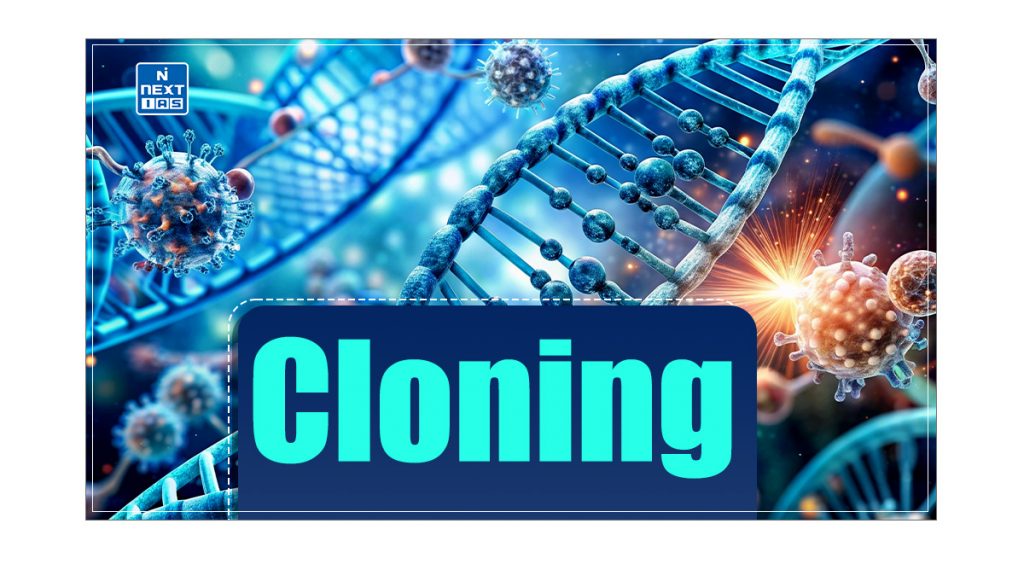
Cloning is a process of creating identical copies of cells, organisms and genetic material. The 1st cloning of a sheep named Dolly was successfully done in 1996. Her cloning was completed using the technique of Somatic Cell Nuclear Transfer (SCNT). In this technique, the nucleus of an unfertilized egg was removed and replaced by the nucleus of the animal to be cloned. The cloned version produced is a newborn biological baby and not the adult size cloned organism.
Reproductive Cloning is used to generate whole new organisms. Therapeutic Cloning can produce embryos to harvest stem cells. These cells can be grown into various tissues, such as skin and heart muscles to prevent diseases like Parkinson’s.
What is Cloning?
- It means an exact copy of something. This can refer not only to whole organisms or cells but also to molecules such as DNA.
- In sequencing work, small pieces of DNA are stitched into carrier molecules (vectors) that can be copied many times in bacteria or cells.
- Each copy is called a clone. The cloned entity shares the same genetic material as the original.
- Reproductive cloning involves the creation of individuals that contain identical sets of nuclear genetic material (DNA).
- To have complete genetic identity, clones must have not only the same nuclear genes, but also the same mitochondrial genes.
- Cloned individuals, whether born at the same or different times, will not be physically or behaviorally identical with each other at comparable ages.
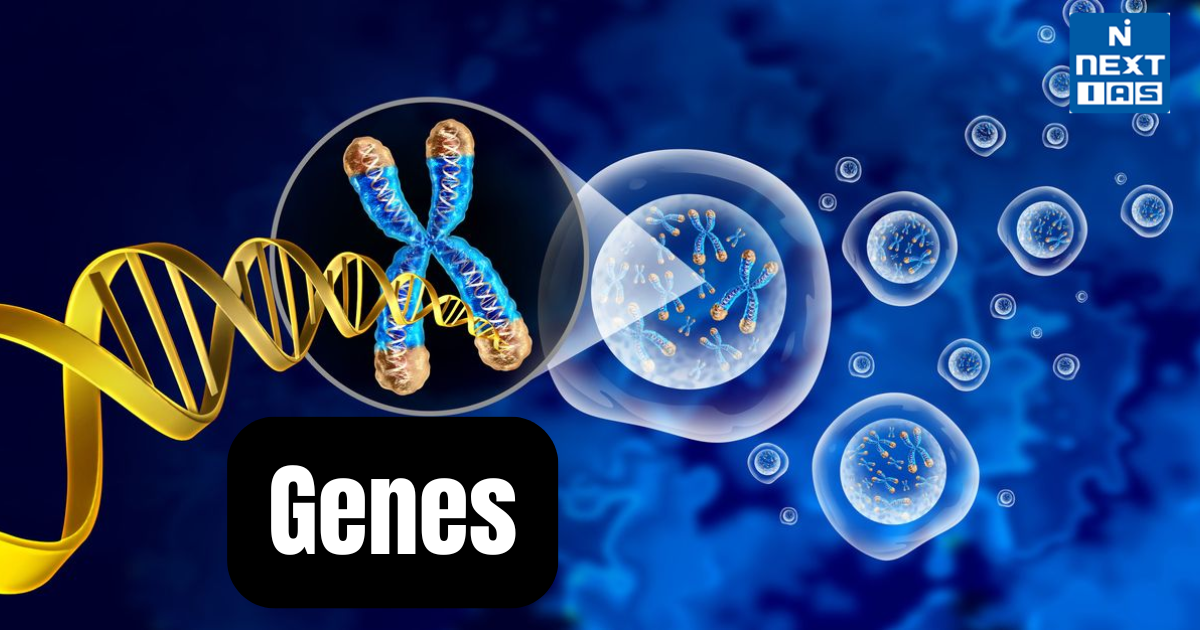
Read our detailed article on Genes.
Various Types
Reproductive
Produces an organism identical to the parent gene. Example: Dolly the sheep in 1996. Used in agriculture and conservation for reproduction of desired traits.
Therapeutic
More about producing stem cells for treatment. Example: Clone human embryos for tissues or organs for transplant.
Gene (Molecular Cloning)
It means copying specific genes or DNA segments. Used extensively in research, gene therapy, and biotechnology.
Embryo (Artificial Twinning)
Mocks natural identical twinning by splitting a fertilized embryo. It generates genetically identical embryos.
Advantages and Disadvantages of Cloning
Advantages
- Gene cloning allows for making a large number of copies of the desired gene in a matter of a few hours.
- The cloned gene can be used for DNA sequencing studies.
- For the production of large quantities of a desired protein by cloning into an expression vector.
- To cure disease using gene therapy.
- Gene therapy replaces a faulty gene or adds a new gene in an attempt to cure disease or improve the body’s ability to fight disease.
- Gene therapy holds promise for treating a wide range of diseases, such as cancer, cystic fibrosis, heart disease, diabetes, hemophilia and AIDS.
- Gene cloning has been used to transfer nitrogen fixing genes of bacteria into food crops to boost food production without using expensive fertilizers.
Disadvantages
- High Failure Rate
- Most cloning attempts fail, with failure rates greatest at the stages of development.
- Health Issues
- The cloned individuals tend to exhibit premature aging, genetic abnormalities, immunodeficiency, and shortened life span (e.g., Dolly the sheep).
- Ethical Concerns
- Cloning raises controversies on the grounds of it interfering with nature, animal welfare, and possible misuse of human cloning.
- Reduction in Biodiversity
- Cloning has the propensity to reduce genetic diversity and render populations susceptible to disease and environmental changes.
- Expensive and Time-Consuming
- The cloning process is one that is very costly, complicated, and labor-intensive, limiting its usability on a wide scale.
- Social and Psychological Issues
- Human clonings, if pursued, may place psyche illnesses and identity issues upon the minority.
- Environmental Hazards
- In large numbers, animal cloning could upset ecosystems and bring in unforeseen risks.
Human Cloning and Ethical Dilemma
- The possibility of human cloning has long fired the popular imagination, including in the world of popular entertainment. Dolly gave added impetus to talk and concern about human cloning. The cloning debate involves scientists, legislators, religious leaders, philosophers and international organizations, but not always harmoniously. General agreement, if not absolute unanimity, evolved that human “reproductive” cloning, for the purposes of producing a human genetic-copy baby, is unethical.
Reasons behind this are:
- The high failure rates (more than 90 per cent) and high morbidity of animal cloning strongly suggests its inapplicability to humans. Furthermore, cloned animals seem to suffer high deformity and disability rates.
- Many people think that these clones will have the same characteristics / personalities as the person cloned.
- According to Religion, cloning is “playing the God” – cloning is not “natural” mention in closing some of the conditions proposed in a provisional list yet, so research on therapeutic human cloning should be stopped.
- Its primary purpose is to create children of a certain kind makes cloning morally troubling. In this respect, it is similar to other forms of genetic engineering by which parents seek to choose the traits of their children—sex, eye color, perhaps one day even their intellectual attributes, athletic prowess, and musical ability.
Some Examples of Cloning
- Dolly the Sheep (1996): First mammal cloned from an adult somatic cell using SCNT (Somatic Cell Nuclear Transfer).
- Cc the Cat (2001): First cloned pet, with different fur patterns than the original cat.
- Zhong Zhong and Hua Hua (2018): First cloned macaque monkeys, advancing research on human diseases.
- Snuppy the Dog (2005): First cloned dog, paving the way for pet cloning.
- Retro the Monkey (2024): Newest cloned primate, showcasing developments in cloning technology
Way Forward
There is scope for betterment of SCNT and gene editing techniques to optimize their success rates and ensure safety. It could potentially treat diseases like Parkinson’s and Alzheimer’s through therapeutic cloning: hence, it would require an ethical framework for its responsible deployment. Conservation of species is another application, and thus public awareness and policy frameworks would become the foundation for discussion and good governance of such concerns.
Conclusion
It is considered having great opportunities in medicine, conservation, and research, yet such development is hindered by technical, ethical, and regulatory constraints. Therapeutic cloning may be exploited to develop treatments for disease, whereas reproductive cloning can be grouped with biodiversity conservation efforts. Ethical governance, public engagement, and foregoing responsible application balancing innovation with societal interests are thus prerequisites to standardizing integrations for the safe commercial application of biotechnology for the benefit of the society.
GS - 3