


Syllabus: GS2/International Relations
Context
- Recently, the Prime Minister of India met with Mauritian counterpart in Victoria, Mahe on the sidelines of Seychelles’ Golden Jubilee National Day celebrations.
- They reaffirmed their commitment to strengthening cooperation in maritime security, development partnership, capacity building, trade, connectivity and people-to-people ties.
India–Mauritius Relations
- India and Mauritius share an exceptionally close relationship based on:
- Shared history and civilizational links;
- Indian diaspora connection;
- Maritime and strategic convergence in the Indian Ocean;
- Development partnership;
- Common democratic values;
- Mauritius occupies a central position in India’s vision of Security and Growth for All in the Region (SAGAR) and the Neighbourhood First Policy.
Historical Background
- Mauritius was uninhabited until European colonisation. A large number of Indians migrated as indentured labourers after the abolition of slavery in 1834.
- Today, around two-thirds of Mauritius’ population is of Indian origin, making the diaspora a major pillar of bilateral relations.
- Diplomatic relations were established immediately after Mauritius attained independence in 1968.
Republic of Mauritius
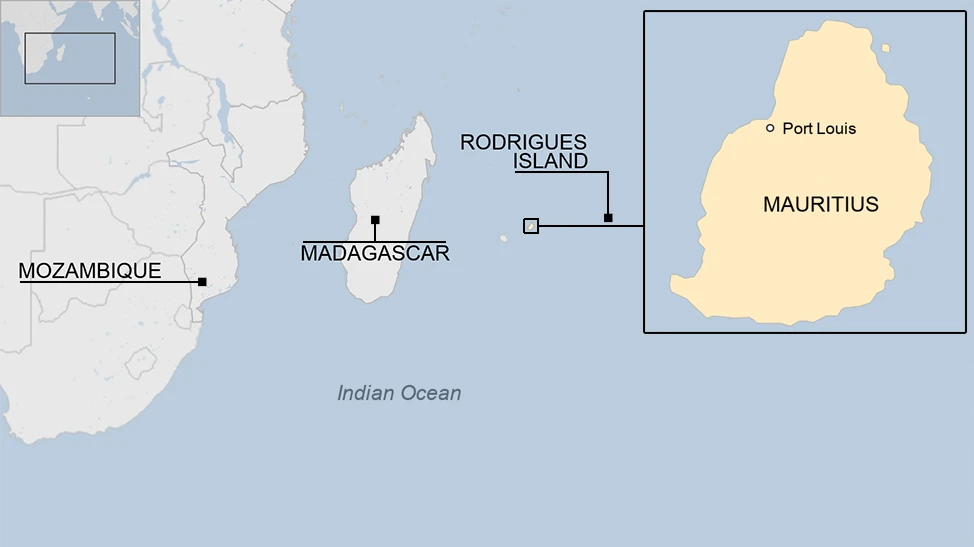
- It is an island nation located in the Indian Ocean, approximately 2,000 kilometers off the southeastern coast of Africa.
- Capital: Port Louis
Major Pillars of India–Mauritius Relations
- Political Relations: India and Mauritius maintain regular high-level political exchanges.
- Recently, both sides reiterated commitment towards expanding development partnership, enhancing maritime cooperation, strengthening regional stability in the Indian Ocean, and deepening economic engagement.
- Strategic and Maritime Cooperation:
- Maritime Security: Joint surveillance of Mauritian EEZ; hydrographic surveys by the Indian Navy; coastal radar systems; and information sharing on maritime domain awareness.
- Defence Cooperation: India assists Mauritius through training of Mauritian defence personnel, supply of defence equipment, deployment of Indian military advisors, joint exercises and patrols.
- SAGAR Doctrine: Mauritius is a cornerstone of India’s SAGAR Vision, Indo-Pacific Oceans Initiative (IPOI), and Vision MAHASAGAR.
- Economic and Commercial Relations
- Bilateral Trade (FY 2024-25): USD 887.25 mn (Total trade)
- Indian Exports to Mauritius: USD 676.34 mn
- Mauritian Exports to India: USD 210.91 mn
- Trade has grown by 329% in the last 17 years, from USD 206.76 million in 2005-06 to USD 887.25 million in 2024-25.
- Main Indian Exports: Petroleum products, pharmaceuticals, food products, machinery, textiles, and automobiles
- Mauritian Exports: Scrap metals, agricultural products, textiles, and seafood products.
- Bilateral Trade (FY 2024-25): USD 887.25 mn (Total trade)
- Comprehensive Economic Cooperation and Partnership Agreement (CECPA): It was signed in 2021. It is India’s first trade agreement with an African country.
- It aims to liberalise trade in goods and services, promotion of investment, expansion of financial services, and greater market access.
- Financial and Investment Relations: Historically, Mauritius has been a major source of Foreign Direct Investment (FDI) into India.
- Key reasons are favourable tax regime; and Double Taxation Avoidance Agreement (DTAA).
- DTAA Revision (2016) was aimed at treaty shopping, round-tripping of funds, and tax evasion.
Do You Know About Treaty Shopping
- It typically involves the attempt to indirectly access the benefits of a tax treaty between two jurisdictions by a person who is not a resident of one of those jurisdictions, often through complex structures and arrangements.
- Development Partnership:
- Metro Express Project: India’s flagship infrastructure project in Mauritius. It significantly improved urban mobility.
- New Supreme Court Building: It was constructed with Indian grant assistance. It symbolises democratic cooperation.
- ENT Hospital: It was built with Indian support. It enhances healthcare infrastructure.
- Social Housing Projects: Several small-scale projects have been implemented across Mauritius in sectors such as education, health, community infrastructure, and sports.
- Other Important Projects: Civil Service College; Forensic Science Laboratory; Digital and ICT initiatives.
Cultural and Diaspora Relations
- Diaspora: Indian origin people comprise nearly 70% of the island’s population of 1.2 million (28% Creole, 3% Sino-Mauritian, 1% Franco-Mauritian).
- Shared Cultural Traditions: Hindi, Bhojpuri, Tamil, Telugu, Marathi and Urdu are widely practised.
- Indian festivals such as Diwali, Holi, and Maha Shivaratri are celebrated on a national scale.
- Cultural Institutions: Mahatma Gandhi Institute; Rabindranath Tagore Institute; and World Hindi Secretariat (headquartered in Mauritius).
- Capacity Building and Human Resource Development: India supports Mauritius through ITEC scholarships, ICCR scholarships, training programmes for civil servants, skill development initiatives, and cooperation in digital governance and public administration.
- Cooperation in Multilateral Forums: Both countries cooperate closely in United Nations (UN), Indian Ocean Rim Association (IORA), International Solar Alliance (ISA), Coalition for Disaster Resilient Infrastructure (CDRI), and Global South initiatives.
- Mauritius has consistently supported India on several international issues.
- India has backed Mauritius’s territorial claim over the Chagos Archipelago, a matter of dispute with the United Kingdom.
Significance of Mauritius for India
- Strategic Importance: Gateway to the western Indian Ocean; critical for securing Sea Lines of Communication (SLOCs); and important for India’s Indo-Pacific strategy.
- Economic Importance: Trade and investment hub; and link to African markets.
- Geopolitical Importance: Helps counter extra-regional influence in the Indian Ocean; and enhances India’s role as a net security provider.
Challenges in Bilateral Relations
- Competition from external powers, especially China.
- Concerns regarding strategic projects and sovereignty issues.
- Need for diversification of trade.
- Regulatory issues in financial cooperation.
- Climate change vulnerabilities affecting Mauritius.
Way Forward
- There is a need to deepen maritime and defence cooperation, expand CECPA implementation, promote blue economy collaboration, enhance digital and fintech partnerships, strengthen renewable energy cooperation, increase people-to-people and educational exchanges, and accelerate implementation of infrastructure projects.
Previous article
News In Short 27-06-2026
Next article
PM Modi Visit to Seychelles
