


Digital Infrastructure for Knowledge Sharing (DIKSHA)
Syllabus: GS2/Government Initiatives
Context
- The Digital Infrastructure for Knowledge Sharing (DIKSHA) has emerged as India’s “One Nation, One Digital Platform” for school education, providing curriculum-linked digital learning resources to students and teachers nationwide.
About
- DIKSHA platform was launched in 2017. It is developed by the National Council of Educational Research and Training (NCERT) in collaboration with the Central Institute of Educational Technology (CIET).
- It supports learning from Foundational Literacy and Numeracy (FLN) to senior secondary education and has been adopted by education boards across almost all States and Union Territories.
- DIKSHA offers videos, 2D and 3D animations, augmented reality (AR) content, simulations, virtual laboratories, QR-coded Energised Textbooks, and interactive learning materials.
- It promotes inclusive and personalised learning through DAISY (Digital Accessible Information System) format, text-to-speech, Indian Sign Language (ISL) videos, adaptive assessments, and competency-based question banks.
- The platform also supports teacher capacity building through the NISHTHA programme and follows a federated architecture, enabling States to manage content while CIET-NCERT ensures quality. It also provides offline access to learning resources.
Source: TOI
Israel, Lebanon Sign US-Brokered Framework Agreement
Syllabus: GS2/IR
Context
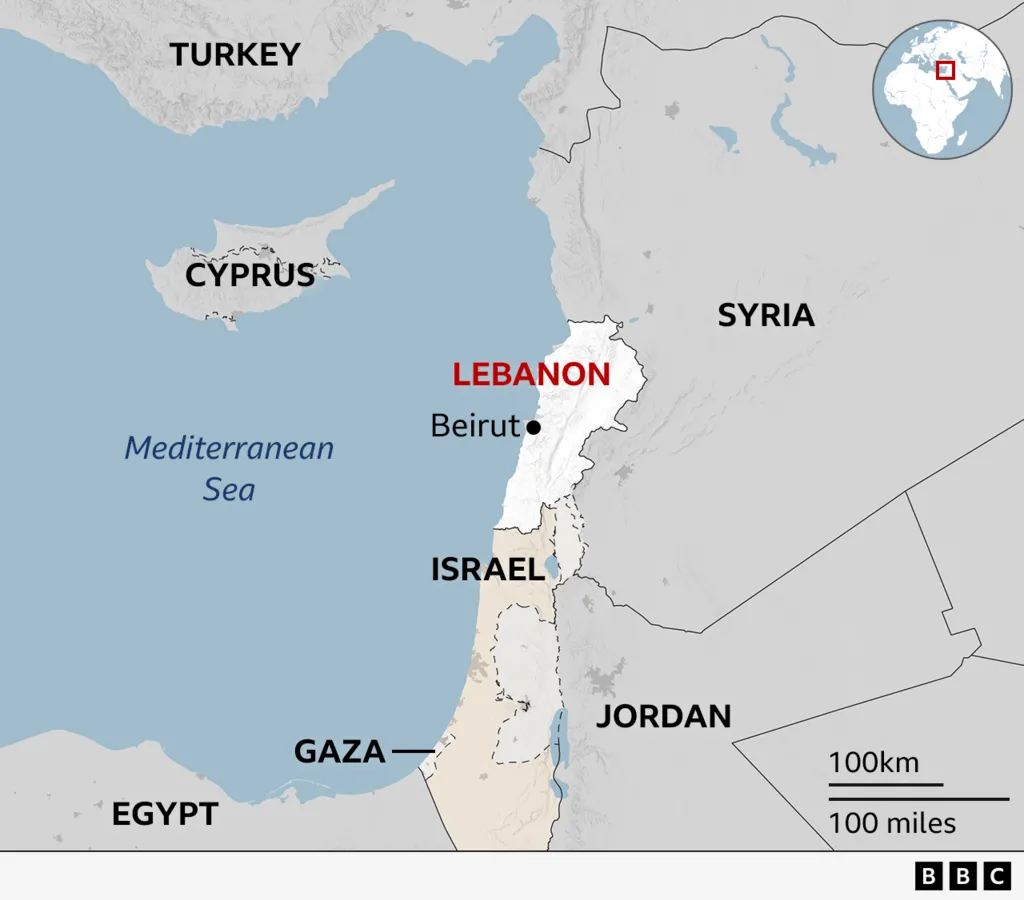
- US Secretary of State Marco Rubio announced a US-mediated framework agreement between Israel and Lebanon aimed at achieving lasting peace and security.
Background
- The announcement follows months of escalating conflict between Israel and Hezbollah, the Iran-backed Lebanese armed group.
- The initiative forms part of broader US efforts to de-escalate tensions in West Asia, following its recent memorandum of understanding with Iran.
Key Features
- The framework proposes a ceasefire, subject to Hezbollah halting attacks on Israel and withdrawing its fighters from southern Lebanon.
- It seeks to dismantle Hezbollah’s military infrastructure in southern Lebanon and restore the authority of the Lebanese government in the area.
- The United States will establish a Military Coordination Group for Lebanon to support implementation and has announced US$100 million in humanitarian assistance.
Concern
- Hezbollah is not a party to the agreement, raising doubts over its implementation.
Source: TH
Operation Amistad
Syllabus: GS2/IR
Context
- After devastating earthquakes struck Venezuela, India launched Operation Amistad to support relief and rescue efforts.
About
- Amistad, meaning “Friendship” in Spanish, is India’s Humanitarian Assistance and Disaster Relief (HADR) mission.
- India was among the first countries to respond, reflecting its commitment to the principle of Vasudhaiva Kutumbakam—“The World is One Family.” It also marks one of India’s longest-range humanitarian relief missions.
- As part of the operation, the Indian Air Force deployed two C-17 Globemaster aircraft carrying a 41-member rescue team, an Indian Army Field Hospital, over 35 tonnes of relief supplies and medical equipment, including two BHISHM Cube portable hospitals.
Source: AIR
Rural Internal Audit Portal
Syllabus: GS2/ Governance
Context
- The Union Minister for Rural Development launched the ‘Rural Internal Audit Portal’ during the Rashtriya Gramin Vikas Sammelan in New Delhi.
About
- Rural Internal Audit Portal is a first-of-its-kind unified digital platform for end-to-end management of internal audits covering both risk-based and compliance audits.
- It is conceived by the Office of the Chief Controller of Accounts (CCA), Ministry of Rural Development, and developed in collaboration with the National Informatics Centre (NIC).
Key Features
- End-to-End Digital Audit Management: Provides full online management of the audit lifecycle, from planning through to audit execution, report preparation, approvals and record keeping.
- Action Taken Reports and Para Settlement: It enables auditees to submit ATRs with supporting documents to facilitate digital review and settlement of audit observations.
- Centralized Audit Repository: A secure digital store for audit records, reports, observations and compliance history for future reference and analysis.
- Role Based Governance Framework: Secured, role specific access to Auditors, Auditees, Approving Authorities, Programme Divisions, States, Districts and Certified Internal Auditors.
- Geospatial Monitoring with Map View: Provides map based visualization for audit coverage, audit team deployment, compliance status and for pinpointing never audited audit units.
Source: PIB
Delhi EV Policy 2.0
Syllabus: GS2/ Governance
Context
- The Delhi Cabinet approved the Delhi Electric Vehicle (EV) Policy 2.0, which comes into force from 1 July 2026, with the objective of making Delhi a pollution-free city by 31 March 2030.
About
- The Government plans to invest about ₹15,000 crore over the next four years to promote electric mobility.
- The policy envisages expansion of charging infrastructure, vehicle scrapping facilities and other measures to accelerate the transition to electric mobility across the city.
Phased Transition to Electric Vehicles
- Three-Wheelers: From 1 January 2027 only electric autorickshaws will be registered in Delhi; registration of new petrol and CNG autorickshaws will cease.
- Two-Wheelers: From 1 April 2028 registration of new petrol and CNG two-wheelers will be discontinued, and only electric two-wheelers will be registered.
Financial Incentives & Subsidies
- Road Tax & Registration: The policy proposes 100% road tax and registration fee waivers for Battery Electric Vehicles (BEVs) priced up to ₹30 lakh.
- Hybrid Support: Strong hybrid vehicles priced up to Rs 30 lakh were proposed to receive a 50 per cent waiver on road tax and registration charges. EVs and hybrids costing above ₹30 lakh will not receive any tax exemptions.
- Buyers of electric three-wheelers will be eligible for incentives of ₹50,000, ₹40,000 and ₹30,000 in the first, second and third years, respectively.
- Buyers of N1 category electric trucks will receive a purchase incentive of up to ₹1 lakh.
- The policy also provides a scrapping incentive of ₹1 lakh for owners of BS-IV four-wheelers or below standard who scrap their vehicles and switch to electric vehicles.
Source: TH
NASA Rover Detects Potential Signs of Ancient Life on Mars
Syllabus: GS3/Space
Context
- In a new study in Science Advances, an international team of researchers has reported finding organic matter on Mars.
Mars
- Mars is the fourth planet from the sun and has a distinct rusty red appearance and two unusual moons.
- Phobos: ~6000 km above Mars; Deimos: ~20 000 km above Mars.
- Mars also has the largest volcanoes in the solar system, Olympus Mons being one of them.
- Gravity: 3.711 m/s2 (about one third of Earth’s gravity)
- Atmosphere: The temperature on Mars ranges between 20 degrees Celsius and -153 degrees Celsius.
- The planet has a rocky surface with canyons, volcanoes, dry lake beds, and craters, all covered in red dust.
- It has about one-third the gravity of Earth and the atmosphere is much thinner than Earth’s, containing more than 95% carbon dioxide and less than 1% oxygen.
- The planet turns on its axis more slowly than Earth, and being farther from the Sun, takes longer to revolve around the Sun.
- A day on Mars is 24.6 hours and a year is 687 Earth days long.
- Major Mars Missions: Mariner 4 (NASA), Viking 1 (NASA), Mars Express (European Space Agency), Mangalyaan (Mars Orbiter Mission) (ISRO), Hope Probe (Emirates Mars Mission) and current flagship rover Perseverance, which is collecting samples for a future Mars Sample Return mission.
Source: TH
Previous article
Black Market for ‘Fake Patents’
