


Syllabus: GS2/IR
Context
- PM Modi paid an official visit to Indonesia.
Major Outcomes of the Visit
- PM Modi was conferred Indonesia’s highest civilian honour, the Bintang Adipurna of the Republic of Indonesia, by the Indonesian President.
- India and Indonesia signed key defence agreements, including cooperation on the BrahMos supersonic cruise missile system and ASTRA beyond-visual-range air-to-air missiles.
- The two countries agreed to promote joint production of defence equipment, technology transfer, cooperation in shipbuilding, establishment of maintenance, repair and overhaul (MRO) facilities, exploration of defence research and development partnerships, and strengthening of defence supply chains.
- India and Indonesia signed an MoU on minerals and steel supply chain technology.
- They also agreed to a strategic joint venture between the Steel Authority of India Ltd. (SAIL) and PT Krakatau Steel to explore the establishment of a stainless-steel slab manufacturing facility in Indonesia.
- Both sides also welcomed progress towards operationalising Local Currency Transactions (LCT) guidelines between the Reserve Bank of India and Bank Indonesia, saying the initiative would promote bilateral trade and investment while deepening financial integration.
India-Indonesia Relation: A Brief Overview
- Foundation of Relations: The shared experience of colonialism, and common post-colonial goals drove India’s friendly bilateral relationship with Indonesia in the late 1940s and 1950s.
- In 1951, India and Indonesia signed a Treaty of Friendship which aimed at perpetual peace and unalterable friendship.
- Founding NAM: India and Indonesia became the voice of independence of Asian and African countries in the UN, which led to Bandung Conference of 1955, and the subsequent formation of Non-Aligned Movement in 1961.
- India and Indonesia were among the five founding leaders of NAM along with Yugoslavia, Egypt, and Ghana.
- Look East: Since the adoption of India’s ‘Look East Policy’ in 1991, and its upgradation to ‘Act East’ in 2014, there has been a rapid development of bilateral relations.
- Trade Relations: Indonesia is the second largest trading partner of India in the ASEAN region (after Singapore).
- Bilateral trade increased from $4.3 billion in 2005-06 to $38.84 billion in 2022-23 and $29.40 billion in 2023-24.
- India-Indonesia bilateral ties were elevated to a Comprehensive Strategic Partnership in 2018. The Shared Vision of India-Indonesia Maritime Cooperation in the Indo-Pacific was also adopted.
- Shared Platforms: Both nations actively participate in major international forums like BRICS, G20, IORA, and the East Asia Summit, fostering cooperation on global issues.
Significance of Indonesia for India
- Policy Alignment: India’s “Act East Policy” and “Indo-Pacific Oceans Initiative” align well with Indonesia’s “Global Maritime Fulcrum” vision, creating synergies for regional cooperation in areas like maritime security, connectivity, and economic development.
- Counterbalancing Influence: Indonesia’s strategic location and growing influence can help counterbalance China’s growing dominance in the Indo-Pacific region, aligning with India’s strategic interests.
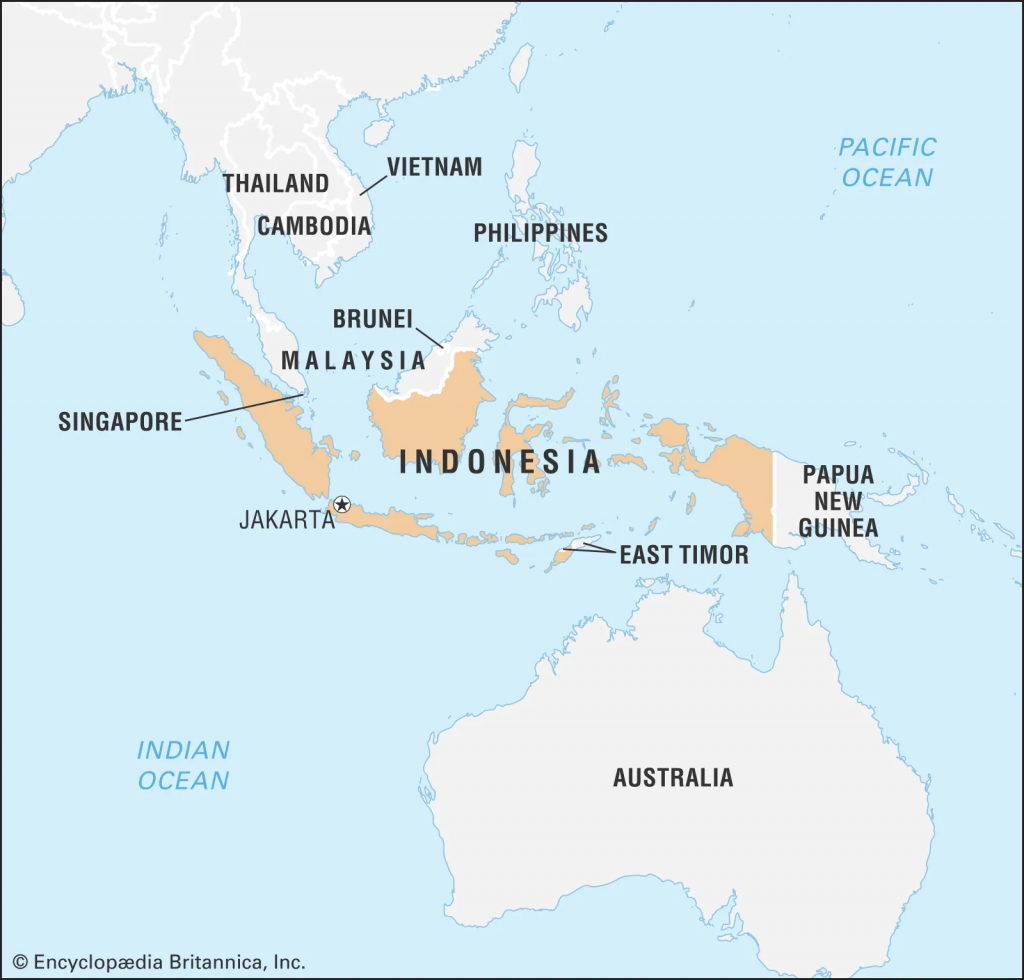
- Maritime Security: Indonesia’s strategic location between the Indian and Pacific Oceans makes it a crucial partner for maintaining maritime security and stability in the region.
- Counter-terrorism: Cooperation in counter-terrorism efforts is essential, given the shared challenges posed by extremism and transnational crime.
- Deep-rooted Cultural Ties: Historical and cultural ties, particularly the influence of Hindu traditions and epics like the Ramayana and Mahabharata, foster strong people-to-people connections between the two nations.
- Tourism Potential: These shared cultural roots can be leveraged to boost tourism and cultural exchanges between the two countries.
Challenges in Relations
- Trade Imbalance: The trade balance is often skewed in favor of Indonesia, mainly due to high imports of palm oil and coal. Both nations are looking for ways to diversify trade to reduce this imbalance.
- Regional Tensions: There are challenges posed by regional tensions and the changing dynamics in the Indo-Pacific, particularly with the rise of China. Both countries are navigating these pressures while maintaining their strategic partnership.
Concluding remarks
- India and Indonesia enjoy a multi-faceted and growing relationship, underpinned by historical ties, economic collaboration, and shared security concerns.
- Both countries have great potential to further deepen their partnership in the coming years, with a focus on regional stability, economic growth, and cultural exchange.
Source: DD News
Previous article
News In Short 07-07-2026
