


Ru-Soam Bridges
Syllabus: GS1/ Culture; GS3/ Environment
Context
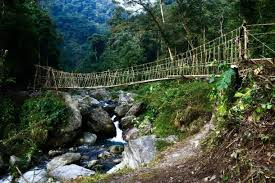
- UNESCO has partnered with the Government of Sikkim to document indigenous Ru-Soam (cane bridge) engineering practices.
- The project is being implemented in the Khangchendzonga Biosphere Reserve with support from Airbnb.
About Ru-Soam Bridges
- Ru-Soam are traditional cane bridges built by the Lepcha community.
- These bridges are constructed using locally available natural materials such as bamboo, cane, and wood.
- They demonstrate a high level of ecological understanding and structural resilience suited to mountainous terrain.
- The bridges proved their resilience during the Sikkim Glacial Lake Outburst Flood 2023.
Source: IE
Tanzania
Syllabus: GS1/Geography
In News
- Recently, the 5th session of the India–Tanzania Joint Trade Committee (JTC), held in Dar es Salaam in Tanzania.
Tanzania
- It is an East African country located just south of the Equator.
- The capital is Dodoma, and Dar es Salaam is the largest city and main port.
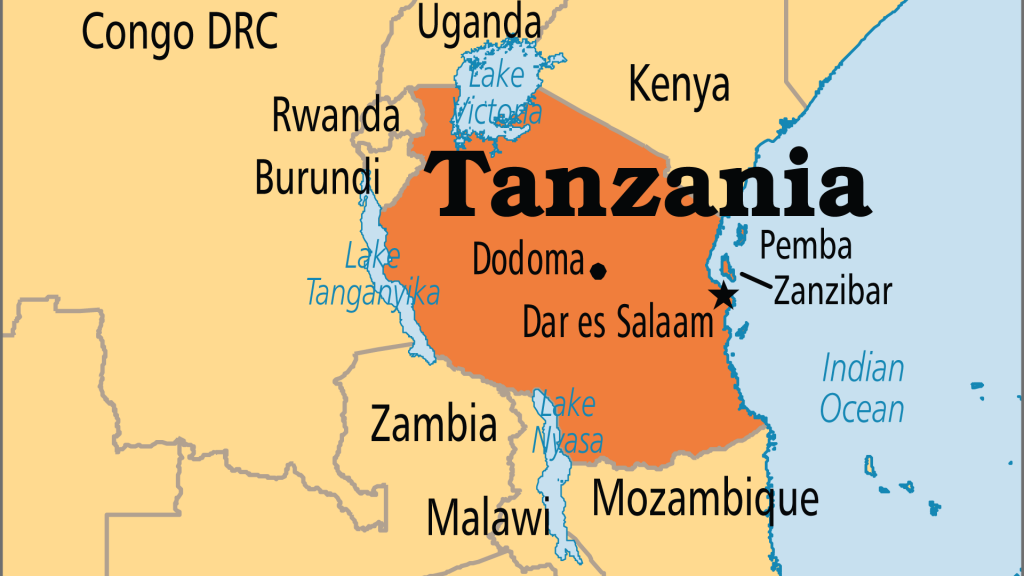
- It is bordered by Uganda, Kenya, and Lake Victoria to the north; the Indian Ocean to the east; Mozambique, Malawi, Zambia, and Lake Nyasa to the south; and Rwanda, Burundi, and Lake Tanganyika to the west.
- Geographical features: Mount Kilimanjaro Located in Tanzania,
- Mount Kilimanjaro is the African continent’s highest peak
- Tanzania also includes a portion of Lake Victoria, the largest lake in Africa and a source of the Nile River.
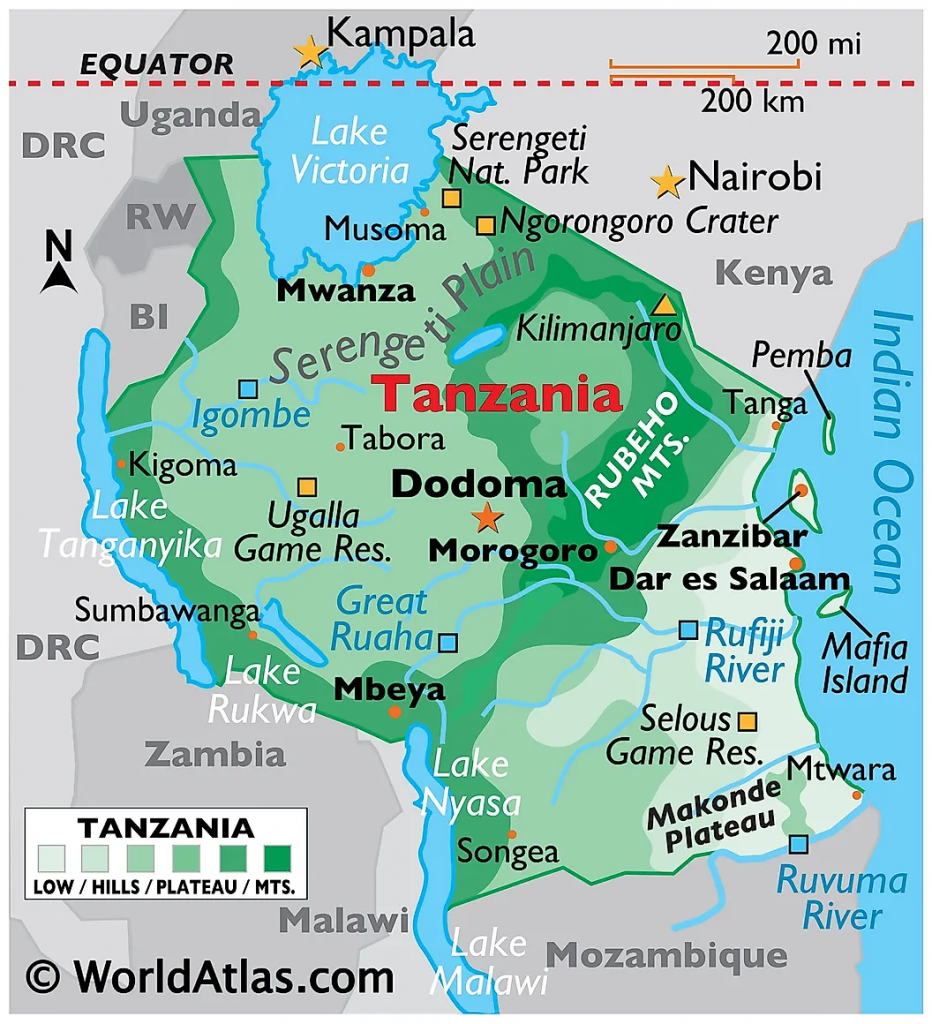
- Several rivers course through Tanzania, including the Great Ruaha, Rufiji, and Kagera rivers
- Lake Tanganyika, forms the boundary between Tanzania and the Democratic Republic of the Congo.
Cooperation with India
- India and Tanzania have strengthened their economic partnership, with bilateral trade reaching $9.02 billion in 2025–26, up from $8.64 billion the previous year.
- Both countries agreed to deepen cooperation by improving trade mechanisms, exploring local currency settlements, easing visa processes for businesspersons, and addressing tariff and regulatory barriers
- Key sectors of collaboration include pharmaceuticals, healthcare, mining, agriculture, education, and digital technology.
Source : TH
Model Code of Conduct (MCC)
Syllabus: GS2/ Polity and Governance
Context
- The recent broadcast by PM Modi has revived debate on whether the Model Code of Conduct (MCC) adequately regulates the use of public resources and government platforms during elections.
What is the Model Code of Conduct (MCC)?
- It is a set of guidelines issued by the Election Commission to regulate the campaigning of political parties and candidates during elections.
- The MCC aims to ensure free and fair elections, maintain a level playing field, and promote ethical political behaviour.
Evolution of the MCC
- The MCC was first drafted by the Kerala government in 1960 to regulate election campaigns. The Election Commission formalised the MCC in 1968 to ensure uniform application across the country.
- The MCC was revised in 1974 to expand its scope and applicability.
- The MCC was strictly enforced from 1991 under T. N. Seshan, which enhanced its credibility.
Constitutional and Legal Basis
- The MCC is not a statutory law but derives its authority from Article 324 of the Constitution, which empowers the Election Commission to conduct elections.
- Certain provisions of the MCC may be enforced through invoking corresponding provisions in other statutes such as the Indian Penal Code, 1860, Code of Criminal Procedure, 1973, and Representation of the People Act, 1951.
- The Supreme Court in Mohinder Singh Gill v. Chief Election Commissioner (1978) held that Article 324 provides wide powers to the Election Commission to ensure free and fair elections.
- The Punjab and Haryana High Court in Harbans Singh Jalal v. Union of India (1997) held that the MCC came into force from the date of announcement of the election schedule.
Source: TH
Supreme Court Brings Survivors of Forcible Acid Ingestion under Rights of Persons with Disabilities Act
Syllabus: GS2/Governance
Context
- The Supreme Court included persons who were forcibly administered acid within the definition of ‘acid attack victims’ under the Rights of Persons with Disabilities Act, 2016.
About
- The 2016 law recognised only victims of acid-throwing, and not forcible acid ingestion.
- The survivors of forcible administration of acid in the category of ‘acid attack victims’ would be deemed to be operative retrospectively from the inception of the Act in 2016.
- It directed that ‘acid attack victims’ shall also include those administered acid, and further, include those who have suffered internal injury even if there is no visible disfigurement.
- The deemed recognition would aid victims of forcible acid ingestion to claim disability benefits due under the 2016 Act.
- The court had suggested framing a comprehensive policy framework to protect the survivors, who, even if they survived, require extensive and continuous medical treatment.
Source: TH
Rashtriya Bal Swasthya Karyakram (RBSK) 2.0 Guidelines
Syllabus: GS2/Governance
In News
- The Ministry of Health and Family Welfare released the Rashtriya Bal Swasthya Karyakram (RBSK) 2.0 Guidelines at the recently concluded National Summit on Good Practices and Innovations in Public Healthcare Service Delivery.
Rashtriya Bal Swasthya Karyakram (RBSK)
- It is a program to improve the overall quality of life of children and provide comprehensive care to all the children in the community.
- It involves screening of children from birth to 18 years of age for four Ds- Defects at birth, Diseases, Deficiencies and Development delays, spanning 32 common health conditions for early detection and free treatment and management, including surgeries at tertiary level.
- Children diagnosed with identified health conditions are provided early intervention services and follow-up care at the district level.
Rashtriya Bal Swasthya Karyakram (RBSK) 2.0 Guidelines
- 4Ds approach strengthened: It broadens the established 4Ds approach – Defects at Birth, Diseases, Deficiencies and Developmental Delays, while incorporating new-age health challenges including non-communicable diseases, mental health conditions, and behavioural concerns.
- Comprehensive care approach : It adopts a comprehensive care approach—covering prevention, promotion, and treatment—for children from birth to 18 years, with a stronger focus on digitalization, aiming to support holistic growth beyond mere survival.
- Screening and Detection: It expands screening to include developmental disorders, mental health issues, and risk factors for non-communicable diseases, with services delivered through Mobile Health Teams at Anganwadi Centres and schools to ensure early detection and universal coverage.
- Digital health : It strengthens digital health by introducing digital health cards, real-time data systems, and integrated platforms, improving efficiency, accountability, and evidence-based decision-making.
- Coordination : It promotes coordination between health, education, and women and child development sectors, using schools, Anganwadi Centres, and community platforms for integrated screening, awareness, and follow-up care.
Source :PIB
Hantavirus Outbreak
Syllabus: GS3/Science
Context
- Three passengers on a cruise ship in the Atlantic Ocean have died after a suspected hantavirus outbreak, according to the World Health Organization (WHO).
About
- Hantavirus is a rare but severe zoonotic disease, meaning it spreads from animals to humans. It belongs to the Hantaviridae family and is an RNA virus.
- The virus is primarily spread by rodents such as mice and rats. It spreads through inhalation of airborne particles from infected rodent urine or droppings, or by touching contaminated surfaces.
- Human-to-human transmission is generally rare.
- The disease usually begins with flu-like symptoms such as fever and fatigue within one to eight weeks after exposure.
- In severe cases, it can lead to Hantavirus Pulmonary Syndrome, which may cause respiratory distress and can be fatal.
- There are no specific drugs to treat the disease, so treatment focuses on supportive care, including putting patients on ventilators in severe cases.
Source: DTE
Girmitiya Communities
Syllabus: Miscellaneous
Context
- The External Affairs Minister will embark on an official visit to Jamaica, Suriname and Trinidad and Tobago.
- These countries share a special connection with India owing to the presence of Girmitiya communities.
About
- Girmitiya Community: “Girmitiyas” were Indian labourers who left India in the mid to late 19th century to work in British colonies, where many eventually settled.
- The term “Girmit” is a mispronunciation of “Agreement,” referring to the contract under which they migrated.
- The labourers were taken to colonies like Mauritius, Fiji, Trinidad and Tobago, South Africa, etc.
- They have strong links with Bihar and Eastern UP and have a bhojpuri-speaking heritage.
Source: AIR
Previous article
Forest Rights Act (FRA), 2006
