


Syllabus: GS1/ Geography
Context
- A recent study from Utrecht University examines whether constructing a dam across the Bering Strait could help stabilize the Atlantic Meridional Overturning Circulation.
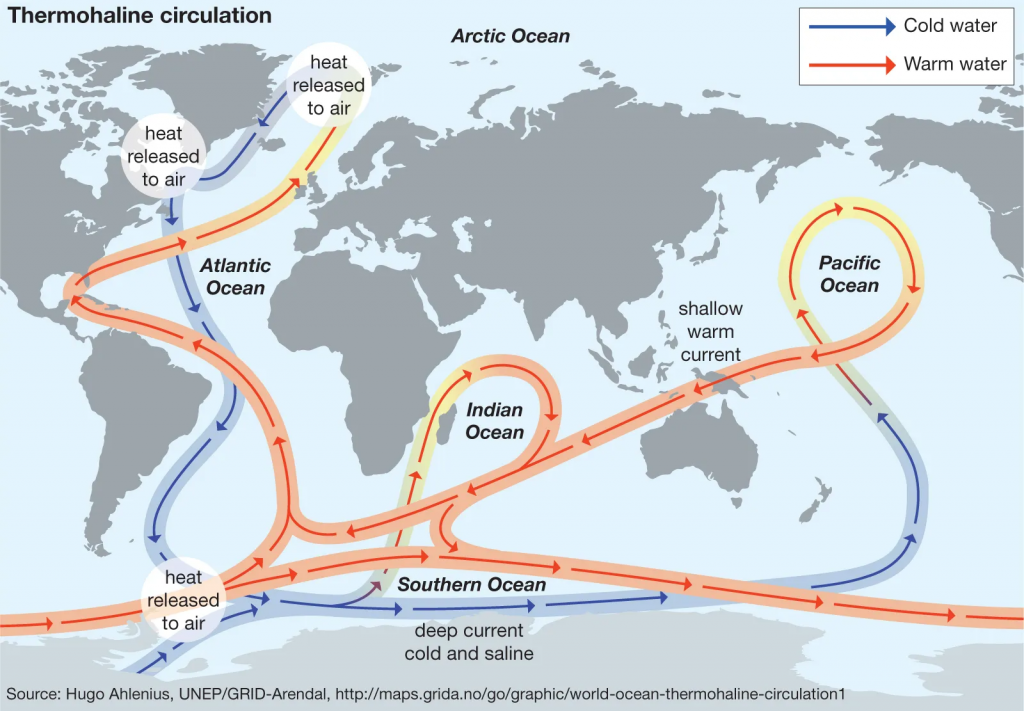
Atlantic Meridional Overturning Circulation (AMOC)
- The AMOC is a vast ocean current system in which warm, salty surface water flows northward, cools, becomes denser, sinks in the North Atlantic, and then returns southward at deeper levels.
- The AMOC is essential for regulating the Earth’s climate, as it redistributes heat from the tropics to higher latitudes and helps maintain temperature balance across regions.
- Variations in temperature and salinity, particularly due to the influx of freshwater from melting ice sheets, can reduce water density, weaken the sinking process, and thereby slow down or disrupt the Atlantic Meridional Overturning Circulation.
Mechanism of Bering Strait Closure
- The Bering Strait connects the Pacific Ocean with the Arctic Ocean and allows freshwater inflow into the Arctic.
- The idea of altering ocean circulation through a dam was proposed in the 1960s by Petr Mikhailovich Borisov.
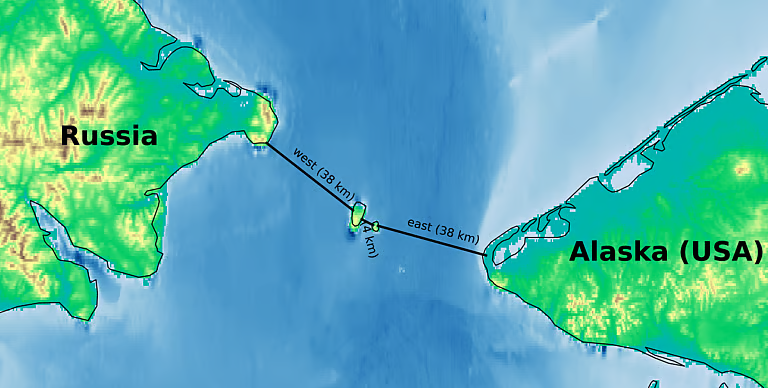
- The proposed Bering Strait Dam consists of three separate parts:
- A part between the Russian mainland and the island of Big Diomede (38 km),
- A part between Big Diomede and Little Diomede (4 km), and
- An eastern part between Little Diomede and Alaska (38 km).
- Significance: Constructing a dam across the Bering Strait could reduce freshwater inflow and maintain higher salinity in the North Atlantic.
- Higher salinity could support deep water formation and potentially stabilise the Atlantic Meridional Overturning Circulation.
What are the Challenges?
- Technical and Geographical Constraints: The Bering Strait is about 80 kilometres wide and located in a remote region with limited infrastructure. Construction and maintenance of such a dam would be extremely difficult and costly.
- Ecological Impacts: The Bering Strait serves as an important migration route for marine mammals. Altering currents and salinity could disrupt Arctic ecosystems and biodiversity.
- Geopolitical Issues: The Bering Strait lies between Russia and the United States. The project raises concerns regarding decision-making authority and responsibility for consequences.
- Ethical Concerns: The proposal represents large-scale geoengineering involving deliberate climate intervention.
- There is a risk of unintended consequences and long-term environmental impacts.
Way Ahead
- Scientific research on the Atlantic Meridional Overturning Circulation should be strengthened through better climate models, long-term ocean monitoring, and international data sharing.
- Geoengineering options such as closing the Bering Strait should be treated only as experimental and last-resort measures, not as substitutes for mitigation.
- Any large-scale geoengineering intervention must be guided by global governance frameworks, transparency, and consent of affected countries.
Source: DTE
Previous article
West Bengal Tea Workers Invoke ILO Article 24
