


Kurumbas
Syllabus: GS1/Society
In News
- The number of speakers of a Kurumbas language has been declining across generations.
About
- The Kurumbas of Keralam are an Adivasi community who reside in the hilly forest regions of Attappady in Palakkad district.
- They are locally known as Palu Kurumbas (distinguishing them from the Alu Kurumbas of the Nilgiris); they represent the most aboriginal and smallest of the three major tribal groups in Attappady (alongside the Irulas and Mudugas).
- The community has been classified as a Particularly Vulnerable Tribal Group (PVTG) by the Ministry of Tribal Affairs, Government of India. They are one of the five PVTGs in Keralam.
- The community members speak Kurumba, an oral language with no script.
- Kurumba language belongs to the Dravidian family and is primarily associated with tribal communities in the Western Ghats, particularly parts of Kerala, Tamil Nadu and Karnataka.
- The Kurumba people often have to live in areas quite far from their native land, primarily for education and employment.
Source :TH
Chhath Puja
Syllabus: GS1/Culture
Context
- Chhath Puja songs played at Mumbai railway stations triggered a political row.
What is Chhath Puja?
- Chhath is one of India’s oldest festivals, dedicated to worshipping Surya, the Sun God, and Chhathi Maiya or Shashti (the sister of Surya).
- It is celebrated with particular devotion in Bihar, Jharkhand, and eastern Uttar Pradesh, as well as by migrant communities across India and abroad.
- The four-day festival involves rigorous fasting and offering Arghya to both the setting and rising Sun.
- Known for its ecological ethos, Chhath promotes reverence for nature, cleanliness, and community participation.
Four Days of Chhath Puja
- Nahay-Khay: Devotees take a ritual bath, clean their homes, and prepare traditional food for the festival.
- Kharna: Devotees observe a day-long fast and break it in the evening after offering prayers. This is followed by a rigorous fast lasting approximately 36 hours.
- Sandhya Arghya: On the third day, devotees offer prayers to the setting Sun, often standing in rivers or ponds. They also prepare offerings such as fruits, sugarcane, and thekua.
- Usha Arghya: On the final day, devotees offer prayers to the rising Sun. The rituals conclude with the breaking of the approximately 36-hour fast.
Do you know?
- India has nominated Chhath Mahaparva for UNESCO’s Intangible Cultural Heritage list for the 2026–27 cycle.
Source: ET
Drop in Tuberculosis (TB) Mortality in India
Syllabus: GS2/ Health
Context
- According to the WHO Global Tuberculosis Report 2026, India has seen a 38% reduction in tuberculosis (TB) mortality since 2015, compared to a global average of 35%.
Findings of the Report
- An estimated 10.6 million people developed TB in 2025, while 1.13 million people died from the disease.
- Regional distribution: The WHO South-East Asia Region accounted for 35% of new TB cases, followed by the Western Pacific (27%) and African Region (25%).
- Concentration of cases: Around 88% of new TB cases occurred in 30 high-burden countries.
- India accounted for approximately 25% of global cases, followed by Indonesia (10%), the Philippines (6.8%), China (6.5%) and Pakistan (6.4%).
- India recorded a 94% treatment success rate among patients with drug-susceptible TB.
What is Tuberculosis?
- Tuberculosis (TB) is an infectious disease that mostly affects the lungs and is caused by the bacteria Mycobacterium tuberculosis.
- It spreads through the air when infected people cough, sneeze or spit.
- TB can be in two forms: Latent TB infection and active TB disease.
- In latent TB infection, the bacteria are present in the body, but the immune system keeps them in check, and the person does not exhibit symptoms.
- However, the bacteria can become active later, leading to active TB disease. The symptoms include a chronic cough, chest pain, weight loss, exhaustion, fever.
- Symptoms: prolonged cough (sometimes with blood), chest pain, weakness, fatigue, weight loss, fever, night sweats.
- The symptoms people get depend on where in the body TB becomes active. While TB usually affects the lungs, it also affects the kidneys, brain, spine and skin.
- Treatment: Tuberculosis is preventable and curable.
- Tuberculosis disease is treated with antibiotics.
- TB Vaccine: The Bacillus Calmette-Guérin (BCG) vaccine remains the only licensed vaccine against TB; it provides moderate protection against severe forms of TB (TB meningitis) in infants and young children.
Source: TH
22nd Foundation Day of the Protection of Plant Varieties and Farmers’ Rights Authority (PPVFRA)
Syllabus: GS3/Economy
Context
- 22nd Foundation Day of the Protection of Plant Varieties and Farmers’ Rights Authority (PPVFRA) and the Plant Genome Saviour Award Ceremony were held recently.
The Protection of Plant Varieties and Farmers’ Rights Authority (PPV&FRA)
- The PPV&FRA is a statutory body established to protect plant breeders’ rights while recognising and safeguarding farmers’ rights.
- The Authority was established in 2005.
- It functions under the Ministry of Agriculture and Farmers Welfare.
- It is established under the Protection of Plant Varieties and Farmers’ Rights (PPV&FR) Act, 2001.
- The Act was enacted to comply with India’s obligations under the WTO’s TRIPS Agreement.
- Major Functions:
- Registers new, extant and farmers’ plant varieties.
- Maintains the National Register of Plant Varieties.
- Documents and preserves farmers’ varieties and traditional plant genetic resources.
- Facilitates benefit-sharing between plant breeders and farming communities.
- Recognises and rewards farmers and communities for conserving plant genetic resources.
- Awards:
- Plant Genome Saviour Community Award: Recognises farming communities for conserving and improving plant genetic resources.
- Plant Genome Saviour Farmer Reward: Recognises individual farmers for their contribution to conservation and improvement of traditional plant varieties.
Protection of Plant Variety and Farmers’ Rights Act (PPV&FRA Act) 2001
- Aim: To provide for the establishment of an effective system for the protection of plant varieties, the rights of farmers and plant breeders and to encourage the development of new varieties of plants.
- The legislation recognizes the contributions of both commercial plant breeders and farmers in plant breeding activity and also provides to implement TRIPs to support the specific socio-economic interests of all the stakeholders.
- Significance:
- Balances innovation and farmers’ traditional rights.
- Promotes agrobiodiversity conservation.
- Enhances seed industry growth while protecting rural livelihoods.
Source: PIB
India Retail Inflation Breaches RBI’s Limit
Syllabus: GS3/ Economy
Context
- According to the data released by the Ministry of Statistics and Program Implementation (MoSPI), India’s retail inflation increased to a two-year high of 6.09 per cent in October 2026.
About
- The Central Government decides the inflation target in cooperation with the RBI under Section 45ZA of the RBI Act, 1934.
- For the period April 2026–March 2031, the inflation target is 4%, with a tolerance band of 2–6%.
Trends in Retail Inflation
- Food inflation climbed to 8.94% from 7.74%, driven by rising prices of essential food items and vegetables.
- Erratic weather, crop diseases and rising global commodity costs amid the West Asia conflict are adding to concerns over food prices.
- Rural inflation reached 6.63%, compared with 5.41% in urban areas, highlighting sharper price pressures in rural India.
- Major Contributors: Food and beverages remained the principal contributors to the increase in headline CPI inflation.
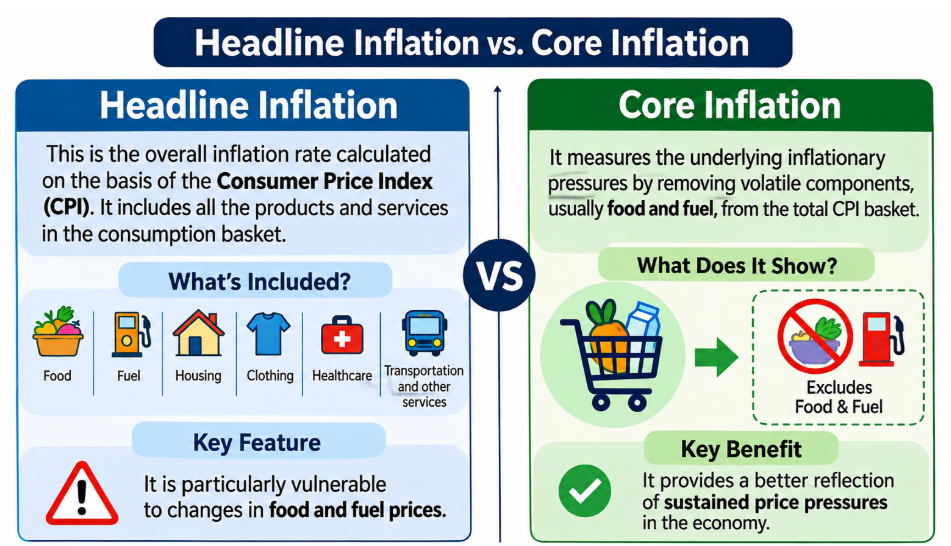
Consumer Price Index (CPI)
- CPI measures changes in the average retail prices of a basket of goods and services consumed by households over time. It is used to measure retail inflation.
- Released by: National Statistics Office (NSO), under MoSPI.
- Base Year: 2024
Source: DTE
Indian Bramble Shark
Syllabus: GS3/Species In News
In News
- Scientists from the Zoological Survey of India (ZSI) and the ICAR-Central Marine Fisheries Research Institute (ICAR-CMFRI) have identified a new species of deep-sea shark from the Indian Ocean.
Deep-sea shark
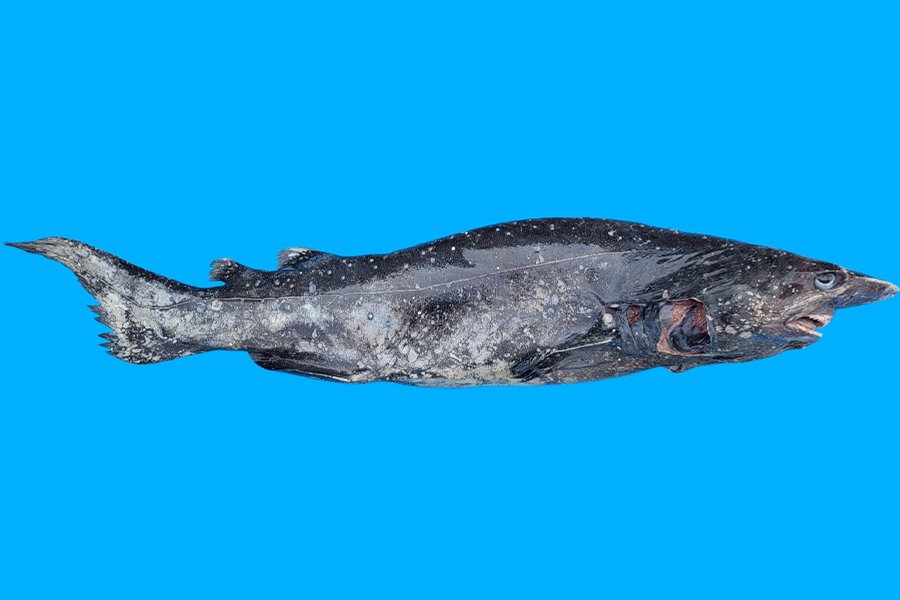
- It was formally named Echinorhinus roinee and it was earlier misidentified for several decades as the Atlantic bramble shark.
- It is commonly known as the Indian Bramble Shark.
- It inhabits continental slope waters at depths ranging from 350 to 450 metres and can grow up to three metres in length.
- Its distribution may extend across the waters of Oman, Sri Lanka and Thailand.
- It has a dark brown to blackish body covered with prominent thorn-like dermal denticles, which fuse into multi-pointed plates as the shark matures.
- It represents a distinct Indian Ocean lineage, genetically separate from the Atlantic bramble shark (Echinorhinus brucus) and the Pacific prickly shark (Echinorhinus cookei).
Source: PIB
Rattlepod (Crotalaria retusa)
Syllabus: GS3/ Environment
In News
- The grasslands of Yellapatty near Munnar in Kerala’s Idukki district have turned golden following the mass flowering of Rattlepod (Crotalaria retusa), locally known as Kilukilukki.
About Rattlepod
- Family: Fabaceae (Legume/Pea family).
- Genus: Crotalaria, comprising over 700 species globally.
- Habitat: Found in tropical and subtropical grasslands, forest margins, riverbanks and disturbed soils.
- Distribution: The Western Ghats have 87 species of Crotalaria, of which 31 are endemic to peninsular India.
Key Characteristics
- Flowers: Bright golden-yellow, pea-like flowers with reddish veins.
- Nitrogen Fixation: Root nodules help fix atmospheric nitrogen and improve soil fertility.
- Toxicity: Contains pyrrolizidine alkaloids, particularly in seeds, which can be harmful to livestock and poultry.
Ecological Significance
- Supports butterfly species such as Blue Tigers, Striped Tigers and Common Crows, which use plant alkaloids for chemical defence and pheromone production.
- Acts as a pioneer species and helps improve soil fertility.
Source: TH
Previous article
2026 Global Carbon Budget
Next article
News In Brief 13-11-2026
