

Endometriosis
Syllabus: GS2/Health
Context
- A first-of-its-kind Indian study has identified 21 genetic regions linked to endometriosis, offering new clues to why some women may be more prone to the disease.
About Endometriosis
- Endometriosis affects an estimated 10% (190 million) of reproductive age women worldwide.
- In endometriosis, endometrium-like tissue (usually found only in the lining of the uterus) grows outside the uterus, causing inflammation and scar tissue formation.
- Symptoms include: severe pain during menstruation; heavy menstrual bleeding; chronic pelvic pain ; infertility; and abdominal bloating and nausea.
- Endometriosis most commonly occurs in the pelvis but in some women, occurs elsewhere in the body, including the abdomen and chest.
- Endometriosis can impact sexual intercourse, bowel movements and/or urination; and mental health (including depression and anxiety).
- The causes of endometriosis are unknown. Emerging research suggests that endometriosis is associated with immune system dysregulation.
- There is currently no cure for endometriosis; access to early diagnosis and effective treatment of endometriosis is limited in many settings and treatment aims to control symptoms and limit long-term impacts.
Source: IE
Orangutan
Syllabus: GS3/ Environment
Context
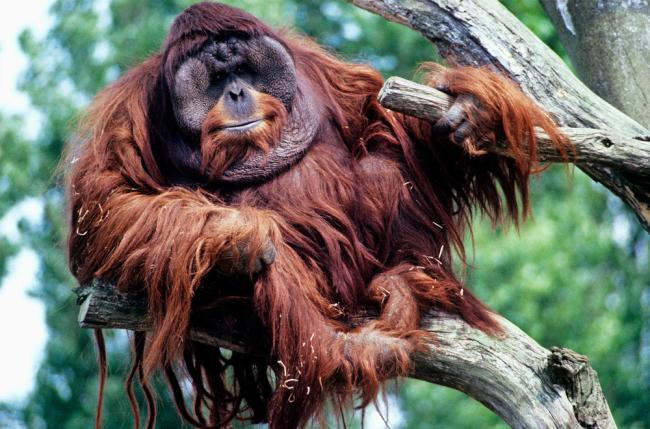
- The Odisha Forest Department rescued five young orangutans after they were found abandoned in a casuarina plantation in the Udayapur-Talsari forest area of Balasore district.
About Orangutan
- Characteristics: Orangutans are the largest arboreal mammal, spending most of their time in trees.
- They are the closest living relatives of humans and they share 96.4% of Human genes and are highly intelligent creatures.
- There are three species of Orangutan – the Bornean, Sumatran and Tapanuli – which differ a little in appearance and behavior.
- Eating habitats : Orangutans mainly eat fruits, such as mangoes, lychees and figs, but they also feed on young leaves, flowers, insects, and even small mammals.
- Habitat and Distribution: They can occur up to 1,500m above sea level, most are found in lowland areas and prefer forests in river valleys or floodplains.
- These great apes are only found in the wild on the islands of Borneo and Sumatra.
- IUCN status: All three orangutan species are critically endangered.
Source: TH
Anti-smog Guns
Syllabus: GS3/Environment
In News
- The Delhi government has approved spending ₹100 crore for 1,000 truck-mounted “anti-smog” guns to be operated across the city in the winter months over three years.
Anti-smog gun
- Anti-smog guns are equipment that spray the atmosphere with fine droplets of nebulised water to absorb the smallest dust and contaminated particles.
- The gun is attached to a water tank which is on a truck.
- It is built in such a way that, by passing through high-pressure nozzles, it turns the water into a fine spray with droplets of a size of 50-100 microns.
Importance
- It reduces air pollution by binding dust and other particulate matter (PM2.5 and PM10) and carrying them down to the ground level along with water.
- It creates a canopy effect and works like rain to bring down the suspended particles wafting in the atmosphere.
- It contains air pollution in cities, and it also helps in controlling industrial dust in mining, grinding, coal, and stone crushing.
Source: HT
Permafrost Melting
Syllabus: GS3/Environment
In News
- According to a recent study, melting permafrost in the Arctic could cause infrastructure damage worth $261 billion by the middle of the 21st century.
Permafrost
- Permafrost is any ground that remains completely frozen — 32°F (0°C) or colder — for at least two years straight.
- These permanently frozen grounds are most common in cold regions.
- These include high mountains and Earth’s higher latitudes — near the North and South poles.
- It covers about 24 per cent of the Northern Hemisphere, including large areas of Alaska, Canada, and Siberia
- It is made of a combination of soil, rocks, and sand that are held together by ice.
- The soil and ice in permafrost stay frozen all year long.
Impacts of climate change
- Permafrost loss, also known as permafrost thaw, is the progressive loss of ground ice in permafrost, usually due to the input of heat.
- Global warming patterns are causing permafrost to melt.
- This melting releases previously stored greenhouse gases.
- Climate warming is accelerating the thawing of permafrost and melting ground ice and destabilising soils, which can ruin buildings, roads and other infrastructure in northern communities.
- Thawing also activates microorganisms that break down previously frozen organic detritus, releasing CO2 and methane and generating a positive feedback that further enhances warming.
- It might also release ancient bacteria and viruses frozen in the soil.
Source: DTE
Slumping: A Soft-coral Threat
Syllabus: GS3/Environment
Context
- UNESCO-listed soft corals, mostly around uninhabited islets south of Jeju, South Korea are showing the ‘slumping’ phenomenon.
About
- Unlike hard corals supported by rigid calcium carbonate skeletons, soft corals rely on internal fluid pressure to keep upright.
- Environmental changes can disrupt that pressure, leading them to slump or collapse.
- Weather conditions and water flowing down from China’s Yangtze River are affecting the area’s salinity triggering slumping.
There are two main types of corals: hard corals and soft corals.
- Soft corals are soft and bendable and often resemble plants or trees.
- These corals do not have stony skeletons and are non-reef-building corals—instead, they grow wood-like cores and fleshy rinds for protection. Like hard corals, they tend to live in colonies.
- Hard corals grow in colonies and are often referred to as “reef-building corals.”
- Hard corals create skeletons out of calcium carbonate, a hard substance that eventually becomes rock.
- Over time, this rock builds up to form the foundation of a coral reef and provides a structure upon which baby corals can settle.
- Hard corals depend upon tiny algae called zooxanthellae that live inside them.
- Together, they share a symbiotic relationship—the corals provide the zooxanthellae with shelter, and in return, the zooxanthellae provide the corals with food.
Source: TH
Plug-in Hybrid Electric Vehicle (PHEV)
Syllabus: GS3/Science and Technology
Context
- JSW MG Motor India has rolled out Hector Tomahawk in Battery Electric Vehicle (EV) and Plug-in Hybrid Electric Vehicle (PHEV) variants, indicative of the rising diversity in India’s clean-mobility environment.
Plug-in Hybrid Electric Vehicle (PHEV)
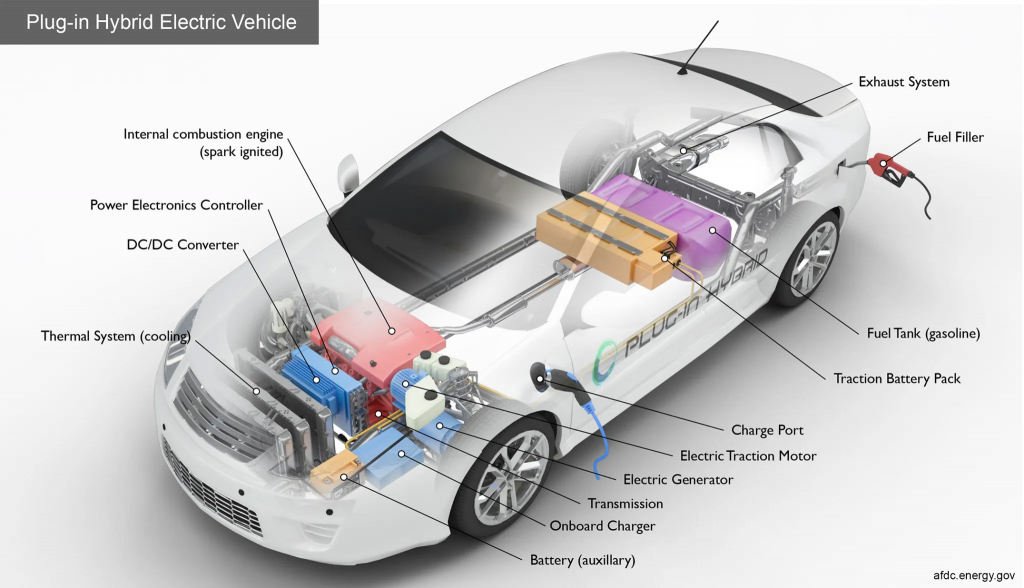
- A Plug-in Hybrid Electric Vehicle PHEV combines an internal combustion engine (ICE) with an electric motor and a rechargeable battery such that the vehicle can run on electric power, the engine or both.
- A PHEV is similar to a normal hybrid electric car (HEV), but has a larger battery and can be charged by plugging the car into an electrical source, in addition to charging through regenerative braking and the engine.
- Its larger battery provides a longer electric-only driving range, enabling short-distance journeys to be completed primarily on electricity, while the ICE provides greater range for long-distance travel and reduces range anxiety.
- PHEVs, however, tend to be more expensive and physically complex than conventional vehicles.
Source: IE
Veer Guardian-2026
Syllabus: GS3/Defence
Context
- The India-Japan bilateral air exercise, Veer Guardian-2026, began at Air Force Station Jodhpur.
About
- The inaugural edition of the bilateral air exercise was held in 2023. Veer Guardian-2026 aims to enhance tactical proficiency and aerospace operational synergy, reflecting the deepening strategic partnership between India and Japan.
Do you know?
- The JIMEX series of exercises between India and Japan began in 2012, with a focus on strengthening maritime security cooperation.
Source: PIB
Previous article
Sea-level Rise is a Threat to Fundamental Human Rights: UN Report
Next article
News In Short 09-09-2026
