

Acharya Vinoba Bhave
Syllabus: GS1/History
In News
- The Prime Minister paid homage to Acharya Vinoba Bhave on the occasion of his birth anniversary.
Acharya Vinoba Bhave
- He was born on September 11, 1895 and was a renowned spiritual leader, freedom fighter, and social reformer.
- He was deeply influenced by Mahatma Gandhi after reading about his speech in 1916 and abandoned formal education and joined Gandhi at the Kochrab Ashram.
- He was often regarded as Gandhi’s spiritual successor and the National Teacher of India.
Contributions
- He founded the Gramseva Mandal in 1934 to organize village service activities.
- He is best known for leading the Bhoodan Movement (1951), a voluntary and non-violent movement aimed at redistributing land to landless peasants.
- He became a key figure at Sabarmati Ashram, contributing to Khadi, village industries, Nai Talim, and sanitation initiatives.
- He also translated the Bhagavad Gita into Marathi, naming it Geetai.
| About Bhoodan Movement – It is also called the ‘Bloodless Revolution‘, was a voluntary land reform movement initiated by Vinoba Bhave in 1951. – He launched the movement in Telangana, when a landlord offered 100 acres of land to landless villagers. 1. This sparked a wider campaign encouraging voluntary land donations to the poor. – It also promoted concepts like Sampattidan (Wealth-gift) and Shramdan (Labour-gift), aimed at uplifting marginalized communities. 1. It gained international recognition, especially in Britain, influencing various social policies. |
Source :PIB
Commonwealth Parliamentary Association (CPA)
Syllabus: GS2/ Polity
In News
- Lok Sabha Speaker Om Birla inaugurated the 11th Commonwealth Parliamentary Association (CPA) India Region Conference at Bengaluru.
About Commonwealth Parliamentary Association (CPA)
- Founded: In 1911 as the Empire Parliamentary Association and renamed in 1948 as CPA.
- Objectives: Voluntary association of national, state, provincial and territorial parliaments in the Commonwealth of Nations.
- Promote parliamentary democracy within the Commonwealth.
- Foster good governance, transparency and accountability.
- Headquarters: London, UK.
- Membership: 180+ legislatures across 55 Commonwealth countries.
- India has been an active member since independence.
Source: TH
Fast Track Immigration-Trusted Traveller Programme (FTI-TTP)
Syllabus: GS2/Governance
In News
- Recently, the Union Home Minister launched the Fast Track Immigration-Trusted Traveller Programme (FTI-TTP) at five additional airports—Lucknow, Thiruvananthapuram, Tiruchirappalli, Kozhikode, and Amritsar.
The Fast Track Immigration – Trusted Travellers’ Programme (FTI-TTP)
- It was originally launched in July 2024 at Delhi’s Indira Gandhi International Airport and later extended to more airports.
- It is inspired by the U.S. Global Entry Program.
- It aims to speed up immigration clearance for Indian nationals and OCI cardholders.
- Process: Eligible applicants must submit biometric data (fingerprints and facial image) along with required information.
- Enrolment is subject to verification, and participants may be suspended if required by law enforcement or courts for investigations.
- Features: The programme allows travellers to complete immigration in just 30 seconds through biometric verification at e-Gates, reducing queues and manual checks. Aligned with Prime Minister Modi’s vision of “speed, scale, and scope.”
- The FTI-TTP enhances convenience and national security, with plans to integrate it into upcoming airports like Navi Mumbai and Jewar.
- Relevance: FTI-TTP will eventually be available at 21 major airports, supporting India’s growing international travel demand and facilitating smoother, faster immigration.
Source :TH
Aedes-borne viral diseases (ABVD)
Syllabus: GS2/ Health; GS3/ S&T
Context
- Aedes-borne viral diseases (ABVD) have emerged as major public health concerns in India, not only causing severe illness but also reducing national productivity.
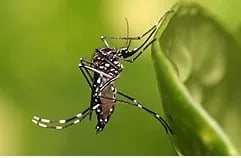
Aedes aegypti
- Aedes aegypti is a known vector of several viruses including yellow fever virus, dengue virus, chikungunya virus and Zika virus.
- The mosquito is native to north Africa, but is now a common invasive species that has spread to tropical, subtropical, and temperate regions throughout the world.
Wolbachia Method For Mosquito Control
- Mosquitoes with Wolbachia can be used to reduce numbers of target mosquito species, for example, Aedes Aegypti mosquitoes.
- Wolbachia bacteria blocks proliferation of harmful viruses but doesn’t harm the mosquitoes themselves.
- Mosquito control professionals release male Aedes Aegypti with Wolbachia into an area with wild Aedes Aegypti.
- When male Aedes Aegypti mosquitoes with Wolbachia mate with wild female mosquitoes that do not have Wolbachia, the eggs will not hatch.
- Because the eggs don’t hatch, the number of Aedes Aegypti mosquitoes decreases.
Source: TH
Aspergillus
Syllabus: GS3/ S&T
In News
- Researchers have identified two novel species of Aspergillus section Nigri (commonly known as black aspergillus).
About Aspergillus
- Aspergillus refers to a group of filamentous fungi found worldwide. These fungi can act as saprophytes (decomposing organic matter), endophytes (living inside plants without causing harm), and opportunistic pathogens (capable of causing disease under certain conditions).
- Black Aspergilli are known as workhorses of industrial application especially in citric acid production, food mycology, fermentation technology, and agriculture.
Source: DD News
Innovative wound-healing pad using extracts from the red ivy plant
Syllabus :GS3/Environment
In News
- Researchers at the Jawaharlal Nehru Tropical Botanic Garden & Research Institute (JNTBGRI) in Thiruvananthapuram have developed a multifunctional wound-healing pad using red ivy plant.
Red ivy plant
- It is locally known as murikooti pacha (Strobilanthes alternata, belonging to the Acanthaceae family).
- It grows abundantly across tropical regions, including India, and traditional practitioners have long been using it to treat cuts and wounds.
Latest Developments
- Researchers used nanotechnology and the medicinal properties of the red ivy plant to develop wound-healing pads.
- The team isolated acteoside—a bioactive compound newly linked to red ivy—for its potent healing effects.
- The pad features an ultra-thin electro-spun nanofiber layer made from biodegradable, non-toxic polymers, incorporating both acteoside and the antibiotic neomycin sulfate.
- Its porous design promotes optimal gas exchange, enabling the wound to “breathe” and accelerating recovery.
Source :TH
Blending of Isobutanol with Diesel
Syllabus: GS3/Environment
Context
- The Union Minister for Transport Nitin Gadkari said that the Automotive Research Association of India (ARAI) is working to explore the possibility of blending 10% isobutanol with diesel.
About
- The trials of blending one-tenth ethanol with diesel was not successful, other than the isobutanol blend so, Diesel in India will soon be blended with isobutanol instead of ethanol.
- Trials with isobutanol are in progress and blending levels will be increased in the coming months.
- Isobutanol is an alcoholic compound with flammable properties, and is commonly used as a solvent in varied industries including paints and coating.
Ethanol Blending
- Ethanol blending refers to the practice of mixing ethanol with gasoline to create a fuel mixture that can be used in internal combustion engines.
- Ethanol feedstocks comprise sugary raw materials (sugarcane, molasses, sweet sorghum, sugar beet, amongst others) or starchy (broken rice, corn, and cassava).
- The ‘National Policy on Biofuels’ notified by the government in 2018 envisaged an indicative target of 20% ethanol blending in petrol by 2030.
- Given the encouraging performance and various interventions made by the government since 2014, the 20% target was advanced to 2025-26.
- Ethanol blending in petrol has already touched the 20% mark, and the next frontier will be using ethanol to produce sustainable aviation fuel.
Source: TH
Samudra Pradakshina
Syllabus: GS3/ Defence
Context
- Defence virtually flagged off Samudra Pradakshina – a historic tri-service all-women circumnavigation sailing expedition.
About
- The initiative is a first of its kind, a symbol of nari shakti (women power), the jointness of the armed forces, self-reliant India (Aatmanirbhar Bharat) and India’s global vision.
- Over the next nine months, 10 women officers from the Army, Navy and Air Force will sail onboard the indigenously-built Indian Army Sailing Vessel (IASV) Triveni.
- They will follow an easterly route covering nearly 26,000 nautical miles, crossing the Equator twice and rounding the three great Capes — Leeuwin, Horn and Good Hope.
- During the expedition, the crew will also carry out scientific research in collaboration with the National Institute of Oceanography, which includes the study of micro-plastics, documentation of ocean life and raising awareness about marine health.
- They will return to Mumbai in May 2026.
Source: TH
China Border
Syllabus: GS3/ Internal Security
Context
- The Union Ministry of Home Affairs (MHA) is contemplating a plan to raise Border Wing Home Guards (BWHG) along the border with China, similar to the guards on the India-Pakistan border.
About
- BWHGs are recruited from the civilian population living in border areas. They act as ancillaries to the Army and border guarding forces during emergencies.
- They are voluntary in nature, enlisted typically for 3–4 years.
- 25% of training and financial support is borne by the Government of India.
- Fifteen Border Wing Home Guards (BWHG) Battalions have been raised in the border States viz. Punjab (6 Bns.), Rajasthan ( 4 Bns.), Gujarat (2 Bns.) and one each for Meghalaya, Tripura and West Bengal.
Need of BWHG along China border
- The China border has difficult terrain, sparse population, and remote regions. Local civilians could help supplement manpower.
- There are concerns about incursions, transgressions, or infiltration, especially in less accessible border areas. A civilian guard force can help augment surveillance and reduce response times.
Source: TH
Previous article
Opportunity Cost of Excessive Militarisation
Next article
World’s first AI ‘minister’ Diella
