


Syllabus: GS2/Governance/GS3/Science and Technology
Context
- Albania has become the first nation to appoint an AI-generated “minister” tasked with tackling corruption.
About
- Albania’s Prime Minister Edi Rama announced the digital minister to his cabinet.
- The digital assistant is named ‘Diella’ meaning ‘Sun’ and has been given responsibility of taking all decisions related to the public tenders, making them 100% corruption-free.
- The AI minister will also have the right to assess tenders and hire talents from across the world.
- Origins as a virtual assistant: Diella was initially introduced in January as an AI-powered digital assistant, designed to resemble a woman dressed in traditional Albanian attire.
- It was meant to help citizens navigate the official e-Albania platform, which offers access to documents and services.
- Corruption challenges in Albania: Public tenders in Albania have historically been at the centre of corruption scandals.
- The country has become a hub for international criminal networks laundering profits from drug and arms trafficking, with corruption reportedly reaching into senior levels of government.
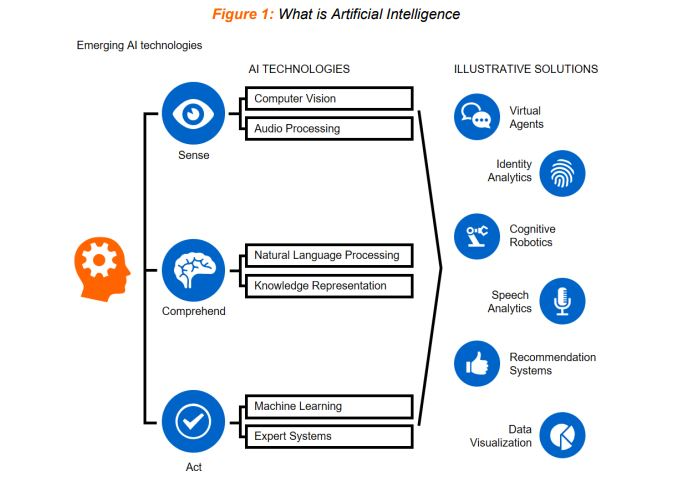
What is Artificial Intelligence (AI)?
- It refers to the hypothetical intelligenceof a machine that possesses the ability to understand or learn any intellectual task that a human being can.
- It is a type of artificial intelligence (AI) that aims to mimic the cognitive abilities of the human brain.
- Artificial intelligence allows machines to model, or even improve upon, the capabilities of the human mind.
How AI Can be Used in Public Service?
- Governance and Administration: AI chatbots and NLP(Natural Language Processing) tools can be used for quick response to citizen complaints.
- AI-based anomaly detection in tax filings, subsidies, and public procurement.
- Healthcare: AI models for early disease detection (e.g., TB, cancer screening).
- Telemedicine: AI-powered virtual assistants for rural healthcare access.
- Education: AI-driven adaptive platforms tailoring lessons to student needs.
- Automated Assessments: Reducing teacher workload and providing quick feedback.
- Agriculture:
- Precision Farming: AI-driven advisories on soil health, weather, and pest control.
- Market Forecasting: Price prediction models for farmers.
- Supply Chain Optimization: Minimizing post-harvest losses using AI logistics solutions.
- Law and Order: AI-based crime pattern analysis and hotspot mapping.
- Facial Recognition & Surveillance: Identifying suspects in public safety operations.
- Judiciary: AI-assisted case management, reducing pendency by automating routine documentation.
- Urban Governance: AI for traffic management, waste disposal, and energy efficiency.
- Disaster Management: Early warning systems using AI in flood, cyclone, or earthquake prediction.
- Welfare Schemes & Social Sector: AI to identify genuine beneficiaries, reduce leakages in PDS, MGNREGA, etc.
- Financial Inclusion: AI in digital banking and micro-credit risk assessments.
Concerns
- Bias & Discrimination: AI trained on data may develop biases and can discriminate against certain groups.
- Data Privacy: India lacks a comprehensive framework for sensitive citizen data despite the Digital Personal Data Protection Act, 2023.
- Accountability Gap: If AI makes a wrong decision, it’s unclear who is responsible — programmer, operator, or government.
- Job Displacement: Automation may replace lower-level administrative and clerical jobs.
- Overdependence on Technology: Risk of ignoring human judgment, empathy, and contextual understanding.
- Cybersecurity Threats: AI systems vulnerable to hacking, manipulation, or adversarial attacks.
- Dependence on Foreign Tech Firms: Risk of “digital colonization” if India relies too much on external AI companies.
Government Initiatives
- India AI Mission (2024): It has a budget of ₹10,300 crore over five years.
- A key goal is the creation of a high-end common computing facility with 18,693 GPUs.
- India’s AI Models & Language Technologies: The government is facilitating the development of India’s own foundational models, including Large Language Models (LLMs) and problem-specific AI solutions tailored to Indian needs.
- BharatGen: The world’s first government-funded multimodal LLM initiative, BharatGen was launched in 2024.
- Sarvam-1 AI Model: A large language model optimised for Indian languages, Sarvam-1 has 2 billion parameters and supports ten major Indian languages.
- Hanooman’s Everest 1.0: A multilingual AI system developed by SML, Everest 1.0 supports 35 Indian languages, with plans to expand to 90.
- AI Centers of Excellence: Establishing dedicated AI hubs and innovation centers across the country to support AI startups and research.
- India’s Digital Public Infrastructure (DPI): Combines public funding with private sector innovation to drive digital transformation.
- Aadhaar, UPI, and DigiLocker serve as the foundation of India’s DPI.
- Intelligent solutions are being integrated into financial and governance platforms to enhance DPI.
- e-Courts Project: Initiated by the Supreme Court of India to modernize judicial functions through digital innovation.
- Phase III: Integrates advanced AI solutions to improve case management and administrative efficiency in courts.
Conclusion
- India’s rapid AI advancements are driven by strong government initiatives, positioning it as a global AI powerhouse.
- A dedicated task force can be appointed to study and recommend the use of AI in public service and justice administration.
- A balanced approach must be taken to ensure AI tools respect privacy, civil liberties, and ethical standards, while preventing misuse.
Source: AIR
Previous article
News In Short – 12 September, 2025
Next article
India Votes in Favour of Palestine’s Statehood at UN
