


Syllabus: GS3/Energy Sector
Context
- The draft National Electricity Policy aims to align the power sector with India’s long-term energy goals.
About
- The Draft NEP 2026 is a proposed revision of India’s existing National Electricity Policy (initially notified in 2005).
- It supports India’s target of reducing emissions intensity of GDP by 45% by 2030 (compared to 2005).
- The policy strongly promotes nuclear energy as a clean, stable, non-weather-dependent power source.
- India plans a 10-fold increase in nuclear power capacity by 2047.
- It supports new technologies like Small Modular Reactors (SMRs), which are safer, smaller, and can be set up near factories and cities.
- Thorium Based Energy: India depends on imported uranium, so the policy stresses developing thorium-based nuclear energy, where India has large reserves.
- The main challenge is boosting research and technology to make thorium energy practical.
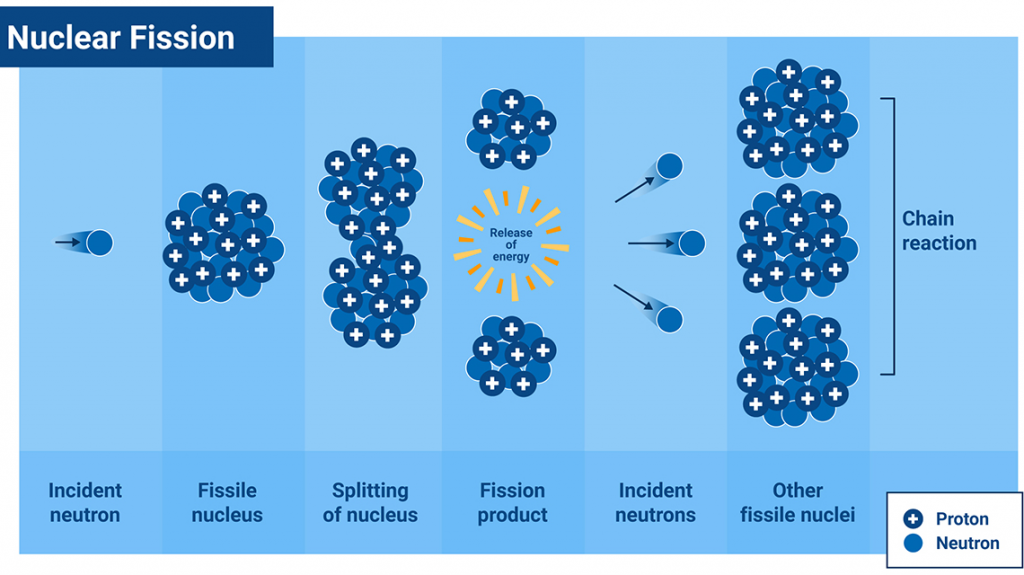
Need to Increase Nuclear Capacity
- Nuclear Capacity Goal: India’s plans to increase its nuclear power capacity from the current 8,180 MW to 22,480 MW by 2031-32 and eventually 100 GW by 2047.
- Energy Demand Growth: India’s electricity demand is expected to increase 4-5 times by 2047, and nuclear power will help meet base-load demand alongside renewables.
- India’s Targets: To reduce the emission intensity of its GDP by 44% by 2030 from the 2005 level.
- To achieve 50% cumulative electric power installed capacity from non-fossil fuel-based energy resources by 2030.
Challenges
- Limited Indigenous Experience: India’s nuclear programme has historically focused on Pressurized heavy-water reactor (PHWRs) and fast breeder reactors, leading to limited domestic expertise in Light Water Reactor (LWR) design and operation.
| Light Water Reactors – Light Water Reactors form a mainstay of the global nuclear program currently account for over 85% of the civil nuclear reactor capacity in the world. a. They use ordinary (light) water as both a coolant and a neutron moderator. – LWRs entail simpler design and engineering compared to heavy water reactors given that they use normal water as both coolant and moderator. – Low Cost: It usually involves lower construction costs due to economies of scale and they are considered more thermally efficient. |
- Limited domestic uranium: India has low-grade and limited uranium reserves, forcing dependence on imports.
- Long-term nuclear expansion needs assured fuel supply agreements with foreign countries.
- High capital cost: Nuclear plants require huge upfront investment and long construction periods.
- Technological constraints: Advanced technologies like Small Modular Reactors (SMRs) are still at an early stage in India.
- Safety and public concerns: Fear of nuclear accidents leads to local opposition and delays in projects.
- Thorium utilisation gap: Though India has large thorium reserves, commercial technology is still under development.
Government Initiatives
- Nuclear Energy Mission & Capacity Targets: The Government has launched a Nuclear Energy Mission aimed at expanding nuclear power capacity to about 100 GW by 2047.
- This mission emphasises enhancing domestic capabilities and adopting advanced technologies.
- Indigenous Reactor Development: Such as Bharat Small Reactors are under development to support scalable deployment.
- While these are PHWR and SMR variants, they lay the groundwork for a broader nuclear innovation ecosystem.
- Three-Stage Nuclear Power Programme: India has a long-term strategy to utilise India’s thorium reserves through PHWRs, Fast Breeder Reactors and thorium-based reactors.
- SHANTI Act, 2025: It enables capacity expansion, advanced reactor technologies and wider participation in nuclear power generation.
- Research & Development Funding: The Union Budget 2025-26 allocated significant funding (around ₹20,000 crores) for R&D in advanced nuclear technologies.
- International Cooperation & Tech Access: The government is working on international partnerships and technology transfer mechanisms that can help bridge experience gaps in technologies.
| India’s Thorium Reserves – India has one of the largest reserves of thorium in the world.  a. Together, Kerala and Odisha account for over 70% of India’s thorium. – India has been developing a three-stage nuclear program, with thorium-based reactors being a critical part of the third stage. – Challenges: Extracting thorium from ores requires high amounts of energy and creates significant waste. a. While India has large thorium reserves, extracting it for nuclear energy use has faced challenges, including the need for advanced reactor technology and economic viability. |
Conclusion
- India is all set for transformative and multi-dimensional growth of clean and renewable energy sources; however, India should accelerate R&D on thorium reactors by strengthening industry collaboration with the stakeholders.
- India can develop pilot and demonstration projects to move thorium technology from lab to commercial scale.
- Nuclear energy can give India clean, secure and indigenous power, but only sustained R&D, policy support and institutional commitment can unlock its full potential.
| Daily Mains Practice Question [Q] Examine the role of nuclear technology in ensuring India’s long-term energy security and meeting its climate commitments. |
Source: IE
Previous article
Trial by Social Media
Next article
How we can bring our scientists back home
