


Syllabus: GS3/ Agriculture
Context
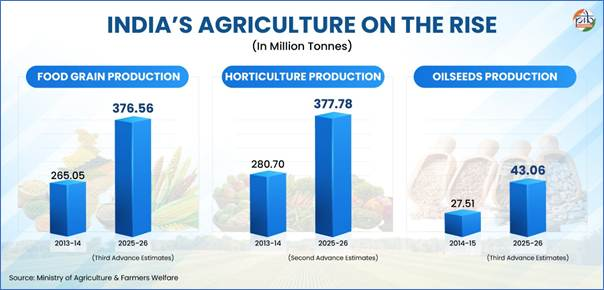
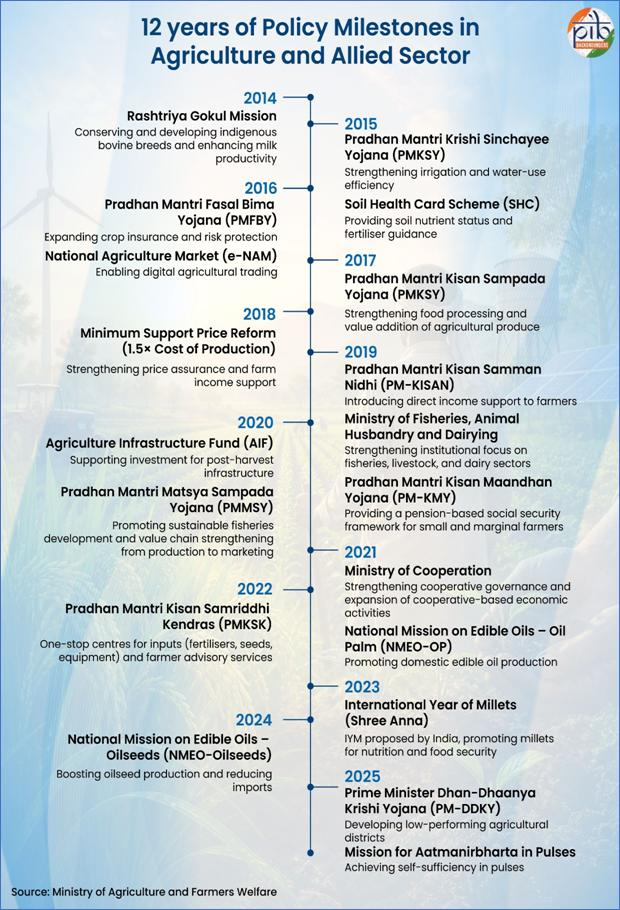
- India’s agriculture and allied sectors are witnessing a significant transformation, marked by rising productivity, stronger farmer support systems, and greater resilience.
Agriculture Sector in India
- Agriculture remains the backbone of India’s economy, providing livelihoods to approximately 46.1 percent of the workforce.
- Livestock and fisheries have maintained stable growth of 5-6 per cent strengthening rural incomes and supporting agricultural diversification.
- The GVA of the Agriculture and Allied Sector is estimated to have increased to Rs.52.08 lakh crore in 2025-26.
- Budget allocation for the Department of Agriculture and Farmers Welfare increased to Rs.1,40,528.78 crore in 2026-27.
- Agricultural exports rose to USD 51.1 billion (FY25), with the share of processed food increasing to 20.4%, signalling value-added growth.
Major Challenges Faced by the Agricultural Sector
- Water scarcity & irrigation: Agriculture in India is highly dependent on monsoon rain, which can lead to drought and erratic patterns of rainfall.
- Major issues are access to irrigation facilities and water management especially in water scarce locations.
- Limited access to credit and finance: Small and marginal farmers often have problems in getting access to loans and financial services.
- Small land holdings: The average farmer is a small land holder resulting in fragmented and uneconomical farming techniques.
- This hampers them to adopt new farming methods and technologies leading to low output.
- Outdated farming practices: A large section of farmers in India still follow traditional and obsolete farming methods.
- Market volatility & price fluctuations: Farmers in India typically encounter price volatility due to lack of adequate market linkages, middlemen and price information.
- Soil Degradation: Intensive chemical-based farming has degraded about 30 per cent of the entire land in India.
- Excessive use of urea and pesticides and reduction in organic matter have led to nitrogen imbalance, harming soil fertility and ecosystem services.
- Rising Input Costs: The Green Revolution paradigm is reaching the point of diminishing returns, with rising input costs outpacing gains and leading to indebtedness and farmer suicides.
- Impacts of Climate Change: Agriculture production and food security are under threat from rising temperatures, irregular rainfall, floods, droughts and extreme weather events.
Way Ahead
- Diversification: Encourage the shift from cereal-based agriculture to horticulture, dairy, livestock, fisheries, sericulture, beekeeping and agro-forestry to raise farm revenues and minimise dependence on a few crops.
- Expand the usage of micro-irrigation systems using drip and sprinkler technologies for improved water-use efficiency.
- Empower Farmer Producer Organisations (FPOs) and cooperatives and Self-Help Groups (SHGs) to enhance aggregation, bargaining power, access to credit and market linkages.
- Promote food processing, cold-chain networks, warehousing and logistics so as to reduce post-harvest losses and boost farmers’ participation in consumer prices.
- Support start-ups, agri-tech breakthroughs and data-driven farming solutions that boost production, efficiency and market access.
Source: PIB
Previous article
Parliamentary Productivity & Disruptions in India
Next article
India’s Infrastructure Transformation
