


Musi River
Syllabus: GS1/ Geography
Context
- The Hyderabad Disaster Response and Asset Protection Agency (HYDRAA) has initiated action against illegal encroachments into the Musi river bed.
About
- The Musi River is a major tributary of the Krishna River, one of the major east-flowing rivers of peninsular India.
- Location: It flows through the state of Telangana in India. The city of Hyderabad is situated on the banks of the Musi.
- Origin: The river originates in the Ananthagiri Hills in the Vikarabad region of Rangareddy district, Telangana.
- Reservoirs: The river flows into the Himayat Sagar and Osman Sagar reservoirs, which historically served as water sources for Hyderabad.
Source: TH
Setubandha Scholar Scheme
Syllabus: GS2/Governance
In News
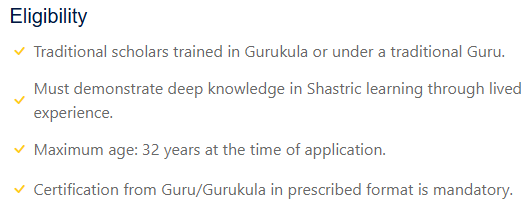
- The Ministry of Education, in partnership with the Indian Knowledge Systems (IKS) division of the Central Sanskrit University, has launched the Setubandha Scholar Scheme.
Setubandha Scholar Scheme
- It is meant for students deeply trained in traditional Vidyās and Kalās under the Gurukula system who wish to engage in research, teaching, and academic collaboration at Post Graduation or Ph.D. level.
- All degrees will be conferred by the Central Sanskrit University.
- Selected fellows will receive a monthly fellowship of ₹40,000 to 65,000 and an annual contingency grant of ₹1-2 lakhs.
Importance
- It will serve as a bridge between the ancient Gurukul tradition and modern research.
- It will provide recognition to traditional scholars and unlock new paths for academic innovation
- It is seen as a significant step in reviving Indian Knowledge Systems and mainstreaming traditional expertise within the formal education ecosystem.
Source: PIB
National Overseas Scholarship Scheme
Syllabus: GS2/Governance
Context
- The Union Social Justice Ministry is in the process of seeking additional allocation for administering the National Overseas Scholarship scheme for marginalised students.
About
- Aim: To empower low-income students from marginalized communities, including the Scheduled Castes, Denotified Nomadic and Semi-Nomadic Tribes, Landless Agricultural Labourers, and Traditional Artisans.
- The scholarship supports their pursuit of higher education, such as Master’s degree or Ph.D. courses, by providing opportunities to study abroad.
- Eligibility: Candidates should have secured at least 60% marks or equivalent grade in the qualifying examination;
- the candidates total family income from all sources should be less than Rs. 8.00 lakh per annum;
- should be less than 35 years of age on selection year;
- and have an unconditional offer of admission from top 500 QS ranked foreign Universities as per the latest QS rankings.
Source: TH
CRIB Blood Group
Syllabus: GS2/ Health
In News
- A South Indian woman was found to have a “new” blood group with a rare antigen named CRIB Blood Group.
What is CRIB Blood Group?
- The CRIB blood group is a newly discovered blood group antigen that is part of the Cromer (CR) blood group system. “CR” refers to the Cromer system; “IB” refers to “India, Bengaluru,” recognizing the place of discovery.
- The Cromer system is a rare blood group classification. It involves antigens located on the Decay-Accelerating Factor (DAF) protein found on red blood cells.
- These antigens play a significant role in immune reactions that can occur during blood transfusions.
Scientific Significance
- CRIB is a new entry in global transfusion medicine.
- Its discovery highlights India’s contribution to rare blood immunogenetics.
- It emphasizes the critical need for rare donor registries and global collaboration in blood typing.
Blood Group Basics
- Blood groups are determined by specific molecules (antigens) on the surface of red blood cells.
- The ABO and H blood groups are the oldest and most important blood group system in transfusion medicine due to their high immunogenicity.
- There are over 30 blood group systems (e.g., Bombay, Kell, Kidd, Duffy, MNS, etc.).
- The ABO system was originally discovered in 1900 by Austrian scientist, Karl Landsteiner, for which he later received the Nobel prize in 1930.
Source: TH
Gini Index
Syllabus: GS 3/Economy
In News
- The Gini Index ranked India among the world’s most equal societies, by giving the country a score of 25.5.
About
- India’s score is much lower than China’s 35.7 and far lower than the United States, which stands at 41.8. It is also more equal than every G7 and G20 country, many of which are considered advanced economies.
- India falls into the “moderately low” inequality category, which includes Gini scores between 25 and 30, and is only a fraction away from joining the “low inequality” group, which includes countries like the Slovak Republic with a score of 24.1, Slovenia at 24.3, and Belarus at 24.4.
- India’s extreme poverty dropped to 2.3% in 2022-23, says the World Bank and 171 million Indians moved out of extreme poverty between 2011–23.
What is a Gini index ?
- It measures the extent to which the distribution of income or consumption among individuals or households within an economy deviates from a perfectly equal distribution.rephrase
- It ranges in value from 0 to 100. A score of 0 means perfect equality.
- A score of 100 means one person has all the income, wealth or consumption and others have none, hence absolute inequality. The higher the Gini Index the more unequal the country.
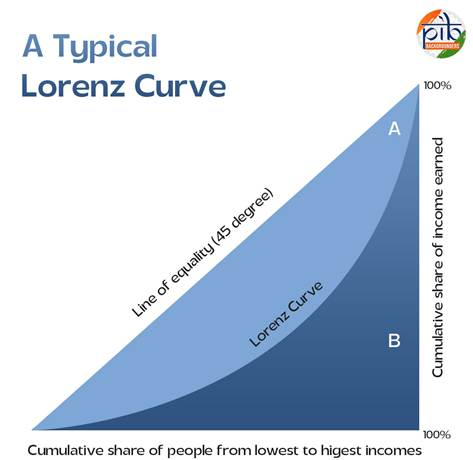
- Graphically Gini Index can be explained by the Lorenz curve.
- A Lorenz curve plots the cumulative percentages of total income received against the cumulative number of recipients, starting with the poorest individual or household.
- A perfectly equal distribution will be shown by a diagonal line, while the actual distribution will be shown by the Lorenz curve.
- The Gini index measures the area between the Lorenz curve and a hypothetical line of absolute equality, or the gap between the two, expressed as a percentage of the maximum area under the line.
- The bigger the gap, the more unequal the income. This gives one clear number to show how fairly income is spread.
Source :TH
World’s Smallest Known Snake Seen in Barbados
Syllabus: GS3/Environment
Context
- The Barbados threadsnake has been rediscovered in Barbados, 20 years after its last sighting.
Barbados threadsnake
- It is the world’s smallest-known snake and it can fit on a coin.
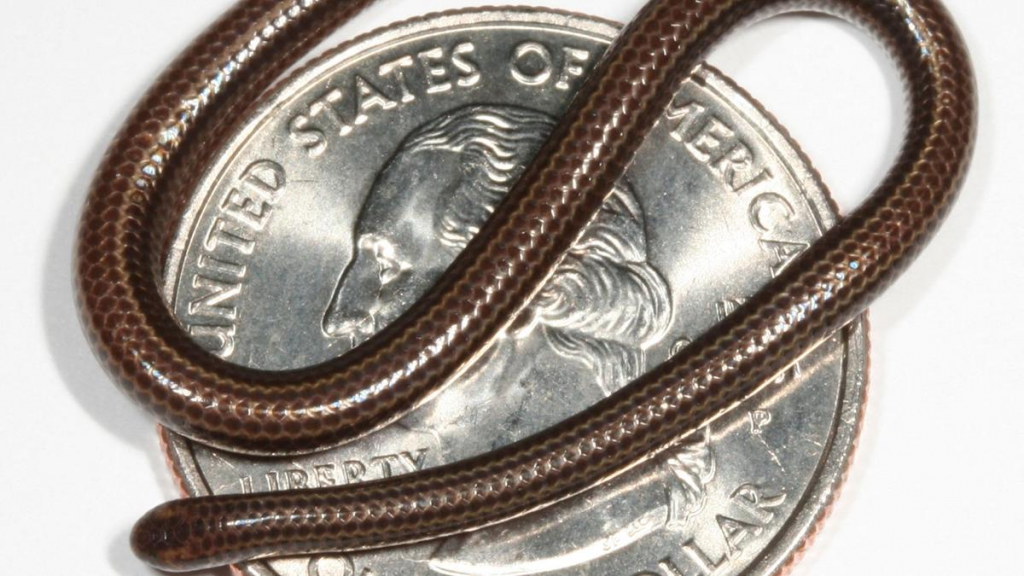
- It is blind, burrows in the ground, eats termites and ants, and lays one single, slender egg.
- Fully grown, it measures up to 10 cm.
- It had been on a global list of 4,800 plants, animals and fungi species that have been lost to science.
- It reproduces sexually and the females lay only one egg at a time, unlike some other reptiles that can produce fertile eggs without mating.
- Its rediscovery underscores the importance of conservation and highlights the role of community-led fieldwork in protecting rare endemic species.
Source: TH
DRDO Conducts Two Consecutive Successful Flight Tests of Pralay missile
Syllabus: GS3/ Defence
Context
- The Defence Research and Development Organisation (DRDO) successfully conducted consecutive test flights of the Pralay missile from the Dr. A.P.J. Abdul Kalam island off the coast of Odisha.
About
- Pralay, is an indigenous surface-to-surface short-range quasi-ballistic missile.
- Range and Payload: Pralay has an operational range of approximately 150 to 500 km and carries a payload capacity of 500 to 1,000 kg.
- Propulsion: It is powered by a solid-propellant rocket motor.
- The missile is equipped with a state-of-the-art navigation system and integrated avionics, ensuring precision targeting even in challenging terrains.
Source: AIR
Previous article
Maharashtra Special Public Security Bill
