



8th Central Pay Commission
Syllabus: GS2/Governance
Context
- The Union Cabinet, chaired by the Prime Minister approved the Terms of Reference of 8th Central Pay Commission.
About
- The 8th Central Pay Commission was announced in January, 2025.
- The commission aimed to examine and recommend changes in the Salaries and other benefits of Central Government employees.
- It will be a temporary body.
- The Commission will comprise one Chairperson Justice Ranjana Prakash Desai; One Member (Part Time) and one Member-Secretary.
- It will make its recommendations within 18 months of the date of its constitution.
Central Pay Commissions
- The Central Pay Commissions are periodically constituted to go into various issues of emoluments structure, retirement benefits and other service conditions of Central Government employees and to make recommendations on the changes required thereon.
- The first CPC was established in 1946, and subsequent commissions have been set up roughly every 10 years.
- Going by this trend, the effect of the 8th Central Pay Commission recommendations would normally be expected from 01.01.2026.
Source: AIR
Supplemental Nutrition Assistance Program (SNAP)
Syllabus: GS2/IR
In News
- Thousands of families in the United States are set to lose access to the Supplemental Nutrition Assistance Program (SNAP), commonly known as food stamps, after the U.S. Department of Agriculture (USDA) announced a temporary halt in payments due to funding shortages.
Supplemental Nutrition Assistance Program (SNAP)
- SNAP is the largest food assistance programme in the US in which the recipients are given reloadable debit cards, which they may use to purchase essential groceries from supermarkets and e-commerce platforms like Amazon Grocery.
- It was launched in 2008, replacing the Food Stamp Program that began in 1939 during the Great Depression, when President Franklin D. Roosevelt introduced it to boost consumer purchasing power and stabilize crop prices to help revive the economy.
- It has traditionally been funded on a 50:50 basis by the federal government and the states, with the former typically paying for the benefits and the states assuming the cost of administering the programme.
- Eligibility is based on income thresholds aligned with the Consumer Price Index—$15,060 for individuals and $30,000 for families of four in 2025—with maximum monthly benefits of $292 and $975 respectively.
- Primarily intended for US citizens, certain refugees from Cuba or Haiti and asylum seekers may qualify if income criteria are met.
- Permanent residents and green-card holders must have completed five years to be eligible.
- The One Big Beautiful Bill Act raised the work requirement age from 54 to 64, now exempting only parents with children under 7.
Source :IE
14th Round of Commercial Coal Mine Auctions
Syllabus: GS3/Science & Technology
Context
- The Ministry of Coal is gearing up to launch the 14th Round of Commercial Coal Mine Auctions.
- For the first time, the Ministry is introducing provisions for Underground Coal Gasification (UCG) within the auction framework.
Underground Coal Gasification (UCG)
- UCG is a process that converts coal into a combustible gas called syngas while it is still in the ground, rather than through conventional mining.
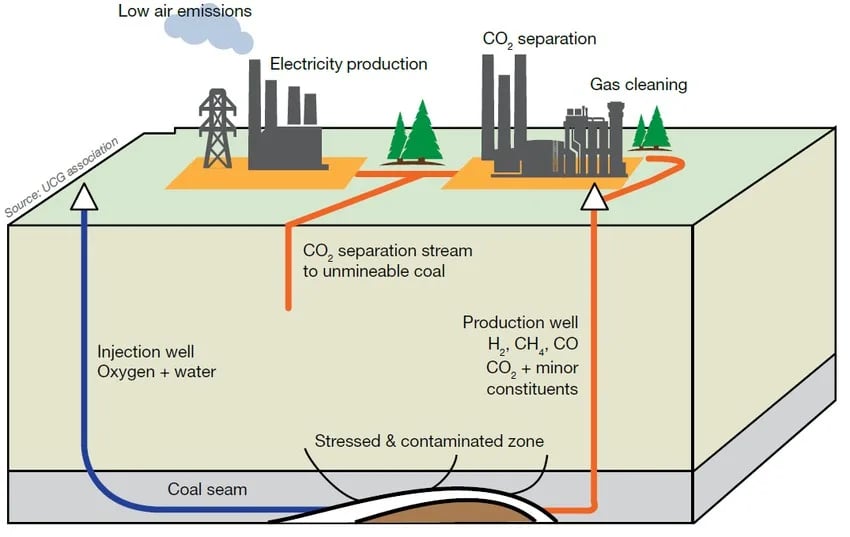
- It represents a strategic initiative to harness India’s deep-seated coal reserves—resources that are otherwise unmineable through conventional methods.
- This innovative step is expected to reduce dependence on imported natural gas and crude oil while unlocking new avenues for investment.
Source: PIB
Loktak Lake
Syllabus: GS3/ Environment
Context
- A recent study by Nagaland University has established a direct link between land use and severe water pollution in Manipur’s Loktak Lake.
About Loktak Lake
- It is the largest freshwater lake in Northeast India and is known for its unique floating biomass, called phumdi in the Meitei language.
- Rivers like Khuga, Nambul, Imphal, Kongba, Iril, and Thoubal drain into Loktak Lake.
- The lake supports 132 plant species and 428 animal species, including several endemic and migratory species.
- It is designated as a Ramsar Site for its ecological significance.
- Due to the degradation, Loktak Lake has been on the Montreux Record since 1993, a global warning list for wetlands facing severe ecological damage.
- Ecological Importance:
- It is home to the Keibul Lamjao National Park, the world’s only floating national park.
- The park shelters the Sangai or brow-antlered deer, Manipur’s state animal, which is critically endangered.
Source: TH
Climate Inequality Report 2025
Syllabus: GS3/ Reports
In News
- The Climate Inequality Report 2025, co-authored by Lucas Chancel and Cornelia Mohren of the World Inequality Lab, found that wealthy individuals drive the climate crisis more through their investments than their consumption.
Key Findings
- It highlights that wealthy individuals contribute more to the climate crisis through asset ownership than consumption, with the top 1% responsible for 41% of emissions linked to private capital and 15% of consumption-based emissions.
- Their per-capita emissions are up to 680 times higher than those in the bottom 50%.
- Ownership-based emissions in countries like the US, France, and Germany far exceed consumption-based estimates, highlighting the disproportionate impact of the rich.
Impacts
- The report warns that climate change could worsen wealth inequality, projecting the top 1% could control 46% of global wealth by 2050 if they dominate climate investments.
Suggestions
- The report proposes a carbon-adjusted wealth tax to discourage high-carbon investments and fund the green transition, arguing it would be more progressive and effective than consumer-focused carbon taxes.
- Additional recommendations include banning new fossil fuel investments and expanding public ownership of low-carbon infrastructure to reduce inequality.
- With the global carbon budget for 1.5°C warming nearly exhausted, urgent action is needed to prevent climate change from worsening global wealth disparities.
Source :IE
HAL–Russia Deal: SJ-100 to Be Made in India
Syllabus: GS3/ Defence
Context
- The Hindustan Aeronautics Limited (HAL) and Russia’s United Aircraft Corporation (UAC) have signed a Memorandum of Understanding for production of civil commuter aircraft SJ-100.
About
- The SJ-100 is a twin-engine, narrow-body passenger aircraft. So far, over 200 units have been produced and are operated by more than 16 commercial airlines worldwide.
- Under this collaboration, HAL will have the rights to manufacture the SJ-100 for domestic customers — a move expected to be a game changer for short-haul connectivity under the UDAN Scheme.
- This will also mark the first time a complete passenger aircraft is produced in India since the AVRO HS-748, which HAL manufactured between 1961 and 1988.
- The SJ-100 project is not only a step towards ‘Aatmanirbharta’ in civil aviation, but will also strengthen the private sector, and generate employment across the aviation manufacturing ecosystem.
Do you know?
- Over the next decade, India’s aviation sector is projected to need over 200 jets in this category for regional connectivity and around 350 more for nearby international destinations across the Indian Ocean region.
Source: TH
Previous article
Global Emission Cuts Fall Short of Paris Goals
Next article
Cyclone Montha
