


Syllabus: GS3/ Energy
Context
- The Grid Controller of India (Grid India) has advised gas-based power stations to plan fuel procurement arrangements, anticipating the need for additional gas-fired generation for coming days.
What is Gas-Based Power?
- Gas-based power plants generate electricity using Natural Gas or Liquefied Natural Gas (LNG).
- They primarily operate through Combined Cycle Gas Turbine (CCGT) technology, which offers faster start-up than coal plants, higher operational flexibility, and lower carbon emissions than coal.
India’s Energy Landscape
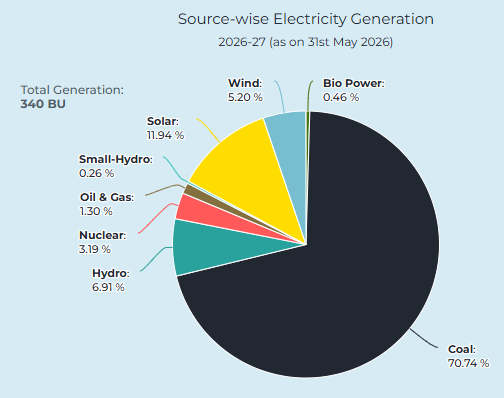
- India has achieved over 50% of its installed electricity capacity from non-fossil fuel sources, well ahead of its 2030 Nationally Determined Contributions (NDCs) target.
- As per IRENA RE Statistics 2025, globally, India stands 3rd in Solar Power installed capacity, 4th in Wind Power capacity and 4th in total Renewable Energy capacity.
- Coal-based thermal power remains the grid’s mainstay, meeting over two-thirds of total peak demand. However, this share retracted to 57 per cent during solar hours.
Why Does India Still Need Gas-Based Power?
- Cleaner Energy Source: Gas-based power generation emits fewer pollutants compared to coal-based power plants, making it a cleaner option.
- Less Hydropower Generation: The India Meteorological Department has forecast below-normal rainfall in this monsoon. This will eventually reduce inflows into reservoirs, limiting hydroelectric power generation.
- Intermittent nature of Renewable Energy: Solar power generation falls after sunset, while wind generation is also variable. However electricity demand continues throughout the day and peaks in the evening.
- Grid Balancing: Gas-based power plants can start and ramp up quickly, making them suitable for balancing variable renewable energy.
- Rapid Deployment: Gas-based power plants can be constructed relatively quickly compared to large-scale coal or nuclear plants.
Challenges of Gas-Based Power
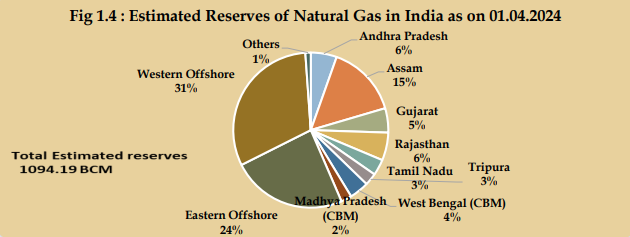
- Import of Natural Gas: India has limited domestic natural gas reserves, and the majority of its consumption is met through imported natural gas, primarily from countries like Qatar, Australia, and the United States.
- Infrastructure Constraints: The development of infrastructure, including pipelines, LNG terminals, and city gas distribution networks, is essential for the efficient transportation and distribution of natural gas.
- However, the expansion of infrastructure in India has been hampered by factors such as land acquisition issues, regulatory hurdles, and funding constraints.
- Environmental Concerns: While natural gas is considered a cleaner alternative to coal and oil, its extraction, transportation, and combustion still produce greenhouse gas emissions.
- Low Plant Utilisation: Many gas-based plants remain underutilised because of expensive fuel and limited domestic gas availability.
Government Initiatives to Increase Gas Based Energy
- Infrastructure Development: As of June 2025, about 25,429 km of natural gas pipelines are operational, while 10,459 km are under various stages of construction.
- National Gas Grid (“One Nation, One Gas Grid”): It is the expansion of the pipeline network to connect all states and transport natural gas safely and economically.
- Pradhan Mantri Urja Ganga (PMUG): The Jagdishpur–Haldia–Bokaro–Dhamra– Barauni–Guwahati natural gas pipeline) stretches 3,546 km, across 6 states (Uttar Pradesh, Bihar, Jharkhand, Odisha, West Bengal, and Assam) to bring cleaner fuel to Eastern India.
- City Gas Distribution (CGD) Network Expansion: The government has been promoting the expansion of CGD networks across India to increase access to piped natural gas (PNG) for households, industries, and commercial establishments.
- Under the CGD bidding rounds, licenses are awarded to entities for developing CGD networks in geographical areas identified by the Petroleum and Natural Gas Regulatory Board (PNGRB).
- Gas Price Rationalization: Reforms such as the New Domestic Gas Pricing Guidelines (2014) and the introduction of the Hydrocarbon Exploration and Licensing Policy (HELP) have aimed to provide pricing incentives for domestic gas producers while balancing the interests of consumers.
- Natural Gas Infrastructure Development Fund (NGIDF): The government has set up the NGIDF to provide financial support for the development of natural gas infrastructure in India.
Way Ahead
- Battery Energy Storage Systems (BESS): Accelerate deployment of grid-scale battery storage through supportive policies and financial incentives to provide reliable balancing and peak-hour support.
- Expand Pumped Storage Projects (PSPs): Fast-track the development of pumped hydro storage as a cost-effective long-duration energy storage solution.
- Adopt Artificial Intelligence (AI), machine learning, and digital grid management tools to improve renewable energy forecasting and optimise scheduling.
- Transmission infrastructure: Accelerate the expansion of Green Energy Corridors and interstate transmission networks to transmit renewable power from resource-rich regions to demand centres.
Concluding remarks
- India’s energy transition is no longer only about installing more solar panels and wind turbines but it is about ensuring that clean electricity is available whenever consumers need it.
- Until large-scale energy storage and smart grid technologies become widespread, gas-based power will remain an essential balancing resource.
Source: IE, BS, MOSPI, NITI AAYOG
Previous article
Declining Fertility Rate in India and Concerns
Next article
National Food Security (Amendment) Bill, 2026
