


Kheer Bhawani Mela
Syllabus: GS1/Culture
Context
- In Kashmir Valley, the annual Mela Kheer Bhawani is being celebrated with religious fervour and gaiety on the occasion of Jyeshtha Ashtami.
About
- This is one of the most important festivals for the Kashmiri Pandit community during which devotees offer Kheer (rice pudding), milk, flowers, and aromatic leaves to Mata Ragnya Devi.
- The mela symbolizes faith, resilience, cultural reconnection, and communal harmony.
About Kheer Bhawani Temple
- It is dedicated to Goddess Ragnya Devi, who is considered an incarnation of Goddess Durga.
- The original temple was built by Maharaja Pratap Singh around 1912 in Ganderbal, Jammu and Kashmir. It was later embellished and renovated by Maharaja Hari Singh.
- A distinctive feature of the temple is a hexagonal spring located at its center, revered for its sacred water.
- Both the temple and the festival derive their name from the sweet dish ‘kheer’, which is distributed as prasad (a religious offering) to devotees.
Source: AIR
Khurasani Imli
Syllabus: GS3/ Economy/ Agriculture
Context
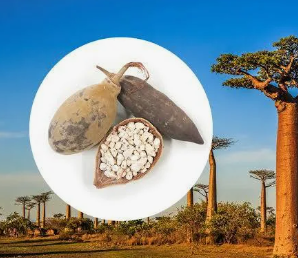
- The fruit of Mandu’s Baobab tree, known locally as Khurasani Imli, has secured a Geographical Indication (GI) tag.
About Khurasani Imli
- Khurasani Imli is the fruit of the Baobab tree (Adansonia digitata), a species native to Africa and Madagascar.
- It is popularly known as the “Tree of Life” because of its multiple uses and exceptional resilience.
- In India, baobabs occur in the semi-arid regions of central India and parts of the Western Ghats.
- Mandu in Madhya Pradesh is one of the few places in India where Baobab trees are found in large numbers.
- Historical accounts suggest that the seeds were brought to Mandu by Afghan rulers or Arab traders around the 14th–15th century.
- The tree is known for its distinctive bottle-shaped trunk and its ability to store large quantities of water.
- The fruit is rich in Vitamin C, antioxidants, and has traditional medicinal uses.
Source: ET
AI Agent Loops
Syllabus: GS3/ Science and Technology
Context
- AI experts suggest that AI Agent Loops are going to transform human-AI interaction by automating workflows and reducing the need for manual prompting.
What Are AI Agent Loops?
- An AI agent loop is a recurring automated workflow that repeatedly guides and supervises AI agents without requiring users to write prompts at every step.
- Instead of a human constantly telling the AI what to do next, the system itself generates instructions, evaluates progress, and assigns new tasks until the desired objective is achieved.
Key Components of an AI Agent Loop
- Automations: They are the foundation of a loop and ensure that a loop can be repeated rather than a one-off event. It enables the AI agent to go off on a schedule and do discovery and triage by themselves.
- Worktrees: This is a key component as they enable two AI agents to work in parallel with each other, avoiding any overlap.
- Skills: They can, for instance, be instructions for the AI agent to write down the project knowledge the agent would otherwise just guess.
- Plugins and connectors: They are used to give the AI agent access to the tools you already use.
- Sub-agents: They let users set up AI agents in such a way that one of them has the idea while another one checks the work.
Source: IE
Previous article
Western Ghats & Ecologically Sensitive Areas (ESAs)
Next article
Union Government Tightens FCRA Rules for NGOs
