



Syllabus: GS2/Governance
Context
- Prime Minister Modi dedicated Dhordo as a “Solar Village” to the nation during the ‘Samudra Se Samriddhi’ programme in Bhavnagar, Gujarat.
About
- Dhordo will become the fourth solar-powered village in the State, after Modhera in Mehsana, Sukhi in Kheda, and Masali in Banaskantha.
- It is a remote village in Gujarat’s Kutch internationally acclaimed as the ‘Best Tourism Village’ by the United Nations World Tourism Organisation (UNWTO).
- As part of the PM Surya Ghar: Muft Bijli Yojana, every residential electricity connection in Dhordo has been solarised, ensuring that homes generate their own clean energy.
- The system is projected to generate 2.95 lakh units of electricity annually, directly translating into significant economic relief for residents.
PM Surya Ghar: Muft Bijli Yojana
- It was launched in 2024 and aims to provide free electricity to households by facilitating the installation of rooftop solar panels.
- Installation Targets:
- By October 2025: Reaching 40 lakh,
- March 2027: 1 crore households.
- The scheme offers a subsidy of up to 40% to households, making renewable energy more affordable and accessible.
- Eligibility:
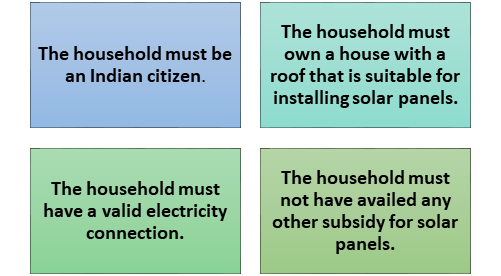
- Model Solar Village:
- An allocation of ₹800 crore has been designated for this component, with ₹1 crore provided to each selected Model Solar Village.
- To qualify as a candidate village, it must be a revenue village with a population of over 5,000 (or 2,000 in special category states).
- This initiative aims to promote solar energy adoption and empower village communities to achieve energy self-reliance.
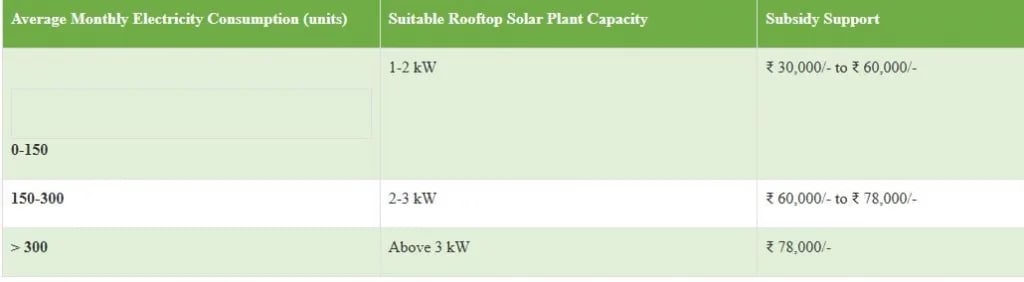
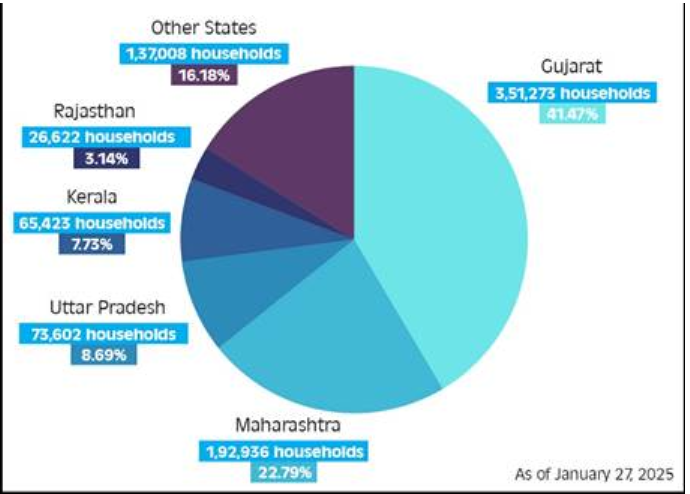
- Achievement: PM Surya Ghar: Muft Bijli Yojana (PMSGMBY) has achieved a historic milestone with 10 lakh homes now solar-powered as of March 2025.
Top 5 states with the highest number of households benefiting under the PM Surya Ghar: Muft Bijli Yojana
Key Benefits of Scheme
- Provides free electricity to households through subsidized rooftop solar panel installations, significantly reducing energy costs.
- Expected to save the government around ₹75,000 crore annually in electricity expenses.
- Contributes to increasing renewable energy use and reducing carbon emissions by about 720 million tonnes.
- Adds 30 GW solar capacity via rooftop installations in the residential sector.
- Enables households to earn income by selling surplus generated power to DISCOMs.
- Creates an estimated 17 lakh direct jobs in various sectors.
Way Forward
- The PM Surya Ghar: Muft Bijli Yojana stands as a transformative initiative, with 10 lakh installations already completed, the scheme is well on track to achieve its ambitious goal of 1 crore solar-powered homes.
- Beyond reducing electricity costs, the scheme is fostering energy self-reliance, environmental sustainability, and economic growth, making it a key pillar in India’s clean energy transition.
Source: TH
Previous article
India’s Manufacturing Momentum: Performance and Policy
Next article
News In Short – 20 September, 2025
