


Paizhen Fault
Syllabus:GS1/Geography
In News
- Chinese geologists have expressed concern about the structural stability of China’s hydropower project on the Yarlung Tsangpo (Brahmaputra) river in Tibet due to the Paizhen Fault.
| Do you know? The Yarlung Zangbo becomes Siang as it flows into India’s Arunachal Pradesh, after egressing the autonomous region of Tibet. It flows further southwards through Assam as the Brahmaputra and enters Bangladesh as Jamuna river. |
Paizhen Fault
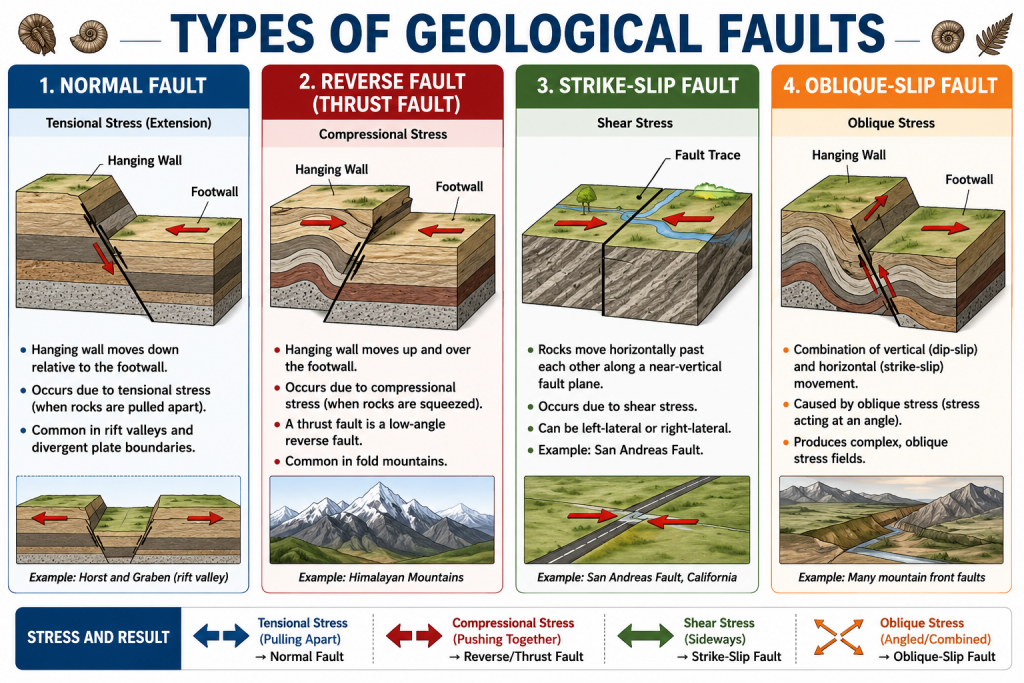
- It is part of a network of tectonic faults in the eastern Himalayan region created by the collision of the Indian and Eurasian tectonic plates.
- It is located within the reservoir area of the Yarlung Tsangpo downstream hydropower station.
- It has remained active since the Early Pleistocene and continues to exhibit strong activity during the present Holocene epoch.
- Dating of ancient lake sediments suggests the fault remained active as recently as 9,500 years ago.
Source : TH
UMANG Portal
Syllabus: GS2/ Government Initiatives
Context
- Researchers have identified security vulnerabilities in India’s UMANG Portal, raising concerns about personal data.
About UMANG Portal
- UMANG (Unified Mobile Application for New-age Governance) is a flagship initiative under the Digital India Programme. It offers a single window access to a wide range of services delivered by the Central Government, State Governments and local bodies through a unified mobile application.
- It enables citizens to access services such as EPFO, healthcare, pensions, LPG bookings, certificates, and several other citizen-centric services through a single platform.
- It was launched in November 2017 by Prime Minister Narendra Modi during the 5th Global Conference on Cyberspace in New Delhi.
- As of February 2026, UMANG offers 2,446 services from 240 government departments, including 80 Central Government Departments and 160 departments across 30 States and Union Territories.
- UMANG supports 23 Indian languages, including Hindi, English, Nepali, and Sanskrit.
Source: TH
Standing Deposit Facility (SDF)
Syllabus: GS3/Economy
In News
- The Reserve Bank of India(RBI) absorbed 1.67 lakh crore rupees through the Standing Deposit Facility (SDF).
Standing Deposit Facility (SDF)
- It is a tool with RBI for liquidity management to suck out excess liquidity from the banking system and to control inflation.
- In 2018, the amended Section 17 of the RBI Act empowered the central bank to introduce the SDF — an additional tool for absorbing liquidity without any collateral.
- It has replaced the Fixed Rate Reverse Repo (FRRR) as the lower bound of the Liquidity Adjustment Facility (LAF) corridor.
- It enables banks to park their surplus funds with the RBI without collateral, thereby fortifying the conduct of monetary policy and supporting financial stability.
- Under the SDF, the eligible entities can place deposits with the RBI on an overnight basis.
- The RBI, however, retains the flexibility to absorb liquidity for longer tenors under the SDF with appropriate pricing, as and when the need arises.
- It is available throughout the year along with the Marginal Standing Facility (MSF).
Source: Air
Eärendil-1
Syllabus: GS3/Defence
Context
- The U.S. Federal Communications Commission (FCC) authorized a company named Reflect Orbital to launch and operate a test satellite named Eärendil-1.
About
- Eärendil-1 is named for a character in the Tolkien fantasy epic The Silmarillion.
- It will be a single satellite in a non-geostationary orbit fit with a “deployable, highly specular thin-film reflector”.
- The reflector will be motorised and can be steered to different orientations.
- The satellite will operate at an altitude of around 625 km with a high inclination of 88°.
- Its purpose is to reflect sunlight towards specific spots on the earth at nighttime.
- It intends to use this technology to extend the usable hours for solar panels and provide light during “critical operations” like emergency or humanitarian missions.
- The FCC has granted a limited two-year license for the test.
- The project has raised questions about governing orbital debris, ownership of reflected energy, and light pollution.
Source: TH
Sulphur dioxide (SO2)
Syllabus: GS3/ Environment
In Contex
- As per the study, nearly 81 per cent of sulphur dioxide (SO2) emissions from coal plants within a 300-km radius of Delhi-NCR originate from facilities exempted from installing pollution control systems.
About
- Sulphur dioxide is a colourless gas with a sharp, choking smell.
- It forms whenever fuel containing sulphur is burnt, and it’s one of the oldest air pollutants tracked by regulators, dating back to the days of London’s coal-smoke smogs.
- The single biggest source in India is coal-fired thermal power plants. Oil refineries and metal smelting units (especially copper and zinc smelters) add to the load.
- SO2 has health concerns and once released, it reacts with oxygen and moisture in the air to form sulphate particles, which are a component of PM2.5, and sulphuric acid.
- Flue Gas Desulphurisation (FGD) system is a technology to remove SO2 from coal plant emissions using limestone slurry, producing gypsum as a by-product.
Source: DTE
Global Liveability Index 2026
Syllabus:Miscellaneous
Context
- The Economist Intelligence Unit has released the Global Liveability Index 2026.
Major Highlights
- The index is compiled annually by the EIU, the research and analysis arm of The Economist Group, it scores 173 cities on 30 indicators.
- These are grouped under five categories: Stability, healthcare, culture and environment, education, and infrastructure.
- Copenhagen (Denmark) remains the world’s most liveable city, edging out Vienna (Austria) and Melbourne (Australia), which are in second and third place.
- New Delhi is ranked 120, followed by Mumbai (121), Chennai (123), and Bengaluru (127).
- Neither this year’s report nor last year’s names a single Indian city in the top or bottom ten, or among the biggest movers.
- Western Europe is still the strongest region for liveability, but its average score has stagnated, while Asia’s has risen.
- Karachi stayed pinned at 170th place two years consecutively, Dhaka held at 171st, Damascus (Syria) remains the world’s least liveable city for a second consecutive year.
Source: TOI
Previous article
Digital Threat Report 2025–26
