


Syllabus: GS3/ Internal Security
Context
- India is strengthening its maritime security capabilities through the induction of indigenous naval platforms designed for combat operations, surveillance, and coastal defence, reflecting the growing importance of the Indian Ocean Region (IOR).
India’s Maritime Zone
- India’s maritime zone refers to the maritime boundaries and areas under its jurisdiction in the surrounding seas and oceans.
- India’s coastline stretches over 11,000 kilometers including island territories.
- Indian Ocean Region: The Indian Ocean covers approximately one-fifth of the total ocean area of the world.
- The Indian Ocean is bounded by Iran, Pakistan, India, and Bangladesh to the north; the Malay Peninsula, the Sunda Islands of Indonesia, and Australia to the east; the Southern Ocean to the south; and Africa and the Arabian Peninsula to the west.
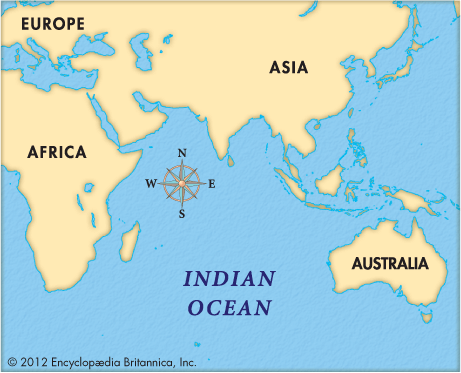
- Maritime Security: It involves protecting the nation’s sovereignty from threats arising from the oceans and seas.
- Threats include protecting coastal areas, safeguarding the available ocean resources such as fish, offshore oil and gas wells, port facilities, etc.
- India’s maritime security is closely linked to major chokepoints in and around the Indian Ocean, such as the Strait of Hormuz, Bab-el-Mandeb, Malacca Strait, and Lombok Strait.
India’s Layered Naval Capability
- The Indian Navy is a primary security provider in the Indian Ocean Region.
- It safeguards a coastline of about 11,098 kilometres, an Exclusive Economic Zone of nearly 2.4 million square kilometres, and sea lanes carrying close to 90 per cent of India’s trade by volume.
- Achieving this requires a balanced fleet, with each class of warship contributing to a distinct layer of maritime security.
- In India, New-generation indigenous naval platforms have been inducted to bring this layered approach to life.
Stealth Frigates of the Navy
- Designed for modern naval warfare, they integrate advanced weapons, sensors, and aviation facilities while optimizing radar, infrared (thermal), and acoustic signatures for enhanced stealth.
- Project 17A is the Indian Navy’s advanced stealth frigate programme to build seven next-generation guided-missile warships.
- The Nilgiri-class comprises INS Nilgiri, INS Himgiri, INS Taragiri, INS Udaygiri, INS Dunagiri, INS Mahendragiri and the under construction Vindhyagiri.
Survey Vessels of the Navy
- Survey vessels strengthen the Indian Navy’s hydrographic capability by mapping the seabed and coastal waters.
- These ships regularly undertake humanitarian assistance, disaster relief and search and rescue missions.
- The Indian Navy is inducting the indigenous Sandhayak-class survey vessels. The class comprises INS Sandhayak, INS Nirdeshak, INS Ikshak and INS Sanshodhak.
Shallow-Water Sub-Hunters
- Anti-Submarine Warfare Shallow Water Craft strengthen the Indian Navy’s coastal defence capability. They detect and neutralise submarines operating in shallow waters near the coast.
- The Indian Navy is inducting the indigenous Arnala-class craft.
- The eight-ship class comprises Arnala, Androth, Anjadip, Amini, Abhay, Agray, Akshay and Ajay.
Other Initiatives of Government
- Sagarmala Programme: Focuses on leveraging India’s coastline and of navigable waterways.
- Supports port infrastructure, coastal development, and connectivity.
- Financial aid for projects like coastal berths, rail/road connectivity, fish harbours, cruise terminals.
- Maritime India Vision 2030 (MIV 2030): Aiming for India to become a top 10 shipbuilding nation by 2030 and create a world-class, efficient, and sustainable maritime ecosystem.
- Maritime Development Fund: ₹25,000 crore fund for long-term financing to modernize ports and shipping infrastructure, encouraging private investment.
- India launched SAGAR (Security and Growth for All in the Region) in 2015 to secure its immediate Indian Ocean neighbourhood.
- It later evolved and expanded its reach globally by launching MAHASAGAR (Mutual and Holistic Advancement for Security and Growth Across Regions) in 2025 to build partnerships across the broader Global South.
Conclusion
- India’s maritime security initiatives reflect a blend of military capability, infrastructure readiness, regional partnerships, and legal-institutional frameworks.
- Initiatives such as Act East Policy, Indo-Pacific Vision, and Blue Economy strategy reinforce India’s centrality in the IOR.
Source: PIB
Previous article
UN’s First Scientific Report on AI
Next article
Digital Threat Report 2025–26
