


Loknayak Jayaprakash Narayan
Syllabus: GS1/Personality in News
Context
- The Prime Minister has remembered Loknayak Jayaprakash Narayan on his birth anniversary.
About
- Jayaprakash Narayan was born on October 11, 1902 and died on October 8, 1979.
- He was an Indian political leader, socialist thinker, and independence activist.
- He was popularly known as Lok Nayak (“People’s Leader”) not only because of his advocacy for social and economic equality but also for his refusal of political power.
Early Life and Freedom Struggle
- Congress Socialist Party: In 1934, he became one of the prominent founders of the Congress Socialist Party, a socialist group within the Indian National Congress.
- Quit India Movement (1942): He was imprisoned by the British during the movement and escaped from Hazaribagh Central Jail in Bihar in 1942. He subsequently helped organise resistance against British rule.
- Socialist politics: After independence, he became an important voice in socialist politics but gradually moved away from electoral party politics towards constructive social work.
Contribution to Indian Society and Politics
- Bhoodan and Sarvodaya movements: From the 1950s, he associated himself with Vinoba Bhave’s Bhoodan movement, which encouraged landowners to voluntarily donate land to the landless.
- Total Revolution Movement (1974): On 5 June 1974, he gave the call for Total Revolution at a massive rally at Gandhi Maidan, Patna.
- He called for greater public participation, accountability in government and the fight against corruption. His movement also demanded the resignation of the government in Bihar.
- Participatory democracy: He advocated decentralisation of power, stronger village-level institutions and greater involvement of citizens in decision-making.
- Ethical politics: He emphasised integrity in public life, accountability of political leaders and the need to prevent the concentration of power.
- Non-violent social change: He supported peaceful mass mobilisation and sought transformation through public participation rather than armed revolution.
Awards and Recognition
- In 1965 he received the Ramon Magsaysay Award, an honor named for a former Philippine president and given for exceptional service in Asia.
- He was posthumously awarded the Bharat Ratna, the highest civilian award in India, in 1998.
Source: PIB
Kulsi River
Syllabus: GS1/Geography
Context
- Villagers living along the Kulsi River in Assam and Meghalaya are protesting for a proposed 55-MW hydropower-cum-irrigation project citing concerns over displacement, indigenous rights and ecological damage.
About
- The Kulsi River is a tributary of the Brahmaputra River, flowing through Meghalaya and Assam.
- It originates in the West Khasi Hills of Meghalaya, where its upper course is known as the Khir River.
- After flowing through Meghalaya, it enters Assam and flows through Kamrup district, where it is known as the Kulsi.
- It joins the Brahmaputra near Nagarbera in Assam.
Do you know?
- The Kulsi River is a natural habitat of the endangered Gangetic river dolphin (Platanista gangetica), which was declared India’s National Aquatic Animal in 2009.
Source: TH
WHO Prequalifies HPV vaccine CERVAVAC
Syllabus: GS2/Health
Context
- The Serum Institute of India’s indigenously developed quadrivalent human papillomavirus (HPV) vaccine, CERVAVAC, has received prequalification from the World Health Organization (WHO).
About
- CERVAVAC is India’s first indigenously developed gender-neutral quadrivalent HPV vaccine and targets HPV types 6, 11, 16 and 18.
- It is licensed in India for girls and boys aged 9 to 26 years.
- The qualification will allow the vaccine to be procured by United Nations agencies and potentially supplied to countries running HPV immunisation programmes.
- The development is significant for India as well as the global effort to prevent cervical cancer.
Cervical Cancer
- Cervical cancer is cancer that starts in the cells of the cervix.
- The cervix is the lower, narrow end of the uterus (womb). The cervix connects the uterus to the vagina.
- Spread: Almost all cervical cancer cases (99%) are linked to infection with high-risk human papillomaviruses (HPV), an extremely common virus transmitted through sexual contact.
- Although most infections with HPV resolve spontaneously and cause no symptoms, persistent infection can cause cervical cancer in women.
- Prevalence: Cervical cancer is the fourth most common cancer in women.
- It is the second most common type of cancer in India for women following breast cancer.
- Prevention: Effective primary (HPV vaccination) and secondary prevention approaches (screening for, and treating precancerous lesions) prevents most cervical cancer cases.
- Global Burden: Globally, cervical cancer caused an estimated 604,000 new cases and 342,000 deaths in 2020.
- Vaccination in India: In India the national HPV vaccination programme was launched on February 28, 2026, targeting about 1.2 crore 14-year-old girls.
- A free single dose of more than 80 lakh doses had been administered by this year.
- India also has an indigenous quadrivalent vaccine, CERVAVAC and access to other HPV vaccines, including Gardasil 9 and Cervarix, through the private market.
Source: TH
Maharaja Agrasen
Syllabus: GS1/History
Context
- Prime Minister Narendra Modi paid tribute to Maharaja Agrasen on his birth anniversary.
About
- Maharaja Agrasen is regarded as an ancient Indian king associated with Agroha, in present-day Haryana.
- His birth anniversary is observed as Maharaja Agrasen Jayanti and is observed according to the Hindu lunar calendar, generally around September or October.
- Lineage: According to traditional accounts, he belonged to the Suryavansha (Solar dynasty) and was associated with the kingdom of Agroha.
- He is traditionally regarded as the founder of Agroha, which became an important centre associated with the Agrawal community.
- Religious tradition: He is associated with the worship of Goddess Lakshmi and is remembered for promoting prosperity through ethical trade and social responsibility.
- Historical evidence: Details of his life, reign and chronology are rooted largely in community traditions and legends. His exact historical period and the details of his biography are not firmly established by contemporary historical evidence.
- Agroha Dham in Haryana is a major religious and cultural centre associated with Maharaja Agrasen and Goddess Mahalakshmi.
Source: AIR
Orangutan
Syllabus: GS3/ Environment
Context
- The Indonesian authorities successfully moved eight orangutans to a safe location after the wildfires in the forests of Borneo.
About Orangutan
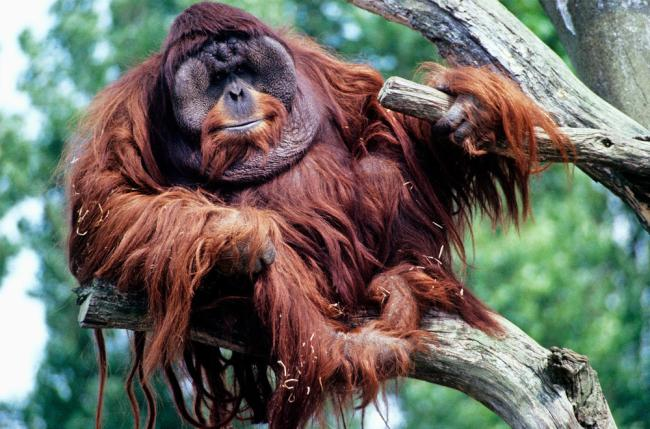
- Characteristics: Orangutans are the largest arboreal mammal, spending most of their time in trees.
- They are the closest living relatives of humans and they share 96.4% of Human genes and are highly intelligent creatures.
- There are three species of Orangutan – the Bornean, Sumatran and Tapanuli – which differ a little in appearance and behavior.
- Eating habits: Orangutans mainly eat fruits, such as mangoes, lychees and figs, but they also feed on young leaves, flowers, insects, and even small mammals.
- Habitat and Distribution: They can occur up to 1,500m above sea level, most are found in lowland areas and prefer forests in river valleys or floodplains.
- These great apes are only found in the wild on the islands of Borneo and Sumatra.
- IUCN status: All three orangutan species are critically endangered.
Source: THE PRINT
India’s Anti-Dumping Probe into Penicillin G Imports
Syllabus: GS3/ Economy
Context
- India has initiated an anti-dumping investigation into imports of Penicillin G and its salts from China after domestic manufacturer Lyfius Pharma alleged that the imports were causing material retardation to the industry.
About Penicillin G
- Penicillin G is a beta-lactam antibiotic used to treat bacterial infections.
- It serves as a key starting material (KSM) and an active pharmaceutical ingredient (API) in the manufacture of medicines.
- It is used in the treatment of infections such as pneumonia, meningitis, diphtheria and certain dental infections.
What Is Anti-Dumping Duty?
- An anti-dumping duty is an additional customs duty imposed on imports when a product is exported at a price below its normal value and the dumping causes or threatens material injury to the domestic industry.
- The duty aims to address unfair price competition rather than prevent imports altogether.
- In India, the Directorate General of Trade Remedies (DGTR), under the Ministry of Commerce and Industry, investigates and recommends anti-dumping duties, while the Department of Revenue, Ministry of Finance, decides whether to impose them.
Source: TH
Previous article
World’s First Nuclear Clock
Next article
News In Short 12-10-2026
