

Supreme Court on Three-Language Policy
Syllabus:GS2/Governance
In News
The Supreme Court has urged the Union government to defer mandatory implementation of the three-language policy for Class 6 to January 1, 2027, instead of applying it to the current batch with only about four months remaining in the academic year.
Three Language Policy
- NEP 2020 continues with the three-language formula of NEP 1968 with more flexibility.
- NEP 1968 advocated for Hindi to be a compulsory language across the nation.
- Hindi-speaking States were required to teach Hindi, English, and a modern Indian language — preferably a South Indian language.
- Non-Hindi-speaking States were expected to teach the local regional language, Hindi, and English.
- NEP 1968 advocated for Hindi to be a compulsory language across the nation.
- NEP 2020 offers greater flexibility, technically not imposing any specific language on any State.
- The three languages can be chosen by the states, regions, and students, provided at least two are Indian languages. Therefore, pupils do not have to learn Hindi necessarily but one Indian language other than the State/regional language.
- The strategy also supports the idea of bilingual education, notably through the home/mother tongue and English, and gives Sanskrit a significant place as an optional choice.
CBSE circular on Three-language policy
- It is part of the CBSE’s alignment of its scheme of studies with the National Education Policy 2020 (NEP) and the National Curriculum Framework for School Education 2023 (NCF-SE).
- Under a circular issued, the study of three languages, with at least two being native Indian languages, was made compulsory for Class 9 students beginning July 1.
The CBSE circular outlined the following framework:
- Language Mandate: “Every student in Class 9 would study three languages.
- Out of the three languages, at least two would be Bhartiya Bhashas. Examples of Bhartiya Bhashas: Hindi, Sanskrit, Tamil, Telugu, Kannada, Malayalam, Marathi, Bengali, Punjabi, Gujarati, Odia, Assamese, etc. Examples of non-native languages: English, French, German, Arabic, Spanish, etc.”
- Foreign Languages: Students opting for a foreign language may do so only as a third language after studying two native Indian languages, or as an additional fourth language.
- Timeline: “With effect from July 1, 2026, for Class 9, the study of three languages (R1, R2, R3) shall be compulsory, with at least two languages being native Indian languages.”
- The board made two Indian languages mandatory for Class 6, providing some relaxation for students in Classes 7, 8, and 9 who were already studying two non-native languages.
Latest Observations of Supreme Court
- Supreme Court observed that the policy, envisaged in the 2020 National Education Policy, should be introduced gradually and with sufficient “breathing space”
- It suggested that the government could develop incentives and engaging methods to encourage students to learn a third language.
- It suggested that the third language could alternatively remain optional for the current batch and become mandatory from January 1, 2027.
Source: TH
Pradhan Mantri Khanij Kshetra Kalyan Yojana
Syllabus: GS3/Economy
In News
Pradhan Mantri Khanij Kshetra Kalyan Yojana (PMKKKY) is promoting education, healthcare, drinking water, and livelihood opportunities in the mining-affected areas.
Pradhan Mantri Khanij Kshetra Kalyan Yojana (PMKKKY)
- It was established in September 2015 to ensure that communities affected by mining benefit from mineral extraction and receive suitable social and physical infrastructure.
- It is administered through District Mineral Foundations (DMFs), which are non-profit trusts constituted under the 2015 modification to the MMDR Act, 1957, and the DMFs work under the control of the State Government.
Features
- It aims to conduct development and welfare projects, reduce the environmental, health, and socio-economic repercussions of mining, and promote sustainable livelihoods.
- Special safeguards have been provided to the Scheduled and Tribal Areas by Constitutional provisions, PESA, 1996, and the Forest Rights Act, 2006.
- DMFs are funded by mining royalty-related contributions, which amount to 10% for leases awarded from 12 January 2015 and 30% for leases given before this date.
- Up to 70% of funding has to be spent on high-priority sectors such as drinking water, healthcare, education, environment, sanitation, housing, skill development and livelihoods
- 30% can be utilised for infrastructure, irrigation, energy and watershed development.
Source: PIB
Electronics Components Manufacturing Scheme
Syllabus:GS3/Economy
In News
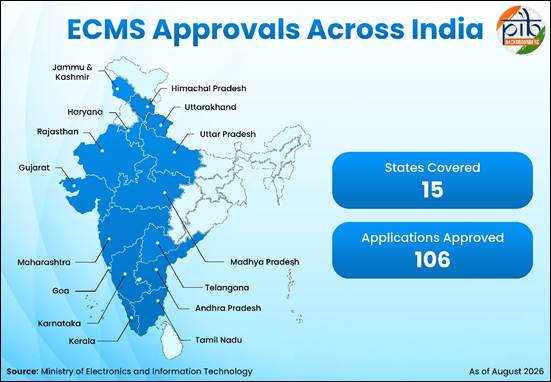
The Electronics Component Manufacturing Scheme is accelerating the development of a robust and deep-rooted ‘Swadeshi’ electronics value chain, moving beyond assembly to domestic manufacturing of critical components and essential raw materials.
Electronics Components Manufacturing Scheme
- It was notified on April 8, 2025, with an original outlay of ₹22,919 crore, equivalent to about USD 2.7 billion.
- It has a tenure of six years, with an optional one-year gestation period.
- Capex Incentive is available for five (5) years
- The Union Budget 2026–27 increased the ECMS outlay to ₹40,000 crore. The enhanced allocation will further deepen domestic electronics component manufacturing.
- It aims to build a strong and self-sustaining ecosystem for electronics component manufacturing in the country.
- Its focus is on attracting both domestic and global investment across the value chain, promoting higher domestic value addition, and positioning India as a key player in global electronics trade.
Objectives
- It complements the India Semiconductor Mission (ISM), working alongside it to strengthen the domestic semiconductor and electronics ecosystem.
- It seeks to integrate India’s electronics industry with global value chains by encouraging production of essential components, sub-assemblies, and raw materials within the country.
Did you know?
- India’s electronics manufacturing sector has undergone tremendous growth. Electronics manufacturing rose from ₹1.9 lakh crore in 2014-15 to ₹13.11 lakh crore in 2025-26.
- In the same period, electronics exports rose from ₹38,000+ crore to ₹4.24 lakh crore.
- Such continuous growth has provided a solid basis for India’s electronics manufacturing aspirations.
Source: PIB
Cheetah Reintroduction and Emerging Social Behaviour
Syllabus: GS3/ Environment
Context
- Kuno National Park has reported an unusual coalition of two unrelated male cheetahs, highlighting the emergence of natural social behaviour in the reintroduced population.
What is Project Cheetah?
- Project Cheetah, launched in 2022 under the aegis of the Ministry of Environment, Forest and Climate Change and spearheaded by the National Tiger Conservation Authority
- It is India’s cheetah relocation programme. It aims to bring back India’s only extinct large mammal.
- The cheetah was officially declared extinct by the Indian government in 1952.
- Kuno National Park in Madhya Pradesh was selected as India’s first cheetah reintroduction site because it offers ideal habitat, abundant prey, and minimal human disturbance, thanks to earlier village relocations.
- The first batch of eight cheetahs arrived in 2022 from Namibia and another batch of 12 cheetahs from South Africa arrived in 2023 in Kuno National Park.
- Two male cheetahs were moved from Kuno National Park to Gandhi Sagar Wildlife Sanctuary in 2025, making it the second home for cheetahs in India as part of Project Cheetah.
Current population of Cheetahs
- Currently, the population is 52 cheetahs, comprising 49 in Kuno National Park and 3 in Gandhi Sagar Wildlife Sanctuary.
- Of these, 32 were born in India, while 17 of the 49 cheetahs at Kuno are currently living in the wild, and the rest remain in soft-release enclosures.
Kuno National Park
- The park is located in the Vindhyan Hills of Central India in Madhya Pradesh.
- It was established in 1981 as a wildlife sanctuary. In 2018, it was given the status of a national park.
- The Kuno River flows through the national park.
Cheetah
- Cheetah (Acinonyx jubatus), is one of the world’s most recognizable cats, known especially for its speed.
- Distribution: Historically widespread across Africa and southwestern Asia, cheetahs are now known to occur in only 9% of their past distributional range, with their remaining strongholds in Southern and Eastern Africa
- Since the 1940s, the cheetah has gone extinct in 14 other countries – Jordan, Iraq, Israel, Morocco, Syria, Oman, Tunisia, Saudi Arabia, Djibouti, Ghana, Nigeria, Kazakhstan, Pakistan and Afghanistan.
- Status in India: In India, the cheetah population used to be fairly widespread.
- The cheetah is believed to have disappeared from the Indian landscape in 1947 when Maharaja Ramanuj Pratap Singh Deo of Koriya princely state hunted down and shot the last three recorded Asiatic cheetahs in India.
- The cheetah was officially declared extinct by the Indian government in 1952.
- IUCN Red List Status: It is listed as Vulnerable
Reason for Extinction
- Over-hunting was a major contributing factor.
- The decimation of its relatively narrow prey base species and
- The loss of its grassland-forest habitat.
Source: IE
First Soil Carbon Payments to Farmers
Syllabus: GS3/ Agriculture/ Environment
Context
- India has initiated its first soil-carbon payments to over 2,500 farmers in Punjab and Haryana, linking adoption of regenerative farming practices with additional farm income through carbon credits.
Regenerative Agriculture
- It is an agricultural technique that puts soil health, biodiversity and natural ecosystem processes first.
- Healthy soil is the basis for food production, carbon storage, homes for microbes, insects and fungi, and also aids with things like drainage and pollination.
- This is important because intensive farming – with heavy machinery and overuse of fertilisers and pesticides – may degrade and erode soils, reducing soil carbon and releasing carbon dioxide (CO₂) into the atmosphere.
About soil-carbon payments under ‘Aadi’ farmer carbon programme
- The payments are linked to the ‘Aadi’ farmer carbon programme, launched by Grow Indigo in 2019 with technical guidance from ICAR.
- Under the programme, farmers adopted practices including Direct Seeded Rice (DSR), reduced tillage and crop-residue management between 2019 and 2022.
- The resulting greenhouse gas reductions and increases in soil carbon were measured and independently verified before carbon credits were issued.
- The Aadi programme currently covers more than two million acres and over 100,000 farmers across seven states and has issued agricultural carbon credits under the Verra VM0042 methodology.
- It is part of a wider transition towards regenerative agriculture in Punjab and Haryana, focusing on crop-residue management, water conservation and farming practices aimed at improving soil health and climate resilience.
Importance
- Soil-carbon payments provide farmers with financial returns for adopting practices that increase soil carbon sequestration or reduce greenhouse gas emissions.
- The carbon benefits are quantified, independently verified and converted into carbon credits, which can generate revenue for participating farmers.
Source: DD News
Melanoma
Syllabus: GS2/Health
Context
- Thousands of patients in India are diagnosed with melanoma, a type of skin cancer, each year.
About
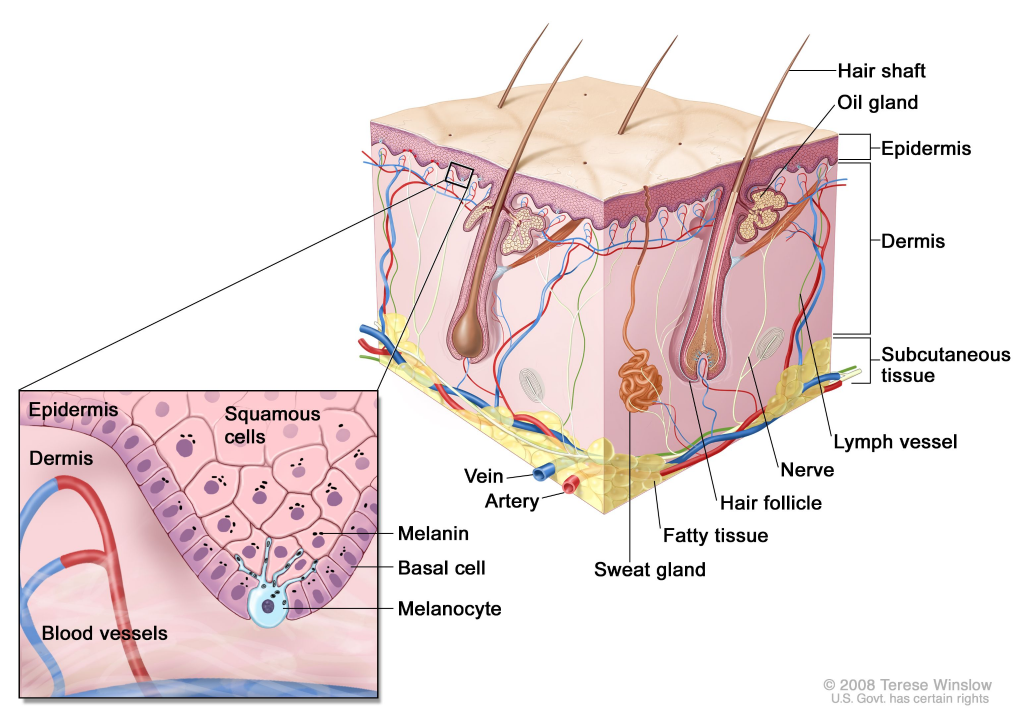
- Melanoma is a type of skin cancer that develops from melanocytes, the cells responsible for producing the pigment melanin.
- It is less common than some other skin cancers but can be more aggressive because it can spread to other parts of the body.
- Major risk factor: Excessive exposure to ultraviolet (UV) radiation, particularly from sunlight and tanning devices.
- Appearance: It may develop as a new dark spot or arise from an existing mole.
- Melanoma can be treated successfully if it is found early.
Human Skin
- The skin is the body’s largest organ. The skin has several layers, but the two main layers are the epidermis (upper or outer layer) and the dermis (lower or inner layer).
- Skin cancer begins in the epidermis, which is made up of three kinds of cells:
- Squamous cells: Thin, flat cells that form the top layer of the epidermis.
- Basal cells: Round cells under the squamous cells.
- Melanocytes: Cells that make melanin and are found in the lower part of the epidermis. Melanin is the pigment that gives skin its natural color.
Source: TH
A New Cat Species Identified in over a Century
Syllabus: GS3/Species in News
Context
- A diminutive wild cat in Bolivia has been identified as a previously unknown species, marking the first time a new living cat species has been formally named and described in more than a century.
About
- The cat, called Tilcayo by local communities, is part of a group called tiger cats found across much of South America.
- Tilcayo cat is light brown, with rosettes across its body.
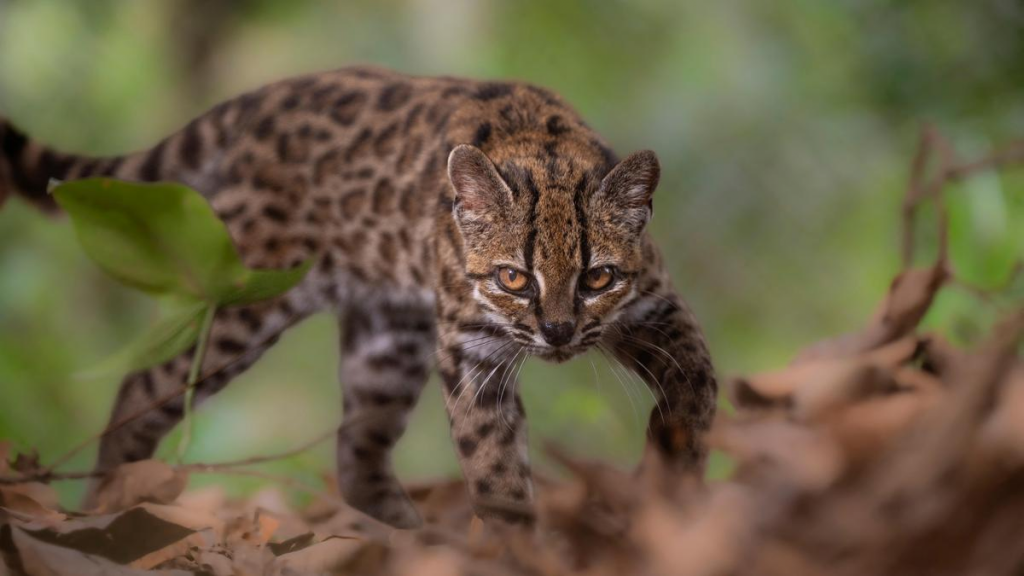
- It was found in Bolivia’s lush Yungas forest, a mountainous region where forests are often covered by clouds and surrounded by high humidity.
- It measures about 18 inches (46 cm) long and weighs around 3 pounds (1.4 kg), making it smaller than the average domestic cat.
- Researchers used genetic data to confirm that the cat is a new species, and gave it the scientific name Leopardus tilcayo, retaining its local name.
Source: TH
Kosovo
Syllabus: GS1/Geography
Context
- Hashim Thaci, the former President of Kosovo, has been sentenced to 25 years in prison after being found guilty of war crimes by a special European Union-backed court at The Hague.
About Kosovo
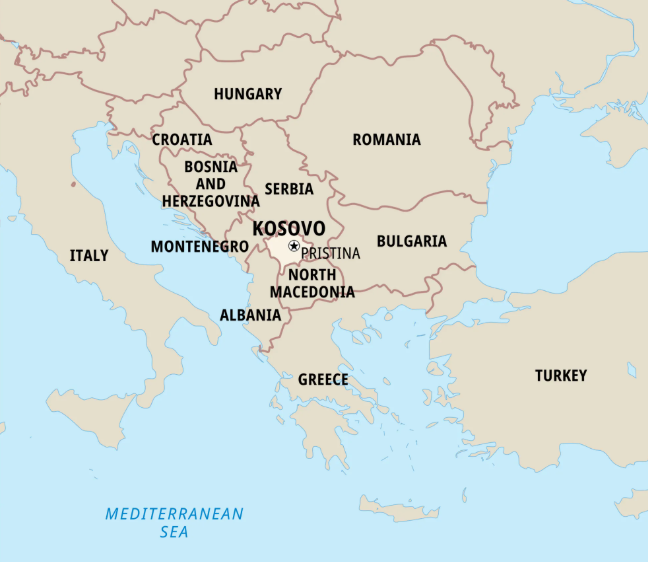
- Kosovo is a self-declared independent country in the Balkans region of Europe.
- It declared its independence from Serbia on February 17, 2008.
- It is bordered by Serbia to the north and east, North Macedonia to the south, Albania to the west, and Montenegro to the northwest.
- It is a landlocked country and has no access to the Mediterranean Sea and can only access the Adriatic Sea through either Montenegro or Albania.
- Capital: Pristina.
- Kosovo has diverse relief and landscape, with the Sharr Mountains dominating the southeastern and southern edges.
Source: TH
Canada to Become First ‘Associate Member’ of European Union (EU)
Syllabus: GS2/IR
Context
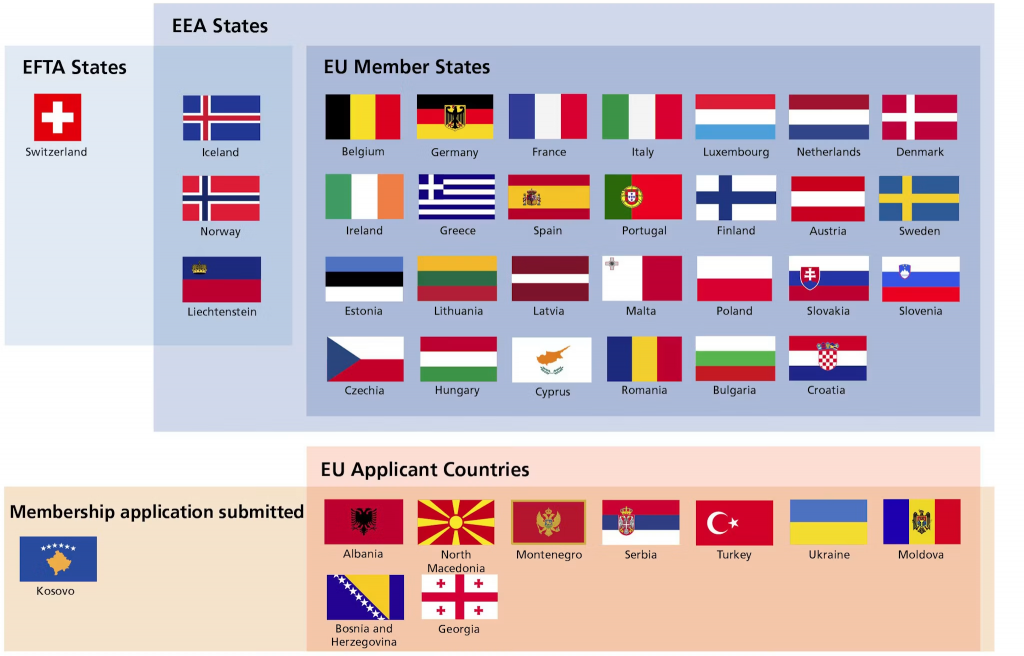
- The European Commission President Ursula von der Leyen has proposed opening the door for Canada to become the EU’s first “associate member.”
What would “associate member” mean?
- It would mean closer integration with the EU without becoming a full member. The proposed partnership could cover trade, technology, defence, energy, critical minerals, AI and the Arctic, creating a broader strategic and economic partnership between Canada and Europe.
- However, the exact rights and obligations are yet to be negotiated, as this status does not currently exist under EU treaties.
European Union (EU)
- The European Union is a political and economic union of 27 European countries.
- Background: The EU traces its roots to the European Coal and Steel Community, established in 1951 by six countries: Belgium, France, Germany, Italy, Luxembourg and the Netherlands.
- In 1957, these six countries established the European Economic Community (EEC) through the Treaty of Rome.
- The European Union was established in 1993 through the Maastricht Treaty, building on the earlier European Communities.
- 21 of the 27 EU countries use the euro as their official currency.
Source: IE
Net Zero Portal and NAPCC Dashboard Launched
Syllabus: GS2/Governnace; GS3/Environment
Context
- Union Minister of State for Environment, Forest and Climate Change launched India’s Net Zero Portal and the National Action Plan on Climate Change (NAPCC) Dashboard on the occasion of World Ozone Day 2026.
Net Zero Portal
- The Net Zero Portal is a centralised digital platform for voluntary registration and disclosure of Net Zero commitments by Indian entities.
- Participating entities can disclose their greenhouse gas (GHG) emissions, declare Net Zero targets and provide annual progress updates.
- Entities are encouraged to report Scope 1 and Scope 2 emissions, while reporting of Scope 3 emissions remains voluntary.
- Scope 1, 2, and 3 emissions are greenhouse gases that are released across an organization’s entire value chain. Scope 3 emissions are the most complex, as they are released before and after a product is delivered or consumed.
NAPCC Dashboard
- The NAPCC Dashboard provides a consolidated digital view of implementation and progress across the National Missions under the NAPCC.
- The NAPCC, launched in 2008, is India’s comprehensive framework for addressing climate change and comprises eight core missions.
- It will strengthen inter-ministerial coordination, support evidence-based assessment of national climate actions, help assess sectoral progress, identify implementation gaps and consolidate relevant inputs.
Did you know?
- India’s Nationally Determined Contribution (NDC) for the period 2031 to 2035, enhancing the country’s ambition under the UNFCCC and its Paris Agreement.
- India after the update in 2022, has now announced its targets for 2031-35, marking a significant step towards the goal of achieving net-zero by 2070.
- India’s original climate commitments, i.e., the NDC submitted in 2015, laid a strong foundation, with targets by 2030 of 33–35% reduction in the emissions intensity of GDP and a 40% share of non-fossil-based electric power installed capacity, both of which were met 11 years and 9 years ahead of the committed timelines, demonstrating a credible and action-oriented approach to climate governance.
- Emissions intensity has since reduced by 36% during 2005 to 2020, and the target has now been enhanced to 47% to be achieved by 2035.
- The country has achieved 52.57 % non-fossil capacity (February 2026), successfully meeting the target five years ahead of the timeline, and now the ambition has been further raised to a 60% share of non-fossil fuel-based energy resources in installed electric power capacity to be achieved by 2035.
Source: DDNews
