

Global Gender Gap Index 2026
Syllabus: GS2/ Governance
Context
- India has retained its 131st rank on the Global Gender Gap Index 2026 released by the World Economic Forum, with only 14 economies ranking below it.
About
- Since its inception in 2006, the index benchmarks progress towards gender parity across four dimensions: Economic Participation and Opportunity, Educational Attainment, Health and Survival, and Political Empowerment.
- The Index uses a 0 to 1 scale, where 1 represents full parity.
Key Findings
- Iceland has topped the ranking, followed by Finland and Norway. In fact, four economies, Iceland, Finland, Norway and Sweden, have appeared in the top 10 in every edition since 2006.
- The last 3 places are occupied by- Pakistan (143rd); Iran (144th), and Chad (145th).
- At the current pace, the world is estimated to be 120 years away from achieving full gender parity.
India’s Performance
- India’s overall gender parity score stands at 64.5%, with Educational Attainment recording the highest parity score at 96.6%, despite a marginal decline of 0.5 percentage points from the previous edition.
- Health and Survival stands at 95.6%, while parity remains lower in Economic Participation and Opportunity at 41.2% and Political Empowerment at 24.5%.
Source: TH
Sohar Port
Syllabus: GS1/Places in News
Context
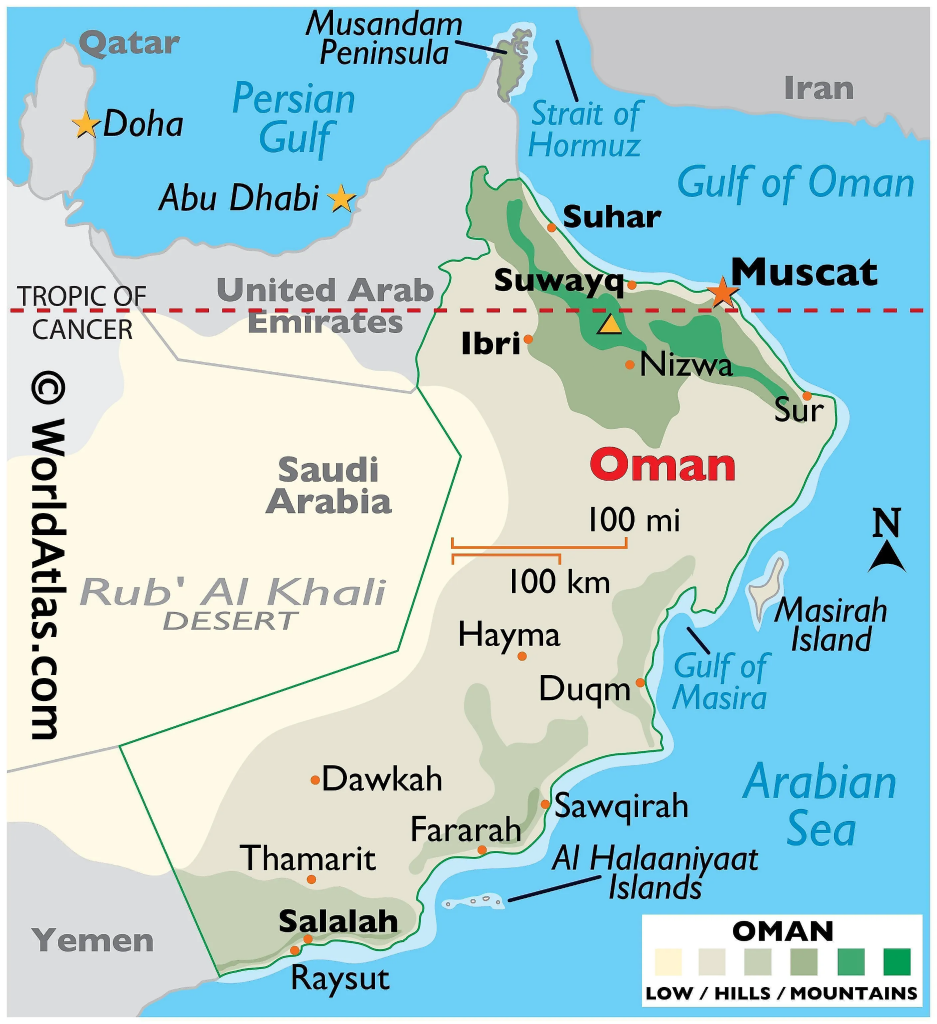
- With the Strait of Hormuz in a chokehold due to Iran-U.S. hostilities, Oman has pitched investment opportunities to India in Sohar Port of Oman.
About
- The Sohar port could provide uninterrupted access to energy resources from the Persian Gulf.
- The port is located on the Omani coast on the Gulf of Oman, and ships can access hubs in the Gulf through this port as it sits far from the Strait of Hormuz.
- Earlier, Oman had offered Duqm and Salalah ports to India, but the Sohar Port has the advantage of being located in the northeast of Oman, close to vital energy pipelines of the United Arab Emirates and eastern Saudi Arabia.
About Gulf of Oman
- The Gulf of Oman is the northwest arm of the Arabian Sea, between the eastern portion (Oman) of the Arabian Peninsula to the southwest and Iran to the north.
- The gulf is 200 miles (320 km) wide between Cape al-Ḥadd in Oman and Gwādar Bay on the Pakistan–Iran border.
- It is 350 miles (560 km) long and connects with the Persian Gulf to the northwest through the Strait of Hormuz.
- The small ports along the gulf include Ṣuḥār, al-Khābūrah, Muscat, and Ṣūr, in Oman, and Jāsk and Bandar Beheshtī (formerly Chāh Bahār), in Iran.
Source: TH
Census Town
Syllabus: GS2/ Governance
Context
- The Ministry of Housing and Urban Affairs (MoHUA) has told a Parliamentary Standing Committee that the 1981 criteria for identifying Census Towns no longer capture the actual scale and spatial diversity of India’s urbanisation.
What is a Census Town?
- A Census Town is a settlement that continues to have a statutory rural status but satisfies demographic and occupational conditions indicating an urban character.
- Under the criteria unchanged since 1981, a settlement must satisfy all three conditions:
- It must have a minimum population of 5,000.
- At least 75% of the male main working population must be engaged in non-agricultural activities.
- It must have a population density of at least 400 persons per sq. km.
Scale of India’s Urbanisation
- According to the 2011 Census, India had a population of about 121 crore, of which around 37.7 crore (31.2%) lived in urban areas and about 83.3 crore (68.8%) lived in rural areas.
- However, the Economic Advisory Council to the Prime Minister (EAC-PM) has estimated that India’s urbanisation level could have been as high as 63% in 2015.
Source: TH
Constitutional Structure of the UK and the Independence Debate
Syllabus: GS2/International Relations
Context
- The Cardiff Agreement, signed by the leaders of pro-independence political parties in Scotland, Wales and Northern Ireland, has renewed debate over the future of the United Kingdom.
About
- The British Isles, a group of over 6,000 islands located in northwestern Europe, comprises the two major islands of Great Britain and Ireland, besides several smaller islands.
- Great Britain consists of three nations — England, Scotland, and Wales — whereas Ireland is made up of the Republic of Ireland and Northern Ireland.
- United Kingdom is the sovereign state consisting of England, Scotland, Wales and Northern Ireland.
How was the United Kingdom formed?
- Wales and England: Wales was brought constitutionally into the Kingdom of England through the Laws in Wales Acts of 1535 and 1542.
- England and Scotland: The Acts of Union 1707 united the Kingdoms of England and Scotland, creating the Kingdom of Great Britain.
- Great Britain and Ireland: The Acts of Union 1800 incorporated the Kingdom of Ireland into the United Kingdom, known as the United Kingdom of Great Britain and Ireland.
- Creation of present-day UK: Following the Anglo-Irish Treaty of 1921, most of Ireland became independent as the Irish Free State in 1922, while Northern Ireland remained within the UK.
Source: IE
Cabinet Approves Enhancement of EPFO Wage Ceiling
Syllabus: GS2/Governance
In News
- The Union Cabinet, chaired by Prime Minister Narendra Modi, has approved raising the EPFO wage ceiling for mandatory coverage from ₹15,000 to ₹25,000 per month.
More About News
- The move is expected to bring over 51 lakh additional employees under mandatory social security coverage.
- The wage ceiling was last revised from ₹6,500 to ₹15,000 in 2014 and has remained unchanged for over a decade.
About EPFO
- The Employees’ Provident Fund Organisation (EPFO), established in 1952, functions under the Ministry of Labour & Employment and provides provident fund, pension and insurance benefits to eligible employees.
- It administers three major schemes:
- The Employees’ Provident Funds Scheme, 1952 (EPF),
- The Employees’ Pension Scheme, 1995 (EPS),
- The Employees’ Deposit Linked Insurance Scheme 1976 (EDLI).
Source: TH
Variable Rate Reverse Repo (VRRR) Auctions
Syllabus: GS3/Economy
In News
- The Reserve Bank of India (RBI) absorbed almost ₹2.9 lakh crore from the banking system through overnight Variable Rate Reverse Repo (VRRR) auctions as part of its efforts to absorb excess liquidity.
Variable Rate Reverse Repo (VRRR)
- VRRR is a monetary-policy tool used by the RBI to absorb surplus liquidity from the banking system.
- Banks park their excess funds with the central bank for a specified period in exchange for interest.
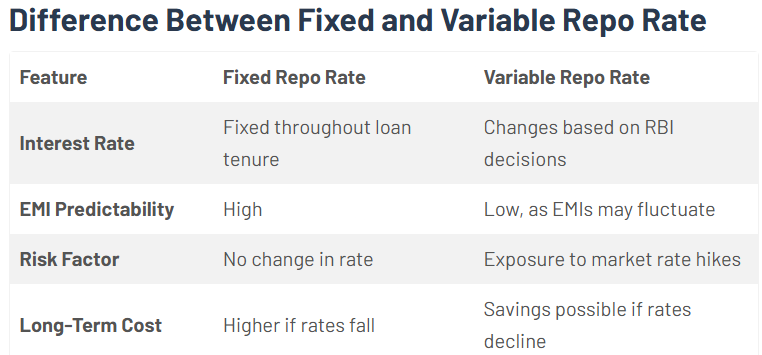
| Do you know? Transient liquidity refers to temporary cash flow fluctuations in a financial or banking system, while a Variable Rate Repo (VRR) auction is a monetary tool used by the RBI to inject short-term liquidity into the banking system. |
Source: TH
NITI Aayog’s India Electric Mobility Index (IEMI) 2025
Syllabus: GS3/Economy/Environment
In News
- NITI Aayog released the India Electric Mobility Index (IEMI) 2025.
India Electric Mobility Index (IEMI)
- It assesses the development of the e-mobility ecosystem and the adoption of electric vehicles (EVs) on Indian roads.
- It is a first-of-its-kind index that offers a dynamic comparative analysis of the progress of road transport electrification across Indian states and union territories.
- The composite scores on performance across all 36 States and Union Territories (UTs) range from 10 to 84, with a median score of 40.
Latest Data
- Top Performers: Delhi bagged the highest score of 84, followed by Maharashtra (78), Karnataka (73), Chandigarh (71), and Goa (65).
- Madhya Pradesh recorded a substantial improvement, moving from the 23rd to seventh rank.
- Delhi, Chandigarh, and Maharashtra were the top three in the highest-weighted category of transport electrification.
- Karnataka emerged victorious in the EV charging infrastructure readiness category, while Delhi topped the EV research and innovation category.
- Main problems: shortage of charging infrastructure, dispersed population, expanding innovation industry. But the EV adoption rate is fast-moving from 0.5% of total registered vehicles in 2018 to 8.25% in 2025-26, with over 8.7 million EVs on Indian roads.
- While the two-wheeler segment continues to dominate the industry in terms of registrations, electric commercial vehicles and buses are also enjoying development – a sign of the growing significance of electrification in decreasing emissions from road transport.
Source: IE
Voyager Missions
Syllabus: GS3/Space
In News
- NASA is powering down instruments on Voyager spacecraft to save energy and extend their interstellar missions.
Voyager Missions
- NASA sent Voyager 2 and Voyager 1 in 1977 to explore Jupiter and Saturn.
- The uncommon planetary alignment, which occurs roughly every 175 years, enabled them to extend their journey to Uranus and Neptune, utilising gravity-assist technology to cut down on travel time and fuel.
- The spacecraft visited all four outer giant planets, 48 moons and their ring and magnetic systems, revolutionising planetary astronomy.
Features
- Voyager 1 and Voyager 2 are the only spacecraft ever to operate outside the heliosphere, the protective bubble of particles and magnetic fields generated by the Sun.
- Voyager 1 reached the interstellar boundary in 2012, while Voyager 2 (traveling slower and in a different direction than its twin) reached it in 2018.
- The spacecraft are powered by radioisotope thermoelectric generators (RTGs), which convert heat from decaying plutonium into electricity.
- However, the generators lose about 4 watts of power every year, forcing NASA engineers to gradually switch off instruments and onboard systems to conserve energy.
Source: TH
Dadasaheb Phalke Award for 2024
Syllabus: Miscellaneous
Context
- Legendary actor Anant Nag, known for his impressive work in Hindi and Kannada cinema will be honoured with the Dadasaheb Phalke Award for 2024.
About
- Instituted in 1969, it is India’s highest award in the field of cinema, presented annually at the National Film Awards ceremony by the Directorate of Film Festivals, an organisation set up by the Ministry of Information and Broadcasting.
- It is presented on the recommendation of the Dadasaheb Phalke Award Selection Committee.
- The award is named after Dadasaheb Phalke (1870–1944), who is regarded as “the father of Indian cinema”. He directed India’s first feature film, Raja Harishchandra (1913).
- The award comprises a Swarna Kamal (Golden Lotus), a shawl and a cash prize of Rs. 10 Lakhs.
- The first recipient of the award was actress Devika Rani, who was honored in 1969.
Source: TH
Previous article
E20 Petrol in India
Next article
News In Short 17-09-2026
