


Icodec/Awiqli drug
Syllabus:GS2/Health
In News
Danish pharmaceutical giant Novo Nordisk launched its weekly insulin shot(icodec) in India , making blood sugar control easier and more convenient for Indian diabetics.
Historical Evolution of insulin
- Prior to 1921, Type 1 diabetes (T1D) was almost universally fatal with treatment consisting of severe calorie restriction and fasting.
- Early insulin was derived from pig and cow pancreases.
- The structure of insulin was discovered in the 1960s. In the 1970s, recombinant DNA technology was developed that resulted in the production of insulin as recombinant human insulin.
- Modern insulin analogues have been modified to improve absorption and to prolong duration of action.
- Insulin’s function:
- Type 1 diabetes: The body produces little or no insulin and therefore insulin injections are needed for life.
- Type 2 diabetes: While many patients can be treated at first with oral medicines, about 25-30% will eventually require insulin therapy as the disease progresses.
Do you know?
- There are around 101 million people with diabetes and 136 million people with pre-diabetes in India.
- Eventually about 20-30% of patients with Type 2 diabetes will need insulin, so that’s about 20 million potential users.
- At present, only about 6 million Indians are on insulin, so there is a lot of underutilisation.
Icodec/Awiqli drug
- Insulin icodec is a genetically engineered insulin analogue (modified human insulin) that is engineered to stay active in the body for a much longer period of time than conventional insulin, allowing for once-weekly dosing instead of daily injections.
- It is the world’s first long-acting insulin shot that reduces the number of pricks to just one a week, from the current once daily.
- It cuts the number of injections from 365 a year to just 52.
- It will be sold under the brand name Awiqli for just Rs 261 per week.
Advantages
- It enhances patient compliance with therapy by reducing the frequency of dosing.
- It Improves long term blood sugar (HbA1c) management.
- It may encourage earlier insulin initiation, reducing complications involving the heart, kidneys, nerves and eyes.
- It can be safely combined with GLP-1 receptor agonists, helping to improve blood sugar control and reduce insulin requirements.
Adverse effects
- Hypoglycaemia (low blood sugar) is the most common side effect of insulin icodec and affects about 1 in 10 patients.
- Experts say the risk is similar to daily conventional insulin injections.
- The hypoglycemia becomes more evident as the insulin brings down the previously high blood glucose.
- Some of the oral diabetes medications may also cause hypoglycemia . This is less noticeable when blood sugar levels are still very high .
Source :IE
Operation Amistad
Syllabus:GS2/IR/GS3/Defence
In News
Operation Amistad has concluded successfully with the return of the Indian contingent to New Delhi.
Operation Amistad
- It is India’s Humanitarian Assistance and Disaster Relief (HADR) mission following the devastating earthquakes in Venezuela.
- Highlights : Two Indian Air Force C-17 Globemaster III aircraft carried a 41-member contingent from the Indian Army’s 60 Para Field Hospital Unit to Venezuela. It comprised surgeons, anaesthesiologists, orthopaedic surgeons, dental and other physicians, paramedical staff and support personnel.
- It also included two BHISHM Cubes, which are state-of-the-art modular and portable mobile mini-hospitals designed for rapid disaster response, 6 tons of essential medicines and medical equipment, and 30 tons of emergency relief supplies, including tents, solar lamps, portable water purifiers, and generator sets.
India’s Humanitarian Assistance and Disaster Relief (HADR) paradigm
- It is backed by a robust policy and institutional architecture that ensures coordinated, timely and credible responses to humanitarian crises both at home and abroad through a whole-of-government approach combining diplomacy, defence, disaster management and public health.
- International HADR operations are regulated by the Prime Minister’s 10-Point Agenda on Disaster Risk Reduction and NDMA’s International HADR Guidelines (October 2024).
- These guidelines institutionalise overseas disaster response based on principles of respect for sovereignty, respect for international humanitarian law and human rights, transparency, accountability and ethical conduct, in line with the UNDRR Gender Action Plan (2024) to promote inclusive humanitarian action.
- They also recognise the Indian Armed Forces as enablers of rapid response and assign them critical roles in strategic airlift, logistics, medical support, evacuation, engineering assistance and use of advanced technologies such as drones and AI-enabled forecasting.
Major International HADR Operations/Evacuation / Relief Operations
- India has emerged as a dependable first responder in the Indian Ocean Region and beyond, guided by the principles of “Vasudhaiva Kutumbakam” and SAGAR (Security and Growth for All in the Region).
- India provides humanitarian assistance, disaster relief, evacuation, medical aid and reconstruction support to the global community through the joint efforts of the Army, Navy and Air Force.
- The induction of INS Sunayna as IOS SAGAR (2025) with personnel from Indian Ocean countries is a reflection of India’s commitment towards collective maritime security, regional cooperation and capacity building.
- India’s major HADR operations include
- Operation Maitri (Nepal, 2015) for rapid rescue, relief, and $2 billion commitment for reconstruction after the earthquake;
- Operation Devi Shakti (Afghanistan, 2021) for the evacuation of 669 people and humanitarian aid;
- Mission SAGAR (2020 onwards) where the Indian Navy provided food, medical oxygen and relief materials to 15 Indian Ocean countries during the COVID-19 pandemic; and
- Operation Samudra Setu (2020) to repatriate 3,992 Indians by sea.
- Operation Ganga (Ukraine, 2022) to evacuate more than 18,000 Indian citizens during the conflict,
- Operation Dost (Türkiye and Syria, 2023) to send medical teams, field hospitals, rescue teams and more than 135 tonnes of relief material after the deadly earthquakes,
- Operation Kaveri (Sudan, 2023) to ensure the safe evacuation of Indian nationals during civil conflict
- Operation Brahma (Myanmar, 2025) to provide approximately 750 tonnes of humanitarian assistance, field hospital for earthquake-hit Myanmar.
Source :Air
GI Tag to Jodhpur Mojari
Syllabus: GS3/Economy
Context
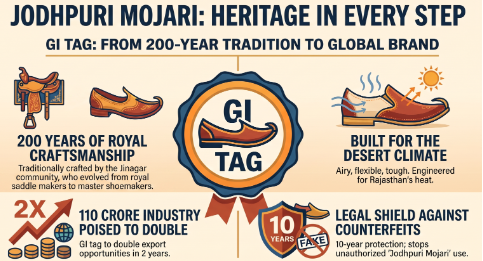
- The iconic Jodhpur Mojari, a handcrafted footwear tradition from Rajasthan, has been awarded the Geographical Indication (GI) tag.
About Jodhpur Mojari
- It is a leather boot known for its high craftsmanship, delicate embroidery and timeless style.
- It is predominantly created by the Jinagar community who were traditionally engaged in saddle manufacture.
- The craft has a history of around 200 years and was originally patronised by the royal family of Rajasthan and has evolved into a distinct cultural character of Jodhpur.
- The domestic market of Jodhpuri Mojari is anticipated to be over ₹100 crore while exports are worth nearly ₹10 crore and the GI tag is expected to further improve its global market potential.
- Mojari, worn by both men and women, suited the hot climate of Rajasthan. It is airy, easy to walk long distances, tough and flexible, and easy to take off at homes and temples. It was designed as slip-on shoes with the top, side and back of the foot almost bare.
Recent GI tags
- Chandannagar’s Jolbhora Sandesh and Janai’s Manohara: In June 2026, West Bengal received GI tags for four more products, taking the total to 21 products. Alongside Chandannagar’s Jolbhora Sandesh, Janai’s Monohara, and Balagarh’s traditional wooden boats have also received recognition.
- Khurasani Imli of Mandu: The fruit of iconic Baobab trees of mandu, Madhya Pradesh, locally known as Khurasani Imli, was awarded the GI tag in June 2026.
- It is famous for its distinctive sweet-sour flavour and high nutritional value.
- Bhagaiya silk, Kuchai silk, Munda jewellery, and bamboo craft of Jharkhand received GI recognition last month. It gives national recognition to crafts rooted in traditional knowledge.
- The Munda jewellery is known for its distinctive designs, traditional craftsmanship and cultural significance, reflecting the identity of the Munda community.
- Ponduru Khadi of Andhra Pradesh: Ponduru Khadi is a traditional hand-woven cotton fabric produced in Ponduru village of Srikakulam district in Andhra Pradesh, locally known as Patnulu.
- The fabric is made using Hill cotton, Punasa cotton, and Red cotton grown in the same region.
- One of its most distinctive features is the use of the jawbone of the Valuga fish for cleaning cotton, a practice not found anywhere else in the world.
Source: IE
India’s First Hydrogen Train
Syllabus: GS3/Science and Tech
Context
- Indian Railways has notified India’s first hydrogen-powered train, which is expected to be flagged off by Prime Minister Narendra Modi on 17 July.
About India’s first hydrogen-powered train
- The Jind-Sonipat route in Haryana has been selected as the pilot corridor for the project.
- Fully designed and developed in India, it is built on a Broad Gauge platform and is currently the world’s longest hydrogen-powered train with 10 coaches.
- The train is powered by a 1,200 kW hydrogen fuel cell propulsion system and has a maximum operating speed of 75 kmph.
- The project includes:
- Conversion of two 1,600 HP diesel power cars into hydrogen fuel cell-powered coaches.
- Establishment of a hydrogen storage and refuelling facility at Jind, Haryana.
- The Research Design and Standards Organisation (RDSO) is responsible for the design, validation, and testing of the project.
Significance
- The hydrogen train is part of Indian Railways’ broader vision to deploy 35 hydrogen-powered trains under the “Hydrogen for Heritage” initiative — specially designed to run on heritage and hill routes across India.
- It marks a historic step in India’s mission to build hydrogen-powered trains, a feat achieved by a few nations like Germany and China.
- This also brings India one step closer to Indian Railways’ bold target — to become a Net Zero Carbon Emitter by 2030.
Hydrogen Fuel Cell Technology
- It generates electricity through a chemical reaction between hydrogen and oxygen, producing water vapour as the only by-product.
- It offers a cleaner alternative to conventional fossil fuel-based railway propulsion systems.
Source: TOI
Ken-Betwa River Linking Project
Syllabus: GS3/Infrastructure
Context
- Residents of several villages who are being impacted by the Ken-Betwa river linking project, have restarted their agitation over their demands of better compensation and rehabilitation.
Ken-Betwa River Linking Project
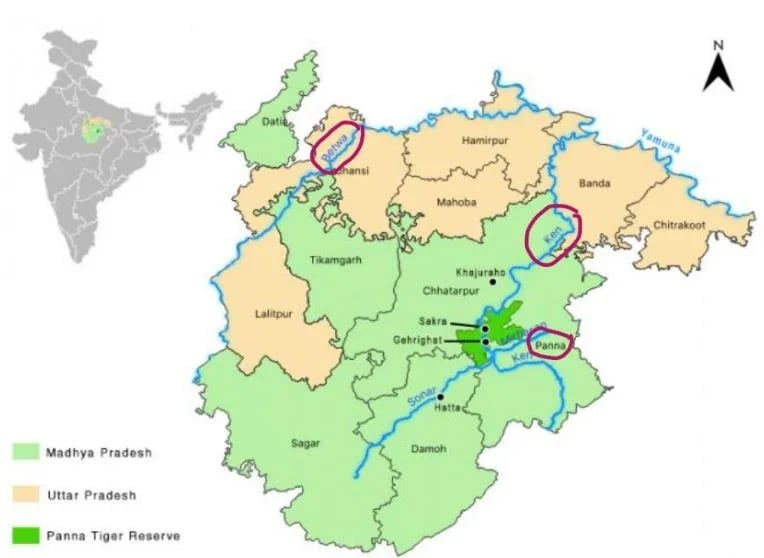
- In 2021, a memorandum of agreement was signed among the Ministry of Jal Shakti and the governments of Madhya Pradesh and Uttar Pradesh to implement the Ken-Betwa Link Project.
- Project:
- Transferring water from the Ken river to the Betwa river, both tributaries of the Yamuna.
- The Ken-Betwa Link Canal will be 221 km in length, including a 2-km tunnel.
- It has two phases. Phase-I will involve building the Daudhan Dam complex and its subsidiary units.
- Phase-II will involve three components — Lower Orr Dam, Bina Complex Project and Kotha Barrage.
- It is the project under the National Perspective Plan for interlinking rivers
Regions to be Benefited:
- The project lies in Bundelkhand, which spreads across 13 districts of Uttar Pradesh and Madhya Pradesh.
- The project will be of immense benefit to the water-starved region.
- Completion: It is proposed to be implemented in eight years.
Source: TH
El Niño Strengthens, Could Develop into Strongest Since 1950
Syllabus: GS1/Climatology
Context
- As per the US-based National Oceanic and Atmospheric Administration (NOAA), the prevailing El Niño in the Pacific Ocean could intensify during the coming months and turn into one among the largest events in the historical records.
El Nino
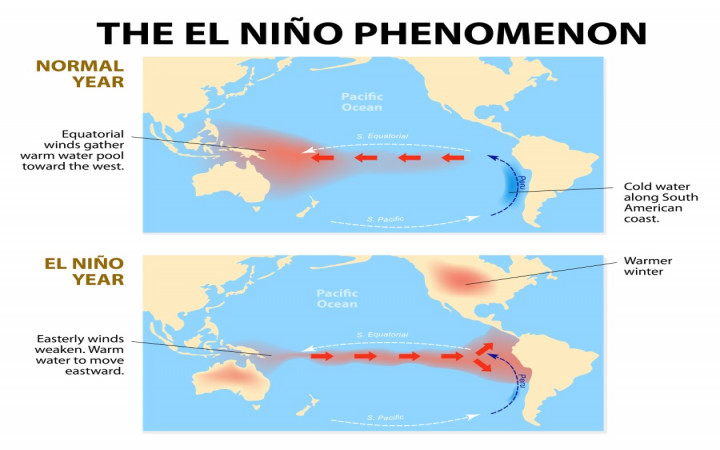
- El Niño means Little Boy in Spanish. It is a climate phenomenon characterized by the periodic warming of sea surface temperatures in the central and eastern equatorial Pacific Ocean.
- During El Niño, trade winds weaken.
- Warm water is pushed back east, toward the west coast of the Americas and as a result cold water is pushed towards Asia.
Impact of El Nino on weather patterns:
- Global Temperature Rise: El Niño causes a rise in global temperatures, often leading to warmer-than-average conditions worldwide.
- Disruption of Monsoon: In India, El Niño typically weakens the monsoon, leading to reduced rainfall and drought conditions.
- Increased Risk of Wildfires: El Niño increases the likelihood of wildfires, especially in regions like Australia, southern Africa, and parts of the Americas.
- Extreme Weather Events: El Niño can trigger extreme weather events, including more intense storms, hurricanes, and cyclones, particularly in the Pacific Ocean and Atlantic.
Latest Forecast by NOAA
- There is an 81% chance of a very strong El Niño during October-December that would rank among the largest El Niño events in the historical record going back to 1950.
- In the past, 60% of the El Nino years have reported either below normal or deficient seasonal rainfall.
- The other 40% El Nino years have received normal rainfall during the monsoon season over India.
Source: IE
Asiatic Lion
Syllabus: GS3/ Environment
Context
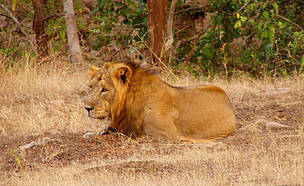
- The National Zoological Park (Delhi) has recorded the birth of three Asiatic lion cubs.
- The breeding programme at Delhi Zoo is part of ex-situ conservation, which involves protecting and breeding threatened species outside their natural habitats.
Asiatic Lion (Panthera leo persica)
- It is one of the five big cat species found in India.
- Physical Characteristics: Asiatic lions are slightly smaller than African lions.
- Males have less developed manes, leaving their ears visible.
- Prominent longitudinal fold of skin along the belly (a distinguishing feature from African lions).
- Distribution: In India, concentrated in the state of Gujarat in and around the Gir Forest mainly in;
- Gir National Park and Wildlife Sanctuary
- Paniya Wildlife Sanctuary
- Mityala Wildlife Sanctuary
- Barda Wildlife Sanctuary.
- Population Increase: As per the 16th Lion Population Estimation, India has reported a 32% increase (from 674 in 2020 to 891 in 2025) in its lion population, exclusively concentrated in Gujarat, between 2020 and 2025.
- Conservation Status:
- IUCN Red List status: Endangered
- CITES: Appendix I
- Wildlife Protection Act, 1972: Schedule I
Source: IE
Conservation Projects for River Dolphins, Snow Leopards and Other Threatened Species
Syllabus: GS3/ Environment
Context
- The governing body of the National Compensatory Afforestation Fund Management and Planning Authority (CAMPA) gave the nod to four new conservation projects for river dolphins, snow leopards, wild water buffalo, and Indian rhinoceros along with continued support for the conservation of Manipur’s brow-antlered deer, Sangai.
Snow Leopards (Panthera Uncia)
- Physical traits: Snow leopards are adapted to rugged, cold environments, with thick fur, stocky bodies, and long tails that serve as rudders for balance and warmth.
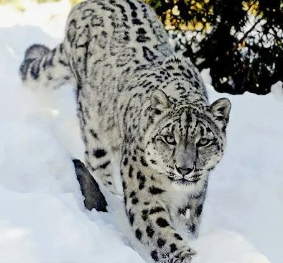
- Habitat: They inhabit the high-altitude mountain ranges of 12 Asian countries, including India, Afghanistan, Bhutan, China, Kazakhstan, Kyrgyzstan, Mongolia, Nepal, Pakistan, Russia, Tajikistan, and Uzbekistan.
- They are referred to as the ‘ghosts of the mountains’ as they are hardly ever seen.
- IUCN Red List: Vulnerable.
Wild Water Buffalo (Bubalus Arnee)
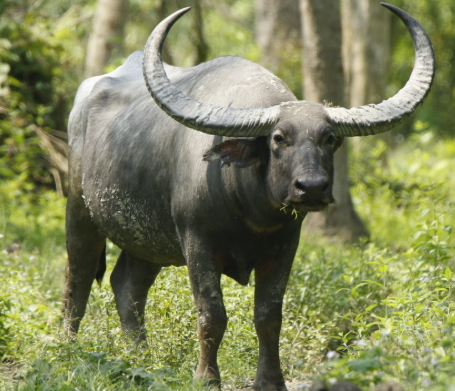
- Wild Water Buffalo, also called Asiatic buffalo, is a large bovine native to the Indian subcontinent and Southeast Asia.
- Characteristics: The wild water buffalo has an ash-gray to black skin. The moderately long, coarse and sparse hair is directed forward from the haunches to the long and narrow head.
- Habitat: The wild water buffalo occurs in India, Nepal, Bhutan, Thailand, and Cambodia. In India it is found at;
- Kaziranga, Manas and Dibru-Saikhowa National Parks, Laokhowa Wildlife Sanctuary and Bura Chapori Wildlife Sanctuary and in a few scattered pockets in Assam,
- D’Ering Memorial Wildlife Sanctuary in Arunachal Pradesh,
- Balphakram National Park in Meghalaya,
- Indravati National Park and Udanti Wildlife Sanctuary in Chhattisgarh.
- IUCN status: Endangered.
Indian rhinoceros (Greater One-Horned Rhino)
- Rhinoceroses are large, herbivorous mammals identified by their characteristic horned snouts.
- Habitat: The Kaziranga National Park and Manas National Park in Assam, Pobitora reserve forest in Assam (having the highest Indian rhino density in the world), Orang National park of Assam etc.
- IUCN Status: Vulnerable.
River Dolphins
- India is home to two species of freshwater dolphins: Ganges (Platanista gangetica) and Indus (Platanista minor).
- Ganges River Dolphin (Platanista Gangetica):
- Characteristics: Ganges River Dolphin is essentially blind and hunts by emitting ultrasonic sounds (echolocation) waves that bounce off of fish and other prey.
- Distribution: It is distributed in Ganges and Brahmaputra river basins of India, Nepal and Bangladesh. It can only live in freshwater.
- IUCN status: Endangered.
- National and State Symbol: The Ganges river dolphin was designated as a national aquatic species in 2009 and as the state aquatic animal of Assam.
- Indus River Dolphin (Platanista minor):
- Characteristics: The Indus River Dolphin is also functionally blind and relies on echolocation to navigate and find prey. It is commonly referred to as Bhulan in local languages.
- Distribution: The Indus River Dolphin is found in the Indus River system in Pakistan and a small population is present in the Beas River in India.
- IUCN status: Endangered.
- State Symbol: The Indus river dolphin is the state aquatic animal of Punjab.
Brow-antlered deer
- The Sangai, also known as the Manipur brow-antlered deer, is a deer species found exclusively in Manipur, within the Keibul Lamjao National Park, India.
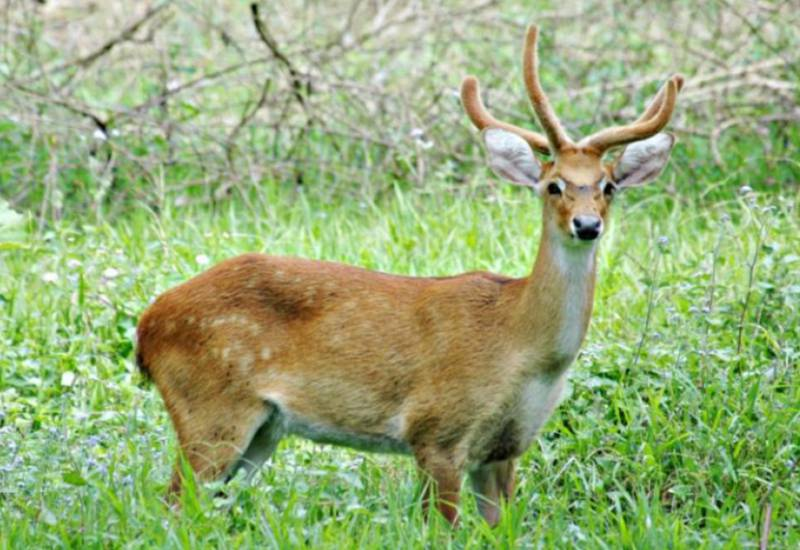
- It serves as the official state animal of Manipur and is famously nicknamed the “dancing deer” due to its unique, delicate gait over its marshy habitat.
Source: TH,
