


Syllabus: GS2/Social Issues
Context
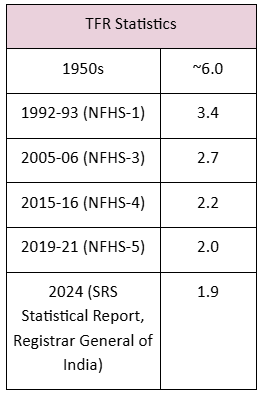
- According to the Sample Registration System (SRS) Statistical Report and NFHS-5, India’s Total Fertility Rate (TFR) has fallen below the replacement level of 2.1, reaching around 2.0 and subsequently 1.9 signals that India may age and eventually shrink faster than previously anticipated.
What is the ‘Baby Bust’?
- A baby bust refers to a sustained decline in fertility rates resulting in fewer births than required to replace the existing population.
- India’s Current Position:
- TFR Below Replacement Level (2.1): Most States, including southern and western States, have fertility rates well below replacement levels.
- Population growth is slowing significantly.
- Future population stabilization may occur earlier than projected.
Why is India Experiencing a Fertility Decline?
- Rising Female Education: Greater educational attainment delays marriage and childbirth, and increased workforce participation changes fertility preferences.
- Urbanisation: Higher living costs discourage larger families, and smaller family norms are becoming widespread.
- Improved Access to Healthcare and Family Planning: Expansion of reproductive health services, and better awareness and availability of contraception.
- Declining Infant and Child Mortality: Families no longer need more births as insurance against child mortality.
- Aspirational and Lifestyle Changes: Greater emphasis on quality of education and human capital investment per child.
Why is it a Warning to the World?
- Demographic Transition Can Be Faster Than Expected: Many developing countries assume they have decades before facing population ageing.
- India’s experience shows fertility can fall rapidly once socio-economic conditions improve.
- Shrinking Workforce Risks: A declining youth population can reduce labour supply, slow economic growth, and increase dependency ratios.
- Rising Fiscal Burden: Governments may face higher pension expenditures, greater healthcare costs, and increased social security obligations.
- Many developing nations may therefore ‘grow old before they grow rich’.
- Lessons from East Asia: Countries such as Japan, South Korea, and China are already experiencing ageing populations, labour shortages, and low fertility traps.
- India may face similar challenges in the coming decades.
Implications for India
- Positive Outcomes:
- Demographic Dividend (Short-Term): Lower dependency burden, greater scope for investment in education and skills, and potential productivity gains.
- Better Human Development: Improved maternal and child health, and enhanced investments per child.
- Emerging Challenges:
- Population Ageing: Growing elderly population, and need for geriatric healthcare and long-term care systems.
- Regional Demographic Imbalances: Southern States may age faster, and Northern States may continue contributing a larger share of the workforce.
- Labour Market Pressures: Potential shortages in labour-intensive sectors, and need for productivity-led growth.
- Social Security Concerns: Pension and healthcare systems require strengthening.
Government Initiatives and Policy Response
- National Population Policy (NPP), 2000: Focus on population stabilization through voluntary and informed choices.
- Mission Parivar Vikas: Targets high-fertility districts, and improves access to family planning services.
- National Programme for Health Care of the Elderly (NPHCE): Addresses emerging ageing-related healthcare needs.
- Digital Health and Social Protection Measures: Expansion of Ayushman Bharat, and strengthening healthcare infrastructure for future demographic changes.
What Should India Do?
- Shift from Population Control to Population Management: Focus on demographic sustainability rather than fertility reduction.
- Invest in Human Capital: Education, skill development, health and nutrition.
- Encourage Female Labour Force Participation: Childcare support, and flexible employment opportunities.
- Prepare for Ageing: Universal pension coverage, elderly healthcare infrastructure, and long-term care ecosystem.
- Promote Productive Workforce Growth: Labour reforms, technology adoption, and migration-friendly policies.
| Daily Mains Practice Question [Q] India’s transition from population explosion to below-replacement fertility marks a significant demographic turning point. Examine the causes of India’s declining fertility rate and discuss its socio-economic implications. |
