

LPG Shortages Spur Biogas Revival
Syllabus: GS3/Energy
Context
- As the shipping through the Strait of Hormuz remains disrupted, parts of India are turning to alternative cooking fuels amid tightening liquefied petroleum gas (LPG) supplies.
About
- States such as Kerala, Gujarat and Maharashtra are increasingly adopting biogas and other local energy options as the fuel crunch ripples through households and commercial kitchens.
- Biogas is a clean fuel produced through anaerobic digestion of a variety of organic wastes: animal, agricultural, domestic, and industrial.Use organic waste, animal dung, or sewage to produce electricity.
- Biogas consists of methane, carbon dioxide, and traces of other gases such as hydrogen, carbon monoxide, nitrogen, oxygen, and hydrogen sulphide.
- The methane content of biogas is appreciably high, at 60%.
- Significance: It is a renewable and dispatchable source of energy (unlike solar/wind).
- Helps in waste management and provides additional income to farmers.
- Reduces dependence on coal and lowers net greenhouse gas emissions.
India’s LPG Import
- India consumes around 31 million tonne (mt) of LPG annually, while domestic production stands at only 13 mt.
- Imports have risen sharply, from about 6 mt in FY12 to roughly 21 mt by FY25, meeting more than 93% of the growth in consumption.
- Over the same period, LPG consumers increased from 14.86 crore (148.6 million) in 2015 to 33.05 crore (330.5 million) in 2025, largely due to the Pradhan Mantri Ujjwala Yojana.
- India imports around 65% of its LPG, mostly from West Asia, leaving it vulnerable to geopolitical disruptions.
Source: DTE
Immigration, Visa, Foreigners Registration & Tracking (IVFRT) Scheme
Syllabus: GS2/Governance
Context
- The Union Cabinet has approved the continuation of the Immigration, Visa, Foreigners Registration & Tracking (IVFRT) Scheme beyond March 31, for a period of five years, till 2031.
About
- The IVFRT platform seeks to interlink and optimize functions related to immigration, visa issuance and registration of foreigners in India.
- It was first approved by the Cabinet Committee on Economic Affairs in 2010 with project duration till 2014.
- The scheme will modernize the immigration and visa ecosystem through adoption of emerging technologies for seamless and secure passenger movement.
- IVFRT system has enabled a 100% contactless and faceless visa process leading to faster visa processing times with 91.24% of e-Visa applications having been cleared within 72 hours during the past five years.
- Average passenger clearance time at Immigration Posts has also been reduced to 2.5-3 minutes from the conventional 5-6 minutes.
Source: TH
PRISM-SG Portal
Syllabus: GS3/ Economy
In News
- The PRISM-SG Portal was recently launched to improve coordination in highway and railway infrastructure projects.
What is PRISM-SG?
- PRISM-SG stands for Portal for Rail-Road Inspection & Stages Management – Steel Girders.
- It is a digital platform that streamlines approval and inspection processes for bridge construction.
- Specifically covers construction of:
- Road Over Bridges (ROBs)
- Railway Bridges
- The portal brings all key players onto a single platform like road owning departments, Indian Railways, contractors etc.
Source: TH
Revamped UDAN Scheme Strengthening Regional Air Connectivity
Syllabus: GS3/Infrastructure
Context
- The Union Cabinet has approved the modified version of the UDAN Scheme with a total outlay of ₹28,840 crore.
- The scheme will be implemented over a 10-year period from FY 2026–27 to FY 2035–36.
About UDAN Scheme
- The UDAN (Ude Desh ka Aam Naagrik) is a regional connectivity scheme launched in 2016 to make air travel affordable and widespread.
- The scheme aims to connect unserved and underserved airports across India through subsidised fares and financial incentives.
- It operates on a market-based mechanism where airlines bid for routes supported by Viability Gap Funding (VGF).
- As of February 2026, a total of 663 routes have been operationalised across 95 airports, heliports and water aerodromes, with over 3.41 lakh flights carrying more than 162.47 lakh passengers.
Key Features of the Modified UDAN Scheme
- The government plans to develop 100 new airports from existing unserved airstrips, with a capital outlay of ₹12,159 crore over the next eight years.
- To address sustainability concerns, operational and maintenance support will be extended for up to three years for regional aerodromes, with a total estimated cost of ₹2,577 crore covering around 441 facilities.
- In addition, 200 modern helipads will be developed at a cost of ₹3,661 crore, targeting remote, hilly, island and aspirational regions to improve last-mile connectivity.
Source: DD News
Antimatter
Syllabus: GS3/ Science and Technology
Context
- Scientists at CERN have successfully conducted the first-ever road transport of antiprotons, marking a breakthrough in antimatter research and experimental physics.
What is Antimatter?
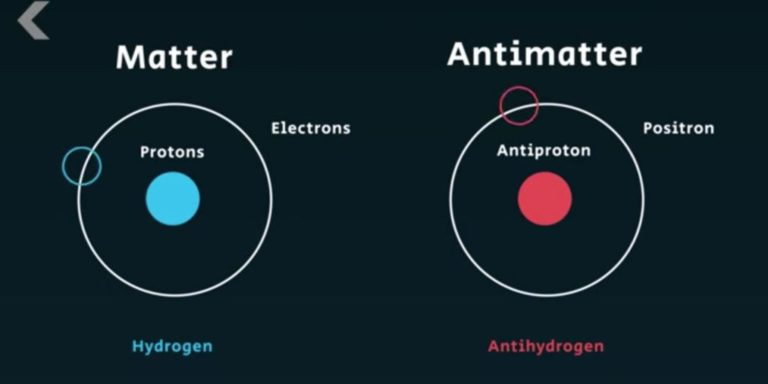
- Antimatter is a term referring to material composed of antiparticles (such as positrons and antiprotons) that possess the same mass as ordinary matter but opposite electric charge and magnetic moment.
- Composition: Anti-atoms are formed by antiprotons and antineutrons in the nucleus with orbiting positrons (anti-electrons).
- Interaction: While matter and antimatter are physically similar, they cannot coexist. Their contact results in intense annihilation, creating gamma rays.
About CERN
- CERN (the European Council for Nuclear Research) is the world’s largest particle physics laboratory, located on the Franco-Swiss border near Geneva.
- Founded in 1954, it uses complex accelerators, including the Large Hadron Collider (LHC), to study the fundamental constituents of matter,
- Key Discoveries: Higgs boson (2012), W and Z bosons (1983) and created the first anti-hydrogen atoms (1995).
Source: TH
Saraswati Samman 2025
Syllabus: Miscellaneous
Context
- Bengali Novel Hara Parbati Katha by Author Ramkumar Mukhopadhyay has been selected for Saraswati Samman, 2025.
About
- The Saraswati Samman, instituted by the K.K. Birla Foundation in 1991, is an annual award given to outstanding literary work written in any Indian language by an Indian citizen and published during the last 10 years.
- The awardee will be given 15 lakh rupees, a citation and a plaque.
Source: AIR
Previous article
U.S. Researchers bet on Hybrid, GMO to make Wheat Profitable
