

Syllabus: GS2/Polity and Governance
Context
- The Supreme Court directed the Law Commission of India to prepare a report on restructuring century-old colonial-era laws governing property transactions.
About
- Flagging systemic deficiencies in colonial-era property laws, the SC directed a nationwide reform by asking the Law Commission to examine using the Blockchain technology for restructuring property registration process.
- Blockchain technology creates a secure, transparent, and immutable digital ledger for all property transactions.
- Making registration process tamper-proof and provides a single, verifiable source of ownership history.
What are the Concerns with the Current Property Transactions Laws?
- Outdated Laws: These laws were framed for a colonial economy and have become outdated, complex, and inconsistent with present-day socio-economic realities.
- The laws included the Transfer of Property Act, 1882, the Registration Act, 1908, and the Stamp Act, 1899.
- Administrative Hurdles: They cause delays, disputes, and litigation, particularly in matters of ownership, transfer, tenancy, and succession.
- Buying and selling property have become cumbersome experience, property disputes account for 66% of civil litigation in the country.
- Lack of Uniformity: Registration procedures also vary from State to State, as land is a “State subject” under the Constitution.
- Incomplete Digitisation: Though projects like Digital India Land Records Modernization Programme (DILRMP) and National Generic Document Registration System (NGDRS) have digitised land records but data remains flawed, and title disputes persist.
- Lack of Inter-Departmental Integration: Land record data, survey maps, and registration records remain fragmented across departments — revenue, survey, and registration — creating inconsistencies.
Supreme Court’s observation:
- Property rights, though no longer a fundamental right, are still protected under Article 300A of the Constitution.
- The constitutionally protected right to own immovable property inherently includes the freedom to freely acquire, possess and dispose of it at will.
- The Court emphasized the need for a coherent, modern property framework balancing individual rights, public purpose, and efficient land management.
- The Law Commission was directed to review, consult stakeholders, and recommend legislative reforms to bring uniformity and clarity.
Significance
- Part of a larger effort to decolonise Indian legal architecture and make property law more citizen-friendly, transparent, and responsive to present needs.
- May influence reforms in land acquisition, registration, tenancy, and urban planning laws.
- The move aligns with the broader constitutional principle under Article 300A and aims to make property governance transparent, efficient, and equitable.
| Right to Property – Historical Background: Originally it was a Fundamental Right under Article 19(1)(f): Right to acquire, hold, and dispose of property. 1. Article 31: Protection from deprivation of property except by authority of law and on payment of compensation. 2. Intended to protect citizens from arbitrary state action while allowing land reforms for equitable redistribution. – The 44th Constitutional Amendment in 1978, deleted Articles 19(1)(f) and 31, and inserted Article 300A. 1. Right to Property ceased to be a Fundamental Right; became a Constitutional/Legal Right. 2. Property rights are now protected by law, not enforceable as a Fundamental Right. About Block Chain Technology – It is a Distributed Ledger Technology (DLT) where encrypted data blocks are permanently linked and stored across multiple computers. – Each transaction is recorded in a block; blocks are chronologically chained and cryptographically secured. – Global examples: Sweden, Georgia, and Ghana have piloted blockchain-based land registries, improving efficiency, reducing fraud, and boosting citizen confidence. 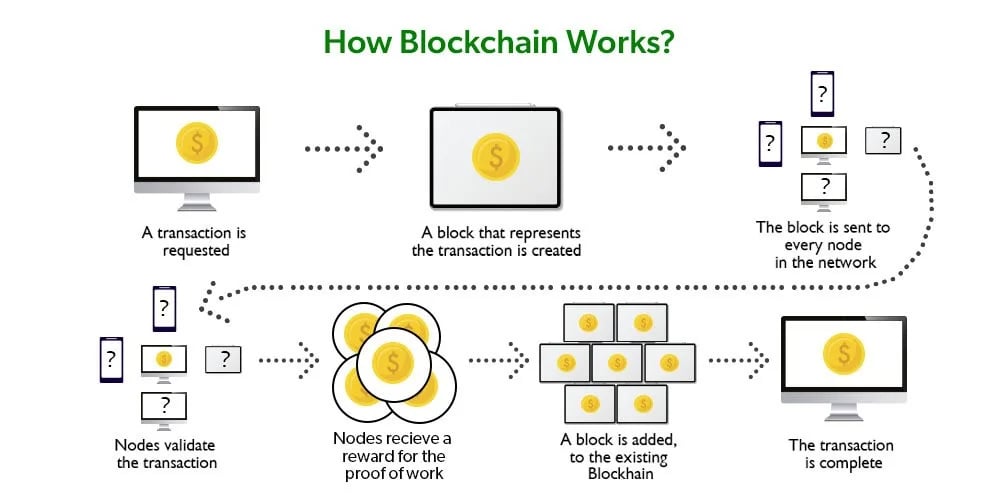 |
Source: TH
Previous article
News in Short – 7 November, 2025
Next article
SC Orders Removal of Stray Dogs From Public Places
