

Samagra Shiksha scheme
Syllabus: GS2/ Government Initiatives
Context
- The Supreme Court has issued notice to the Centre after Tamil Nadu alleged that Samagra Shiksha funds were delinked from reimbursements under the Right to Education (RTE) Act, 2009.
| Background – RTE Act, 2009 1. Private schools must reserve 25% seats at entry level for children from weaker sections, free of charge. 2. Section 7 assigns shared funding responsibility to both Centre and States. The Dispute 1. The Centre argued in the High Court that fund disbursement issues under Samagra Shiksha arose due to Tamil Nadu’s refusal to implement National Education Policy 2020 (NEP 2020). 2. Tamil Nadu opposed NEP’s three-language policy, viewing its Hindi emphasis as a threat to regional linguistic diversity. 3. The Madras HC, however, directed the State to bear the entire financial responsibility for the 2025-2026 academic year. |
About Samagra Shiksha Scheme
- It is an integrated scheme, announced in the Union Budget 2018-19, for school education covering complete pre-primary to senior secondary (up to class 12th).
- Type: Centrally Sponsored Scheme (partnership with States& UT).
- Subsumed erstwhile Centrally Sponsored Schemes:
- Sarva Shiksha Abhiyan (SSA)
- Rashtriya Madhyamik Shiksha Abhiyan (RMSA) and
- Teacher Education (TE)
- Objectives: To implement SDG 4, Right to Education and New Education Policy.
- Coverage: 1.16 million schools, over 156 million students and 5.7 million Teachers of Govt. and Aided schools.
Source: TH
Vikram 32-bit Chip
Syllabus: GS3/Economy
In News
- Union IT minister presented the Vikram 32-bit processor to Prime Minister Narendra Modi at the Semicon India 2025 in Delhi
Vikram 32-bit chip
- It is India’s first fully indigenous 32-bit microprocessor, qualified for use in harsh launch vehicle conditions.
- It is developed by ISRO’s Vikram Sarabhai Space Centre and the Semiconductor Laboratory in Chandigarh.
- It is an advanced microprocessor is an upgraded version of the 16-bit VIKRAM1601 chip used since 2009 in ISRO’s launch vehicle avionics, designed specifically for space flight applications.
Source :HT
Coconut Development Board
Syllabus :GS3/Economy
In News
- The Coconut Development Board (CDB) celebrated World Coconut Day in Kerala, by launching revised schemes and presenting Export Excellence Awards.
Coconut Development Board (CDB)
- It is a statutory body under the Ministry of Agriculture and Farmers Welfare, Government of India, established on 12th January 1981.
- Its mandate is the integrated development of coconut cultivation and industry in India, with a focus on increasing productivity and product diversification.
- It also works on developing post-harvest processing and marketing technologies, promoting product diversification and by-product utilisation, adding value to coconut-based products, sharing information, and building capacity in the coconut sector.
- Headquarters: Kochi, Kerala
Source :PIB
Investor Education and Protection Fund Authority (IEPFA)
Syllabus: GS3/Economy
Context
- The Investor Education and Protection Fund Authority (IEPFA), in collaboration with the Securities and Exchange Board of India (SEBI), successfully organised Niveshak Shivir.
About
- Niveshak Shivir is part of a nationwide series of outreach programs in cities with high concentrations of unclaimed investments.
- These camps highlight IEPFA’s unwavering commitment to enhancing investor awareness, safeguarding financial interests, and ensuring transparency, accessibility, and trust in India’s financial ecosystem.
The Investor Education and Protection Fund Authority (IEPFA)
- Ministry: Ministry of Corporate Affairs.
- It was established in 2016, and it is entrusted with the responsibility of administering the Investor Education Protection Fund (IEPF).
- It is dedicated to safeguarding investor interests by facilitating the return of unclaimed shares and dividends and advancing financial literacy nationwide.
- Through flagship initiatives such as Niveshak Didi, Niveshak Panchayat, and Niveshak Shivir, IEPFA empowers individuals to make informed financial choices and fosters a financially aware citizenry.
Source: PIB
Senna spectabilis
Syllabus: GS3/Environment
Context
- Kerala has carried out India’s first science-based, community-led eradication of Senna spectabilis in Wayanad, clearing 383 acres of infested forest.
About
- Senna spectabilis was introduced in the 1980s in Kerala.
- It has spread across the Nilgiri Biosphere Reserve, choking native plants and food sources for wildlife.
- Native range: Tropical Areas of South America (Brazil, Peru, etc.)
- Ornamental use: Commonly planted for its striking yellow flowers (avenue and garden tree).
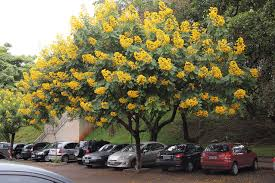
- Invasive species in India: Introduced as an ornamental, but has become highly invasive in the Western Ghats, Kerala, and other regions.
- Concerns: Senna forms dense, sterile thickets, choking out native plants, altering soil chemistry, and depriving herbivores of food.
- Reports of Senna proliferation are emerging from Andhra Pradesh, Goa, and parts of Maharashtra.
- Conservationists warn that unless tackled early, these regions may repeat South India’s mistakes.
Source: DTE
Exercise MAITREE
Syllabus: GS3/Defence
Context
- The 14th edition of the India–Thailand joint military exercise, MAITREE-XIV, commenced in Meghalaya.
About the Exercise
- This year’s focus is on company-level, counter-terrorist operations in semi-urban terrain under Chapter VII of the United Nations Charter.
- Training modules include tactical drills, joint planning, weapons skills, physical endurance and raiding operations.
- Instituted in 2006, Exercise MAITREE remains a key component of bilateral defence cooperation, underscoring the shared commitment of India and Thailand to regional peace, security and stability.
Source: PIB
Previous article
Noise Pollution is Rising but Policy is Falling Silent
Next article
EAM Pushes for EU-India FTA
