


Syllabus: GS3/Economy
Context
- Countries are advancing towards implementing the High Seas Treaty, known as the Agreement on Marina Biodiversity Beyond National Jurisdiction (BBNJ).
About The Treaty
- The BBNJ Agreement is the first treaty to address the conservation and sustainable use of biodiversity in the high seas.
- It is meant to ensure that resources in international waters are treated as the “common heritage of humankind” and that benefits are shared fairly, especially with developing countries.
- Background: The process for the development of an international legally-binding instrument under the United Nations Convention on the Law of the Sea (UNCLOS) on the conservation and sustainable use of BBNJ has been running for over ten years.
- The treaty was agreed upon in 2023 after years of negotiations and opened for countries to sign in 2024.
- It will be an international, legally binding treaty after it enters force 120 days after the 60th ratification, acceptance, approval, or accession.
- India signed the BBNJ Agreement in 2024.
- The negotiations are focused on four main components:
- marine genetic resources (MGR);
- area-based management tools, including Marine Protected Areas (MPAs);
- capacity building and technology transfer;
- and environmental impact assessments.
- PrepCom I: The first session of the Preparatory Commission, PrepCom I, was held in April 2025, where countries began discussing how the treaty would actually work, including its rules, bodies, and financial arrangements.
- PrepCom II: It was held in the UN.
- More than 200 representatives from governments, civil society, and international organisations gathered.
- During the meeting, small island countries, Cabo Verde and Saint Kitts and Nevis, announced their ratifications.
- Now, only five more ratifications are needed before the treaty officially enters into force.
- Once that happens, countries will hold their first major decision-making meeting, known as COP1, which is expected in late 2026.
Significance of the Treaty
- Parties cannot claim or exercise sovereign rights over marine resources derived from the high seas and ensure fair and equitable sharing of benefits.
- It follows an inclusive, integrated, ecosystem-centric approach based on the precautionary principle and promotes using traditional knowledge and the best available scientific knowledge.
- It helps minimise impacts on the marine environment through area-based management tools and establishes rules for conducting environmental impact assessments.
- It would also contribute to achieving several SDGs, particularly SDG14 (Life Below Water).
High Seas
- The high seas are defined as all parts of the ocean that aren’t included in the exclusive economic zone, the territorial sea, or the internal waters of a country, or in the archipelagic waters of an archipelagic country.
- This essentially means that the high seas and associated resources are not directly owned or regulated by any country.
- 95% of the Earth’s total habitat by volume is in the high seas, but it still lacks strong protection.
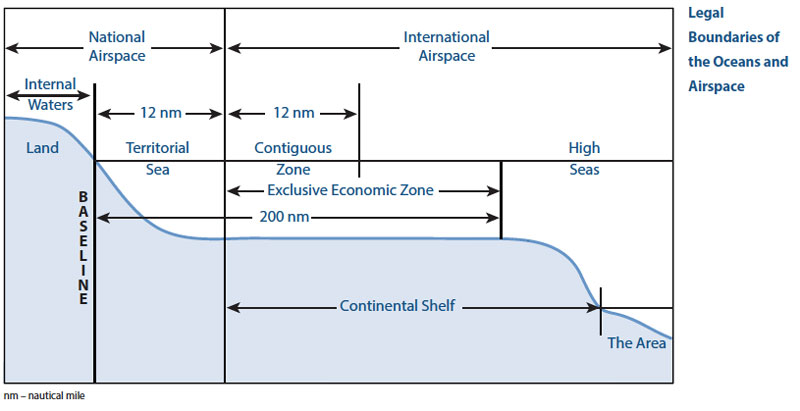
| United Nations Convention on the Law of the Sea (UNCLOS) – UNCLOS was adopted in 1982 and came into force in 1994. – It lays down a comprehensive regime of law and order in the world’s oceans and seas, establishing rules governing all uses of the oceans and their resources. – It establishes the International Seabed Authority to regulate mining and related activities on the ocean floor beyond national jurisdiction. The International Seabed Authority (ISA) – The International Seabed Authority (ISA) is an autonomous international organization established under: 1. The 1982 United Nations Convention on the Law of the Sea (UNCLOS) and 2. The 1994 Agreement relating to the Implementation of Part XI of the United Nations Convention on the Law of the Sea. – All States Parties to UNCLOS are members of ISA. 1. ISA has 170 Members, including India. – Headquarters: Kingston, Jamaica |
Source: DTE
Previous article
APEDA Launches BHARATI Initiative to Boost Agri-food Exports
