


Registrar General of India (RGI)
Syllabus: GS2/Governance
Context
- The Registrar General of India (RGI) asked States to take steps towards achieving universal registration of births and deaths.
About
- Following the directives of the Supreme Court, all government hospitals have been declared ‘registrars’ of births and deaths.
- If the event has taken place in a hospital, a medical officer in charge is required to report it under Section 8 (1) (B) of the Registration of Births and Deaths Act, 1969.
- Hospitals have to report the event within 21 days.
- The RBD Act, 1969, which was amended in 2023, makes online registration of births and deaths compulsory on the RGI portal.
The Registrar General of India (RGI)
- Established in 1961 by the Government of India.
- Works under the administrative control of the Ministry of Home Affairs (MHA).
- Major Functions:
- Census of India.
- Conducts the decennial Census of India (since 1872; regular since 1881).
- Responsible for planning, coordinating, and supervising census operations.
- Civil Registration System (CRS): Oversees the registration of births and deaths across India.
- Ensures uniformity and accuracy in vital statistics collection.
- Vital Statistics: Collects, compiles, and publishes data on births, deaths, causes of death, and population dynamics.
- Provides crucial demographic data for policy planning.
- Sample Registration System (SRS): Launched in 1969 to provide reliable annual estimates of birth rate, death rate, and infant mortality rate (IMR).
- Uses a dual record system (continuous enumeration & independent survey).
Source: TH
Supreme Court’s Modified Order on Stray Dogs
Syllabus: GS2/ Governance
Context
- The Supreme Court modified its earlier directive requiring all stray dogs in Delhi–NCR to be confined in shelters.
Background
- The Supreme Court earlier ordered civic bodies in Delhi–NCR to round up stray dogs and confine them in shelters within 6–8 weeks, citing public safety concerns over dog bites and rabies.
- The order was challenged by animal welfare groups, who argued it violated Animal Birth Control (ABC) Rules, 2023 that mandate relocation of strays to their original areas after sterilisation.
Guidelines in recent ruling
- Release of Strays: Stray dogs will be sterilised, dewormed, vaccinated, and then released back into the locality from which they were picked up.
- Rabid or aggressive dogs will be sterilised and vaccinated but housed in separate shelters/pounds.
- Feeding Regulation: Feeding strays on streets is prohibited.
- Municipal bodies must set up dedicated feeding zones in every ward, with signboards indicating their location.
- Adoption Option: Animal lovers may adopt stray dogs via municipal authorities, provided the adopted dogs do not return to the streets.
- Monitoring & Enforcement: Civic bodies must create helplines for reporting violations. NGOs and individuals obstructing implementation will face punitive action.
Source: IE
Draft Learning Outcomes-based Curriculum Frameworks (LOCF)
Syllabus :GS2/Governance
In News
- The University Grants Commission (UGC) has released a draft Learning Outcomes-based Curriculum Frameworks (LOCF).
Draft Learning Outcomes-based Curriculum Frameworks (LOCF).
- It seeks to redefine undergraduate education by embedding traditional Indian knowledge systems into modern academic frameworks, but its approach has raised concerns about academic balance and political influence.
- Covered subjects are Anthropology, Chemistry, Commerce, Economics, Geography, Home Science, Mathematics, Physical Education, and Political Science.
| How is it different from the National Education Policy? – National Education Policy encourages multidisciplinary and holistic education but the draft LOCF focuses on single-major specialisation, with most credits dedicated to discipline-specific courses. 1. A similar structure is proposed for commerce, leaving limited scope for multidisciplinary learning. |
Key Highlights
- A key focus of the LOCF is the integration of Indian Knowledge Systems (IKS) across disciplines. Each subject includes elements of ancient Indian thought and practices. For instance:
- Chemistry begins with a salutation to Saraswati and includes traditional fermented beverages and ancient Indian atomic theory.
- Chemistry will have a brief idea of ancient Indian Knowledge of Parmanu. In a unit on atomic structure, recapitulation of the concept of atom in ancient India will be taught along with Bohr’s theory and its limitations.
- Mathematics will cover mandala geometry, yantras, rangoli, kolam, and the contributions of Indian mathematicians to algebra, calculus, etc.
- Commerce incorporates Kautilya’s Arthashastra, Ram Rajya, and Bhartiya philosophy in teaching ethics, governance, and sustainability.
- Concepts like ‘Ram Rajya’ (equitable governance) can be explored in the context of corporate social responsibility (CSR) and contemporary environmental, social, and governance (ESG) frameworks.
- Economics includes teachings on dharmic views of wealth, guild codes, ecological values, and indigenous trade systems.
- Anthropology highlights contributions of Charaka, Sushruta, Buddha, and Mahavira to contextualize knowledge in Indian traditions.
- V.D. Savarkar’s Indian War of Independence has found a place in the reading list for the course on ‘Bharatiya Struggle for Independence’.
- Chemistry begins with a salutation to Saraswati and includes traditional fermented beverages and ancient Indian atomic theory.
Source :IE
Article 311
Syllabus: GS2/ Polity
In News
- Jammu and Kashmir Lieutenant Governor sacked two government employees for allegedly engaging in anti-national activities by invoking Article 311 of the Constitution of India.
About Article 311
- Article 311 of the Constitution of India provides procedural safeguards to civil servants (i.e., persons employed in civil capacities under the Union or a State) against arbitrary dismissal, removal, or reduction in rank by the government.
- Article 311 applies only to civil servants, not to members of the defense services or those whose employment is otherwise governed.
- Article 311(1): No civil servant can be dismissed or removed by an authority subordinate to the one who appointed them. This means that only the appointing authority or an authority of equivalent or higher rank can order dismissal or removal.
Source: IE
Druzhba Pipeline
Syllabus: GS2/ International Relation
In News
- Ukrainian forces struck the Unecha pumping station, a critical hub on the Druzhba oil pipeline located in Russia’s Bryansk region.
About
- The Druzhba pipeline historically served as a vital route for Russian and Kazakh oil into Central and Western Europe.
- It is 5500 km long and passes through Belarus and Ukraine, splits into northern branch (towards Poland & Germany) and southern branch (towards Slovakia, Hungary, Czech Republic).
Source: TH
Direct Action Day
Syllabus :GS1/History
In News
- Vivek Agnihotri’s upcoming film The Bengal Files based on the Great Calcutta Killings of 1946 (Direct Action Day) is facing significant challenges in West Bengal.
Direct Action Day
- Background: In March 1946, British PM Clement Attlee announced the plan to transfer power to Indians, but without a fixed date.
- The Cabinet Mission proposed an interim government in May, which was rejected by both the Congress and the Muslim League.
- The League, led by Muhammad Ali Jinnah, insisted on Partition and the creation of Pakistan, warning of either a divided India or a destroyed India.
- August 16, 1946 was designated by the Muslim League as “Direct Action Day” to mobilise Muslims through strikes and protests and to create Pakistan.
- The protests soon spiraled into widespread communal riots between Hindus and Muslims, especially in Calcutta (now Kolkata, West Bengal), and resulted in thousands of deaths.
Impacts
- The day is considered a pivotal moment leading up to the partition of India into two separate countries.
- Between 5,000 and 10,000 people are believed to have been murdered and some 15,000 wounded in the “Great Calcutta Killing”, which witnessed perhaps the worst single episode of Hindu-Muslim violence that accompanied the partition of the subcontinent.
Source :IE
Ponzi Scheme
Syllabus :GS 3/Economy
In News
- IIT graduate was arrested in Bengaluru for running a ₹65-crore Ponzi scheme through a fake firm.
Ponzi scheme
- It is a type of investment fraud where returns to earlier investors are paid using funds from new investors, rather than from legitimate profits.
- It is named after Charles Ponzi.
- In the 1920s, Charles Ponzi promised 50% returns in a few months through investments in international mail coupons, but he actually used money from new investors to pay earlier ones.
- It promises high returns with little risk but uses new investors’ money to pay earlier ones.
- Lacking real profits, they collapse when new investments slow or many investors withdraw funds.
Source :IE
Royal Bengal Tiger
Syllabus: GS3/ Species in News
Context
- Recently, the National Zoological Park, Delhi, witnessed the death of four out of six cubs born to tigress Aditi, a wild-origin Royal Bengal tigress.
Royal Bengal Tiger
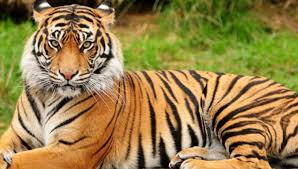
- The Royal Bengal Tiger (Panthera tigris tigris), also known as the Indian Tiger, is a subspecies of tiger found in the Indian subcontinent.
- It is the national animal of India and also the national animal of Bangladesh.
- Physical Characteristics: They have a striking yellow to light orange coat with dark brown to black stripes. Each tiger has a unique stripe pattern, similar to human fingerprints.
- They are strong swimmers and are known to cross rivers and lakes while hunting.
- Distribution: They are primarily found in India, Bangladesh, Nepal, Bhutan, and Myanmar. India is home to the largest population of Royal Bengal tigers.
- Reproduction: The gestation period for Bengal tigers is around 3 months, and females typically give birth to a litter of 4-5 cubs.
- IUCN Status: Endangered
- Conservation efforts: India’s Project Tiger, launched in 1973, is a major conservation effort focused on protecting tiger habitats and increasing their population.
Source: IE
International Big Cat Alliance
Syllabus: GS3/Environment
Context
- The government has extended privileges and immunities to the International Big Cat Alliance (IBCA) and its officials under the United Nations (Privileges and Immunities) Act, 1947.
- The United Nations (Privileges and Immunities) Act, 1947, enables specific privileges and immunities to be enjoyed by international organisations and their representatives in India.
International Big Cat Alliance (IBCA)
- The IBCA was established through the nodal organisation, viz. National Tiger Conservation Authority, Ministry of Environment, Forest and Climate Change, 2023.
- The IBCA became a legal entity after five countries—Nicaragua, Eswatini, India, Somalia, and Liberia—had signed the Framework Agreement to formally become members of the IBCA.
- It is a coalition of 95 range countries.
- The IBCA primarily aims for the conservation of seven big cats, namely the Tiger, Lion, Leopard, Snow Leopard, Cheetah, Jaguar, and Puma.
- Objectives:
- Facilitation of collaboration and synergy amongst the concerned stakeholders,
- consolidation of successful conservation practices;
- and expertise to achieve conservation of big cats around the globe.
- The initiative seeks to foster international collaboration for the sustainable future of big cats, as well as underscores India’s leadership and commitment to global wildlife conservation.
Source: DD
Previous article
National Space Day 2025
