


Syllabus: GS3/Economy
Context
- With Onam round the corner, customers are insistent on authentic ethnic wear called Chendamangalam handloom.
Chendamangalam Handloom Industry
- Cultural Significance: Chendamangalam (Ernakulam, Kerala) is famed for its traditional handloom products, especially in demand during Onam.
- Crisis in the Weaving Sector: Weavers have declined from ~5,000 in the 1980s to ~500 now (spread across 5 cooperative societies).
- Causes: Lure of employment guarantee schemes, perception of low wages, and youth disinterest.
- Remuneration is viable if adapted to new designs/market needs.
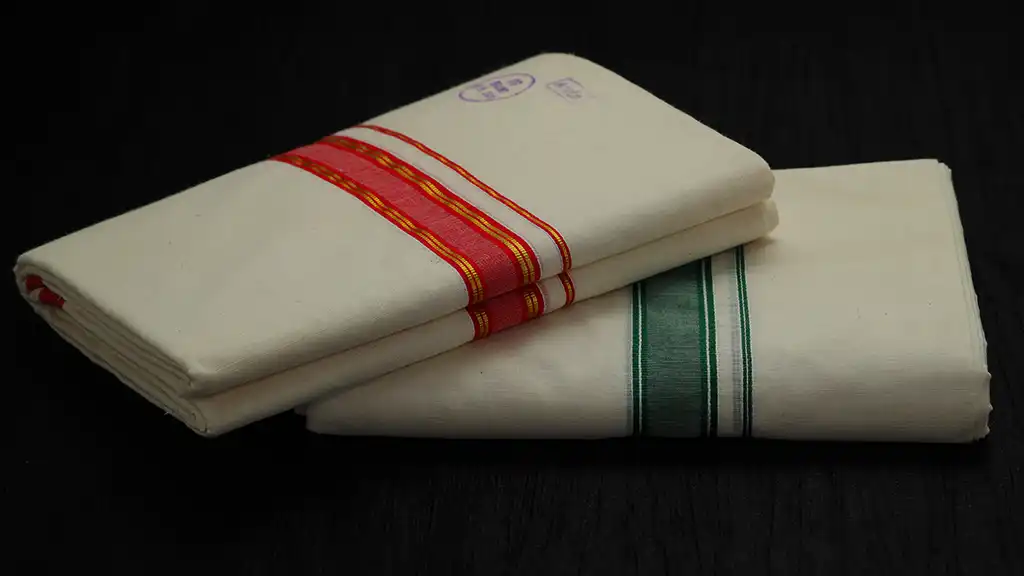
- Resilience & Innovation: Chendamangalam-Karimpadam Handloom Cooperative Society gained global attention in the 2018 floods by making ‘Chekutty dolls’ from soiled cloth.
Handloom Industry
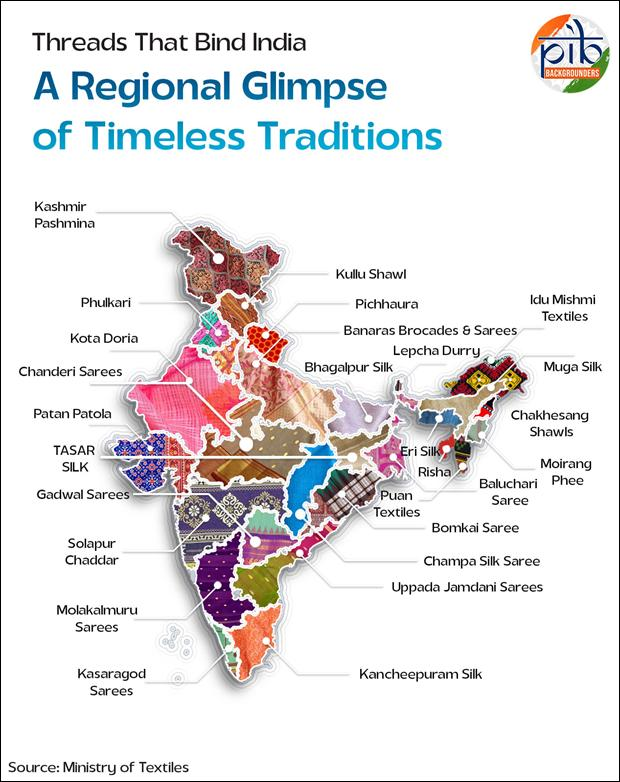
- The Indian handloom industry is one of the oldest and most vibrant cottage industries in the world.
- The Swadeshi Movement, launched on 7th August 1905, championed indigenous industries as a form of economic resistance to colonial rule.
- In honour of this legacy, the Government of India declared 7th August as National Handloom Day in 2015.
- According to the 4th All India Handloom Census (2019–20), about 35.22 lakh households are involved in this work, and around 72% of economic handloom weavers are women.
- Top Export Destination: In FY 2024-25, the United States remained the largest destination, followed by the United Arab Emirates, the Netherlands, France, and the United Kingdom, respectively.
- Products: Made-ups such as cushion covers, curtains, table linen, and other household items contributed 42.4% in 2024-25, followed by floor coverings like carpets, rugs, and mats, which made up 40.6%.
- Clothing accessories contributed 12.7%, while fabrics accounted for 4.3%.
Major Challenges Faced by the Industry
- Declining Number of Weavers: Younger generations moving away due to low income, lack of social security, and absence of modern skill training.
- Traditional weavers are aging, leading to a shrinking workforce.
- Economic Distress: Rising cost of raw materials (cotton, silk, dyes) but low selling prices due to middlemen exploitation.
- Competition from Powerlooms & Mills: Mass-produced, machine-made fabrics are cheaper, faster to produce, and dominate markets.
- Handloom products lose price competitiveness despite better quality and uniqueness.
- Weak Marketing & Branding: Limited penetration in domestic and global markets due to the absence of branding, modern retail, and e-commerce adoption.
- Technological & Skill Gaps: Traditional looms are labor-intensive and less productive.
- Lack of design innovation and modern training to meet changing fashion trends.
- Globalisation & Import Competition: Cheap imports (especially from China and Bangladesh) are flooding Indian markets.
- Indian handloom struggles to compete internationally due to high production costs and a lack of aggressive export promotion.
Government Initiatives
- GeM Onboarding: Allows weavers to sell directly to government departments via the Government e-Marketplace (GeM).
- Raw Material Supply Scheme (RMSS): It has been approved for implementation for the period 2021–22 to 2025–26.
- The scheme aims to support handloom weavers by ensuring the availability of quality yarn at affordable prices.
- Marketing Assistance: Expos and district-level events are organised regularly to provide a marketing platform to the handloom weavers.
- Certification of Handloom Products: The Handloom Mark was launched in 2006 to provide a distinct identity to handloom products.
- In 2015, the India Handloom Brand (IHB) was introduced for branding high-quality handloom products.
- Small Cluster Development Programme (SCDP): Need-based financial assistance of up to ₹2 crore per cluster is provided for interventions.
- Skill Up-gradation: Weavers and allied workers receive training to learn new weaving techniques, adapt to modern technologies, and develop new designs and colours.
- Design Resource Centers (DRCs): Established in major cities to enhance design excellence in handlooms.
- Weavers’ Welfare Scheme: Includes National Handloom Development Programme (NHDP), Comprehensive Handloom Cluster Development Scheme (CHCDS), Handloom Weavers’ Comprehensive Welfare Scheme (HWCWS), Yarn Supply Scheme (YSS), and Hathkargha Samvardhan Sahayata.
- Weaver MUDRA Scheme: Offers financial assistance for working capital and new technology investments.
| GI Tags to Protect the Handloom Industry – GI tags are official markers given to products with a specific geographic origin and distinct qualities. 1. They protect these products from unauthorized use or imitation, helping consumers identify authentic goods. – In India, the Geographical Indications of Goods (Registration & Protection) Act, 1999, enacted in 2003, aims to safeguard producers’ interests, prevent exploitation of GIs, and boost marketability. – From 2023 to 2024, the government awarded GI tags to several handloom products, enhancing their recognition and economic value. These products include: 1. Barabanki Handloom Products from Uttar Pradesh; 2. Chedibutta Saree from Tamil Nadu; 3. Jodhpur Bandhej Craft from Rajasthan; 4. Basohli Pashmina Woolen Products from Jammu & Kashmir; 5. Rangwali Pichhoda of Kumaon from Uttarakhand; 6. Tangail Saree from West Bengal; 7. Garad Saree from West Bengal; 8. Korial saree from West Bengal. |
Source: TH
Previous article
Migration is Essential To Globalisation: Amartya Sen
Next article
National Space Day 2025
