

Syllabus: GS3/Environment & Climate Change
Context
- As the world grapples with intensifying climate crises, the credibility and effectiveness of the United Nations Framework Convention on Climate Change (UNFCCC) process have come under scrutiny.
About the UNFCCC
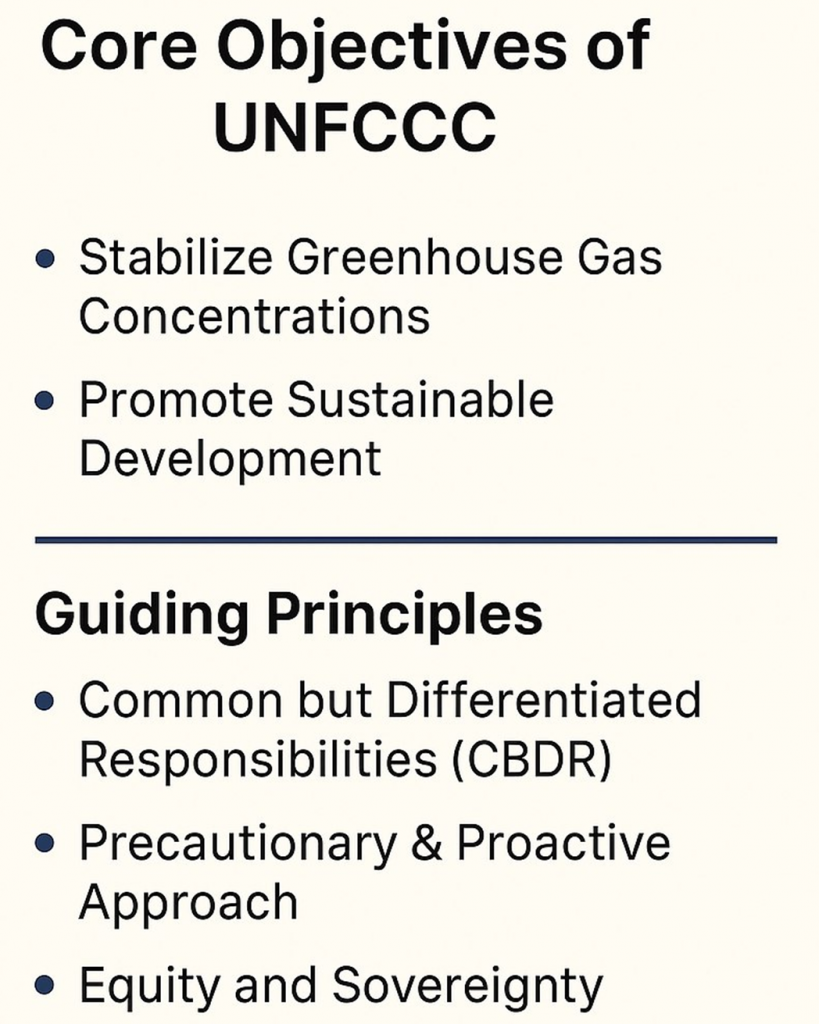
- It is the foundational international treaty that guides global efforts to combat climate change.
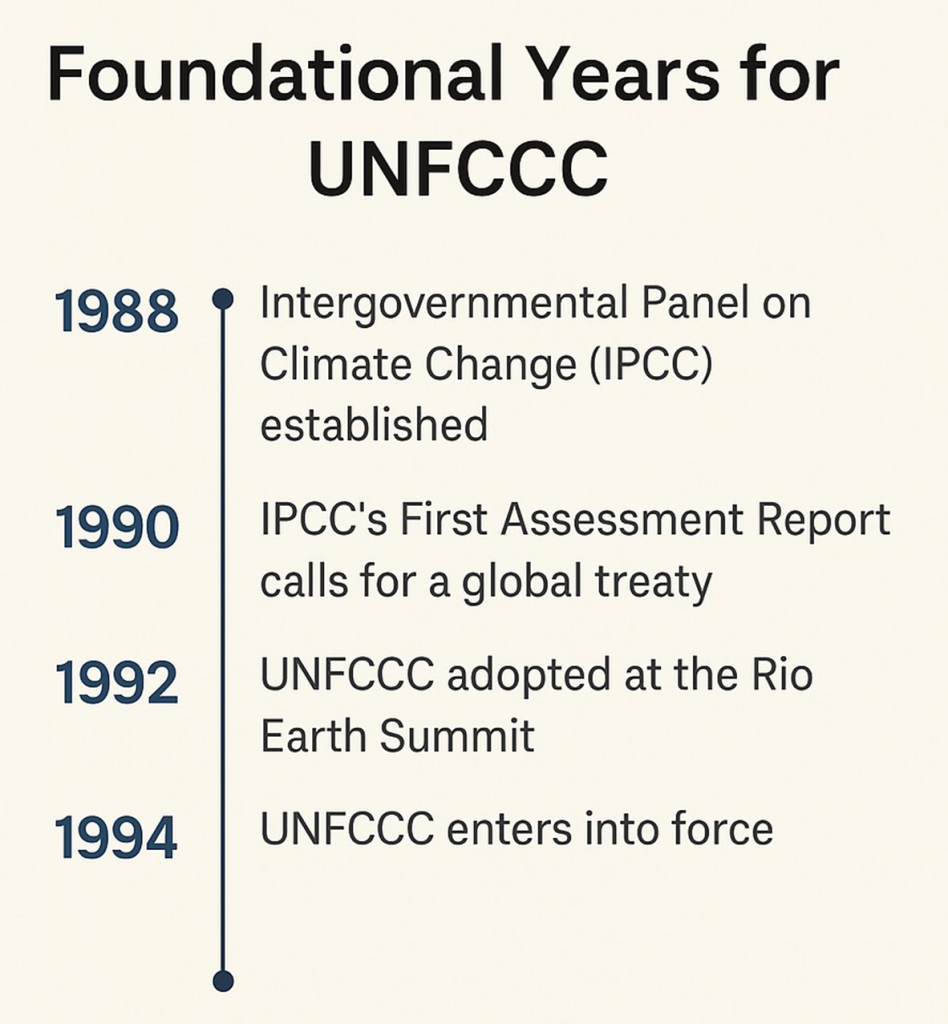
- It was adopted in 1992 at the Earth Summit in Rio de Janeiro, it has since become the bedrock of climate diplomacy, shaping agreements like the Kyoto Protocol and the Paris Agreement.
Institutional Framework
- Conference of the Parties (COP): The supreme decision-making body that meets annually to assess progress and negotiate new commitments.
- Subsidiary Bodies:
- Subsidiary Body for Scientific and Technological Advice (SBSTA): Provides scientific and technological advice
- Subsidiary Body for Implementation (SBI): Supports implementation and reviews national reports
- Secretariat: Facilitates negotiations, supports implementation, and maintains transparency through data and reporting systems.
Major Milestones of the UNFCCC Process
- Protocol and Implementation:
- 1997: Kyoto Protocol adopted — first legally binding emission reduction targets
- 2005: Kyoto Protocol enters into force
- 2012: Doha Amendment adopted, extending Kyoto commitments
- Paris Agreement Era:
- 2015: Paris Agreement adopted at COP21 — aims to limit global warming to well below 2°C
- 2023: First Global Stocktake – First comprehensive review of climate progress
| India & the UNFCCC: Key Contributions & Commitments – Nationally Determined Contributions (NDCs): Updated in 2022 to reflect the Panchamrit goals announced at COP26. 1. Targets include reducing emissions intensity of GDP by 45% by 2030 (from 2005 levels); achieving 50% cumulative electric power capacity from non-fossil sources by 2030; and net-zero emissions goal by 2070. – Mission LiFE (Lifestyle for Environment): A citizen-centric initiative promoting sustainable living. – Long-Term Low-Carbon Development Strategy (LT-LEDS): It was submitted to UNFCCC in 2022. It focuses on: 1. Clean energy transitions; 2. Low-carbon transport and urban design; 3. CO₂ removal technologies; 4. Forest enhancement and climate resilience India at COP Summits – COP26 (Glasgow): India presented its Panchamrit climate action framework; 1. Advocated for climate justice and equitable access to the global carbon budget; – COP28 (Dubai): 1. 33% reduction in emissions intensity (2005–2019); 2. 40% installed capacity from non-fossil fuels achieved 9 years ahead of target. – India launched initiatives like: 1. Green Credit Programme; 2. LeadIT 2.0 (with Sweden); 3. Global Biofuel Alliance – Progress & Reporting: 1. Biennial Update Reports (BURs): India submitted its 4th BUR in December 2024. It highlights: (a). 7.93% drop in GHG emissions in 2020 vs. 2019; (b). Forest and tree cover offset 22% of CO₂ emissions; (c). 36% reduction in emission intensity since 2005 |
Why Is UNFCCC Reform Urgent?
- Stalled Progress: Despite decades of negotiations, global emissions continue to rise, and climate finance commitments remain unmet.
- Consensus Paralysis: The UNFCCC’s consensus-based decision-making gives every country veto power, often diluting outcomes and delaying action.
- Withdrawal of Key Players: The recent exit of the United States under President Trump has further eroded trust in the process.
- Climate Finance Bottleneck:
- Current Target: $100 billion annually—far below the estimated $1.3 trillion needed.
- New Pledge: Developed countries offered $300 billion per year starting 2035, which many see as insufficient.
Proposed Reforms To UNFCCC
- At Bonn Climate Meeting (June 2025):
- Agenda Simplification: Eliminate overlapping or redundant items to focus on core issues.
- Team Size Limits: Reduce delegation sizes to improve efficiency.
- Time Management: Restrict statement lengths to allow more time for negotiations.
- By Civil Society Groups:
- Majority-Based Decisions: Replace consensus with majority voting when agreement is elusive.
- COP Host Criteria: Bar countries with poor climate records from hosting COP summits.
- Fossil Fuel Influence: Limit participation of polluting industries in negotiations.
- Increased Transparency: Ensuring that climate decisions are made in public and are subject to independent review.
- Stronger Accountability Mechanisms: Holding countries accountable for unmet commitments.
- Brazil’s Leadership at COP30:
- Trust Building: Issued a letter urging parties to reflect on the future of the UNFCCC process.
- Multilateral Synergy: Proposed integrating climate action across UN agencies and financial institutions.
- 30-Point Agenda: Outlined key areas for accelerating climate action.
- BRICS’ Call for Climate Justice: At a recent BRICS summit in Brazil, it released a joint declaration on climate finance. The statement reiterated the demand for:
- Full delivery of existing climate finance commitments by developed nations.
- A substantial increase in adaptation finance, which remains significantly underfunded compared to mitigation efforts.
Previous article
Delhi’s Fuel Ban for Old Vehicles
Next article
News In Short-09-07-2025
