
 80813-00200


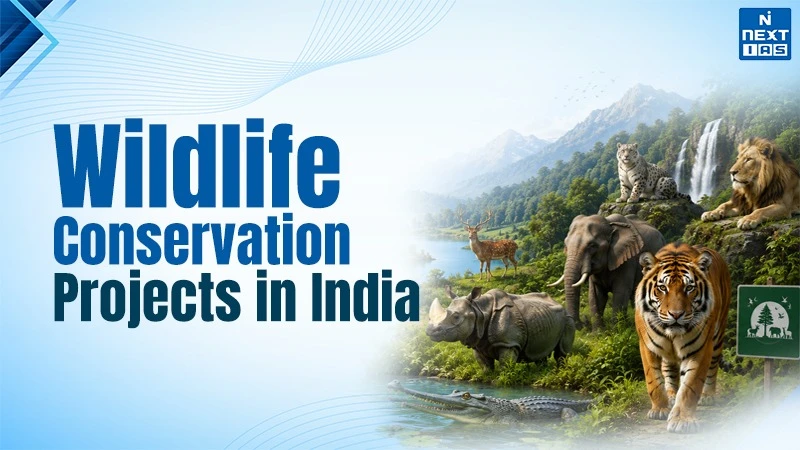
Various wildlife conservation projects have been implemented in India that aim at saving endangered species and ecosystems. Project Tiger was started in 1973 and continues to be a leading wildlife conservation project in India, whereas Project Elephant began in 1992 with an aim to save elephants. Other projects include Project Crocodile, Project Snow Leopard, Project Dolphin, along with conservation projects of Great Indian Bustard and Asiatic Lion among others. Such projects encompass habitat conservation, scientific monitoring, anti-poaching, community involvement, and ecosystem rehabilitation. Conservation is supported by protected zones, wildlife corridors, camera trapping, and satellite tracking technology among other things.
What is Wildlife Conservation?
- Wildlife conservation is the practice of protecting wild plant and animal species and their habitat.
- Wildlife conservation aims to ensure that nature will be around for future generations to enjoy and recognise the importance of wildlife and wilderness for humans and other species alike.
- Wildlife conservation holds significance as wildlife is essential in balancing the ecosystem and stabilising different natural processes.
- Wildlife conservation has become even more important in the present times due to the negative effects of human activity on wildlife.
- Still, many species are not protected from being illegally traded or over-harvested.
| Note: An endangered species is defined as a population of a living species in danger of becoming extinct because its population is very low or falling or is threatened by varying environmental or prepositional parameters. |
| Note: The World Conservation Strategy was developed in 1980 by the International Union for Conservation of Nature and Natural Resources (IUCN) with advice, cooperation, and financial assistance from the United Nations Environment Program (UNEP) and the World Wildlife Fund (WWF) and in collaboration with the Food and Agriculture Organization of the United Nations (FAO) and the United Nations Educational, Scientific and Cultural Organization (UNESCO). |
Need for Wildlife Conservation Projects in India
The need for Wildlife Conservation Projects or wildlife conservation and efforts in India is as follows:
- According to various surveys and reports, our planet has lost more than 58% of its wildlife since 1970 and is experiencing the sixth mass extinction.
- Unlike previous extinction events caused by natural phenomena, the sixth mass extinction is driven by human activity, primarily (but not limited to) the unsustainable use of land, water and energy use, and climate change.
- According to the Living Planet Report, 30% of all land that sustains biodiversity has been converted for food production.
- Agriculture is also responsible for 80% of global deforestation and accounts for 70% of the planet's freshwater use, devastating the species that inhabit those places by significantly altering their habitats.
Note: The species loss is compounded by:
|
What is Biodiversity?
|
Important Wildlife Conservation Projects
- Over the years, the governments, along with various Non-Governmental Organizations (NGOs) and international bodies, have launched several wildlife conservation projects in India.
- Some of the most important wildlife conservation projects in India include:
- Project Tiger
- Project Elephant
- Project Lion
- Project Snow Leopard
- Project Cheetah
- Project Hangul
- Project Crocodile
- Project Great Indian Bustard
- Project Dolphin
Each of these wildlife conservation projects in India has been discussed in detail in the sections that follow.
Project Tiger
- It is a Centrally Sponsored Scheme of the Ministry of Environment and Forests, administered by the National Tiger Conservation Authority.
- The Indian tiger population at the end of the 20th century was estimated at 20,000 to 40,000 individuals.
- The first country-wide tiger census in 1972 estimated the population to comprise a little more than 1,800 individuals, indicating a significant reduction.
- Project Tiger was launched in Jim Corbett National Park of Uttarakhand in 1973, and various tiger reserves were created in the country based on a 'core-buffer' strategy.
Project Elephant
- Project Elephant is a centrally sponsored scheme initiated by the Government of India in 1992 to safeguard the Indian elephant population and their habitats.
- Administered by the Ministry of Environment, Forests, and Climate Change, the project aims to enhance elephant conservation by establishing elephant reserves, anti-poaching measures, habitat management, and community engagement.
- By protecting both the elephants and their habitats, Project Elephant seeks to address challenges such as human-wildlife conflict and habitat fragmentation, ensuring the long-term survival of this iconic species.
Project Lion
- It aims to develop habitats and use modern technologies in lion management.
- It focuses on addressing disease and Human-Wildlife conflict.
- It engages local communities and provides livelihood opportunities.
- It utilises advanced research and veterinary care for holistic species conservation.
Note:
|
Project Snow Leopard
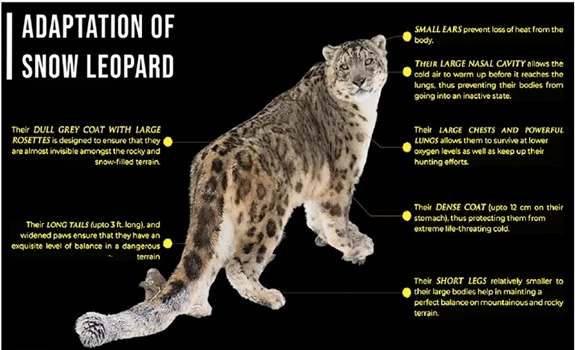
- Project Snow Leopard is a dedicated initiative to conserve the snow leopard, a critically endangered species found in the high-altitude regions of the Himalayas and Central Asia.
- The project was launched to address the severe threats facing this elusive big cat. It focuses on habitat preservation, reducing human-wildlife conflict, and combating poaching.
- By promoting sustainable land use and involving local communities in conservation efforts, the project seeks to secure the snow leopard's habitat while enhancing the protection of its prey species.
Note:
|
Project Cheetah
- Under Project Cheetah, the Prime Minister of India released wild cheetahs in Kuno National Park in Madhya Pradesh. The cheetah had become extinct in India.
- The cheetahs introduced in Kuno National Park have been brought from Namibia.
- This is the world's first inter-continental wild carnivore translocation project.
- There are five female and three male cheetahs among the eight. Under the project, India will receive 20 cheetahs, 12 from South Africa and 8 from Namibia.
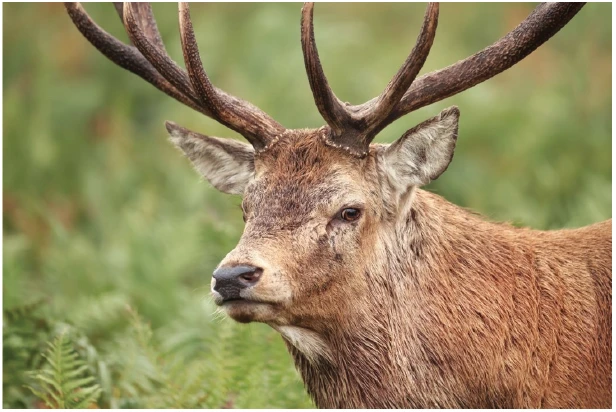
Project Hangul
- Project Hangul was initiated in 1970 by the Kashmir Government with support from WWF.
- The project faced several challenges, including a lack of local participation from communities such as Gujjars, Bakarwals, and Nambardars.
- It focused on the Dagwan area and was hampered by the establishment of cement factories and unscientific limestone extraction, creating death traps for the animals.
- The onset of militancy further disrupted conservation efforts. Rebranded as "Save Kashmir's Red Deer Hangul" in 2009, the project included efforts such as captivity breeding and opening conservation breeding centres.
- Despite a marginal increase in the Hangul population to 261, according to the latest census, continued efforts are necessary.
- Key measures include enlarging Dachigam National Park, relocating Hangul, and hiring experts for relocation sites. Government efforts like patrolling, habitat maintenance, planting fruit-bearing trees, and creating water holes have led to positive results in Hangul conservation.
Project Crocodile
The Indian Crocodile Conservation Project has successfully improved the status of crocodilian species that were once on the brink of extinction. The major objectives of the Project Crocodile are:
- Protect the remaining population in their natural habitat by creating sanctuaries.
- Rebuild populations through 'grow and release' or 'rear and release' techniques.
- Promote captive breeding, where wild species are bred and raised in special facilities.
- Conduct research to enhance management practices.
- Train personnel for project continuity through programs at project sites and the Central Crocodile Breeding and Management Training Institute, Hyderabad.
- Involve local communities in the conservation efforts.
Mugger or Marsh Crocodile
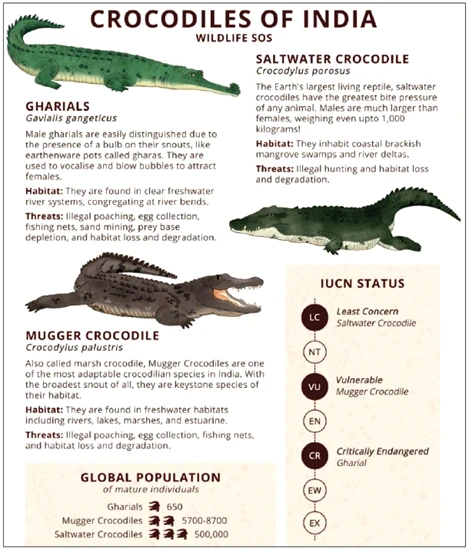
- The Mugger Crocodile is an egg-laying and hole-nesting species known to be dangerous.
- It is primarily found in the Indian subcontinent, inhabiting various freshwater habitats such as rivers, lakes, and marshes.
- Additionally, it can be found in coastal saltwater lagoons and estuaries.
- The species is already extinct in Bhutan and Myanmar.
- Threats to the Mugger Crocodile include habitat destruction, fragmentation, transformation, fishing activities, and using crocodile parts for medicinal purposes.
| Note: IUCN List of Threatened Species: Vulnerable CITES: Appendix I Wildlife Protection Act, 1972: Schedule I |
Estuarine or Saltwater Crocodile
- The Estuarine Crocodile is considered the Earth's largest living crocodile species and is globally infamous as a known maneater.
- It is found in Odisha's Bhitarkanika National Park, the Sundarbans in West Bengal, and the Andamans and Nicobar Islands.
- Additionally, it is present across Southeast Asia and northern Australia.
- Threats to the population include illegal hunting, habitat loss, and antipathy toward the species due to its reputation as a man-eater, which continues to pressure the population.
| Note: IUCN List of Threatened Species: CITES: Appendix I (except the populations of Australia, Indonesia and Papua New Guinea, which are included in Appendix II). Wildlife Protection Act, 1972: Schedule I |
Gharial
- Gharials are Asian crocodilians distinguished by their long, thin snouts, which resemble a pot (ghara in Hindi). Gharials are a type of Crocodile that also includes crocodiles, alligators, caimans, etc.
- The population of Gharials, a relatively harmless fish-eating species, is a good indicator of clean river water.
- Habitat: Gharials are mostly found in fresh waters of the Himalayan rivers. The Chambal River on the northern slopes of the Vindhya mountains ( Madhya Pradesh) is their primary habitat.
- Other Himalayan rivers, like the Ghagra, Uganda, Grow, Ramganga, and Son rivers, are secondary habitats for gharials.
- Threats: Illegal sand mining, poaching, increased river pollution, dam construction, massive-scale fishing operations and floods.
Note:
|
Project Great Indian Bustard
- Project Great Indian Bustard was launched in 2013 to conserve the critically endangered Great Indian Bustard (Ardeotis nigriceps), also known as Godawan, which is the state bird of Rajasthan.
- Despite being listed under the Wildlife (Protection) Act of 1972, the species remained poorly protected.
- Key threats include habitat loss due to conversion of grasslands, anthropogenic disturbances, and poaching.
- Historically, the population has declined from over 1,000 individuals to just 125 in 2013.
- The project focuses on habitat protection through measures such as intensive patrolling, intelligence networks, and check posts.
- Firefly bird diverters are being developed to prevent collisions with power lines.
- Additional steps include planting grasses, providing water facilities, and involving local communities in conservation efforts.
- The project also emphasises mass awareness and continuous monitoring of both the species and its habitat.
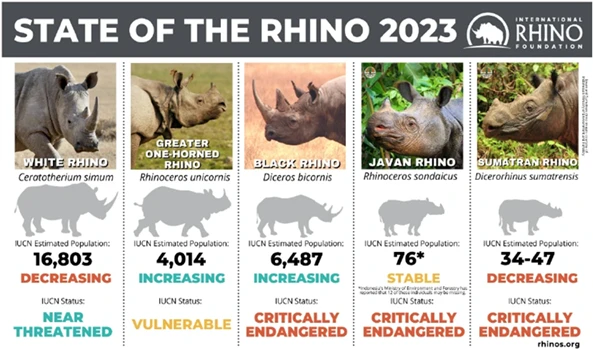
Indian One Horn Rhino Vision-2020
- IRV 2020 is a conservation initiative launched in 2005 by the Forest Department of Assam, in partnership with WWF India, the International Rhino Foundation, and other organisations.
- The aim was to increase the rhino population in Assam to 3,000 by establishing populations in new areas. Rhinos are currently found in four Protected Areas:
- Pabitora Wildlife Reserve,
- Rajiv Gandhi Orang National Park,
- Kaziranga National Park, and
- Manas National Park.
Note:
|
Project Dolphin
- Gangetic river dolphins were declared a national aquatic species in 2010.
- They are found primarily in the Ganga and Brahmaputra rivers and their tributaries across India, Bangladesh, and Nepal. Their population in India is about 3,700.
- This species is classified as endangered on the IUCN Red List. Gangetic dolphins are essentially blind and use ultrasonic sounds to hunt.
- Their existence is threatened by entanglement in nets, increased water salinity, and boat traffic.
- Project Dolphin, announced by the Prime Minister in 2020, aims to conserve these dolphins and their aquatic habitats through modern anti-poaching technology and improved fishermen engagement. The project also focuses on pollution mitigation and supports sustainable fishery.
- Despite its launch, progress has been slow, and on-ground developments are yet to commence.
- The Ministry of Environment, Forests, and Climate Change oversees the project.
Wildlife Conservation Efforts in India
- India has made different attempts at wildlife conservation due to its diverse wildlife. These include setting up more than 100 national parks and over 500 wildlife sanctuaries.
- Tiger Project and Elephant Project are two of the key projects focusing on protecting the species.
- The Wildlife Protection Act, 1972 lays down the legislative provision for wildlife conservation. India also encourages eco-sensitive areas and community-based conservation through schemes like Joint Forest Management.
- Other attempts include conservation breeding programs for threatened species, anti-poaching drives and education campaigns.
- Further, India works in collaboration with other countries on treaties such as CITES to conserve its wildlife.
FAQs on Wildlife Conservation
What are wildlife conservation projects in India?
Wildlife conservation projects are schemes that include efforts for preserving endangered species and ecosystems and monitoring and maintaining ecological balance through habitat protection and anti-poaching.
What is the most popular wildlife conservation project in India?
Project Tiger is an initiative started in 1973 aimed at tiger conservation in India.
When was Project Elephant initiated in India?
Project Elephant was initiated in 1992 to protect and conserve the elephant population in India and solve any problems arising due to the human-elephant conflict.
Why are wildlife conservation projects necessary?
These projects ensure conservation of endangered species and ecosystems, protection of biodiversity, and maintenance of ecological balance.
Which are the species included in wildlife conservation projects?
Tigers, elephants, crocodiles, snow leopards, dolphins, Great Indian Bustards, Asiatic lions and other species are among the animals that are being conserved in these projects.
