
 80813-00200

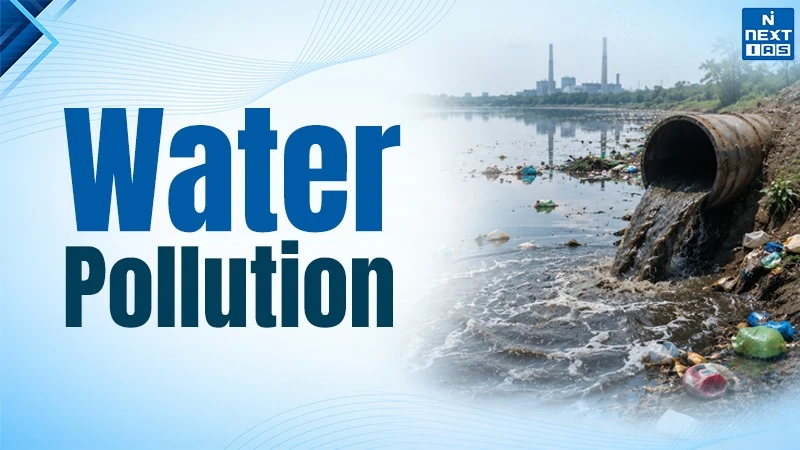
Water Pollution is the contamination of aquatic ecosystems which threatens biodiversity, food security, and human health. The fertilizer runoff can cause eutrophication in water bodies such as lakes and ponds. The algal bloom consumes dissolved oxygen and creates over 500 oceanic 'dead zones' worldwide where marine life may face difficulty in their survival. The microplastics have been detected in deep-ocean trenches and also in the bloodstreams of human beings. It results in bioaccumulation in the marine food web.
Definition of Water Pollution
Water Pollution is the contamination of water bodies such as rivers, lakes, oceans, groundwater or other water bodies by harmful substances, microorganisms or waste. It reduces the water quality and makes drinking water unsafe for domestic use, harms aquatic ecosystems and affects economic activities such as farming, fishing, tourism and industry. Some common pollutants are sewage, industrial effluents, chemical, plastic, oil, fertilisers, pesticides and disease causing pathogens.
Causes of Pollution in Aquatic Ecosystems
The point and non-point sources can cause water pollution. The point sources include factory discharge pipes whereas the non-point sources include agricultural runoff. The major causes are the untreated or partially treated wastewater which carry pathogens and organic matter. The industrial effluents contain toxic chemicals, acids and heavy metals whereas the agricultural runoff carry fertilisers, pesticides, animal waste and sediments.
The excess nutrients such as nitrogen and phosphorus can cause eutrophication in which the fast growth of plants and algae further reduces dissolved oxygen and kills aquatic organisms.
There are other causes including dumping of plastics and solid waste, oil spills, mining waste, thermal discharges from power plants, and polluted stormwater runoff in cities. The groundwater is contaminated by landfill leachate and naturally occurring chemicals such as arsenic and fluoride. The fast pace of urbanisation, poor sanitation, inadequate framework for wastewater treatment and ineffective enforcement can further increase the level of water pollution.
Major Effects of Pollution in Water
| S.No. | Category | Effects |
|---|---|---|
| 1 | Health effects |
|
| 2 | Environmental effects |
|
| 3 | Economic effects |
|
| 4 | Other effects |
|
Types of Water Pollution
Based on different parameters, water pollutants can be classified into different categories, as described below:
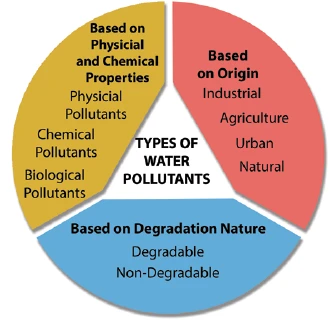
Based on Origin
- Industrial Pollutants: Different industrial pollutants include carbonates, nitrites, and nitrates of heavy metals such as mercury, lead, zinc, arsenic, etc.
- Agricultural Pollutants: These are chemical fertilisers, pesticides, insecticides, herbicides, synthetic chemical compounds, weeds, and plant remains.
- Urban Pollutants: These contain chemicals from vehicular exhaust, lime, household sewage, chemical fertilisers used in the lawns and gardens within the city, etc.
- Natural Pollutants: The natural pollutants include volcanic dust, sediments due to weathering and erosion, debris caused by landslides, decayed and decomposed organic matter, etc.
Based on Physical and Chemical Characteristics
- Physical Pollutants: These pollutants can change physical characteristics such as taste, turbidity, colour, sedimentation content, dissolved and suspended solids, etc.
- Chemical Pollutants: Carbonates, chlorides, sulphites, sulphates, sulphides, nitrates of heavy metals like mercury, lead, cadmium, etc., pesticides, herbicides, insecticides and other chemical compounds.
- Biological Pollutants: Any contaminant of biological origin that causes water pollution is called a biological pollutant, such as infective bacteria, viruses, protozoa, and parasitic worms.
Based on Nature of Degradation
- Degradable Pollutants: Pollutants that can be broken down by
biological agents such as decomposers or microorganisms.
- These are also known as organic pollutants, e.g. sewage, garbage, plants and animals.
- Non-Degradable Pollutants: These pollutants cannot be degraded quickly
by biological agents or sunlight.
- These are also known as inorganic pollutants, e.g. plastic pollutants, solid toxic substances and chemical pollutants.
Sources
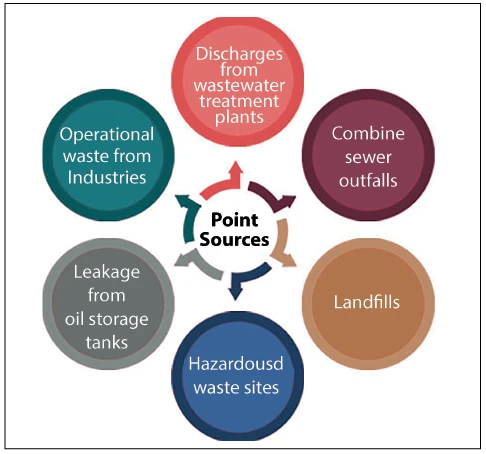
Various sources of water pollution can be categorised into two types - Point Sources and Non-Point Sources.
Point Sources
- Pollution flowing from a single and identifiable source is termed as point source.
- For example, discharge pipe from a factory, roadway or leaking underground storage tank.
Non Point Sources
- Non-point sources of pollution are often termed 'diffuse' pollution, which refers to inputs and impacts that occur over a wide area and are not easily attributed to a single source.
- They are often associated with particular land uses instead of individual point source
discharges.
- For example, run-off from agri fields, urban landscapes, mining fields, construction sites, etc.
- Non-point source pollution is often more difficult to control than point source pollution.
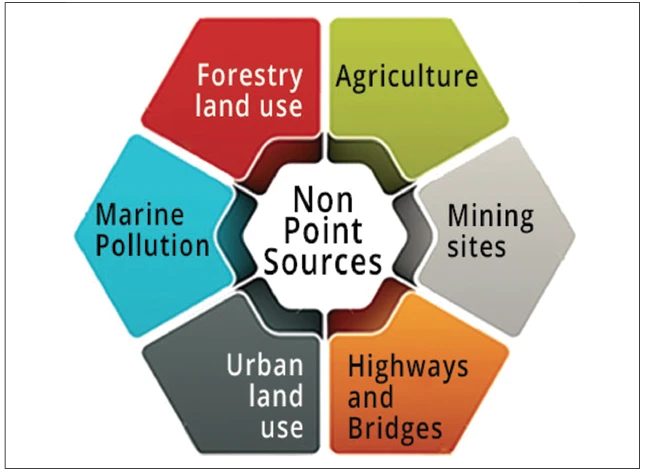
- The various non-point sources of water pollution are:
- Agriculture: In farming areas, non-point sources of pollution include pesticides, fertilisers, animal manure, and soil washed into streams during rainfall run-off, where stock is given access to stream banks. They may foul the water and accelerate erosion.
- Land Use in Forestry: It may contribute to non-point source of pollution of streams by increasing soil erosion and sediment run-off.
- Urban Land Use: The rainfall-runoff as stormwater drains is one of the major non-point sources of pollution in urban areas. It impacts the water quality of the waterways and bays.
- Mining: The drainage of mines which are abandoned are a form of water pollution.
- Highway and Bridges: Runoff from roads, highways, and bridges reach surface waters.
Effects of Toxic Chemicals on Human Health
| S.No. | Chemicals | Health Impacts |
|---|---|---|
| 1 | Mercury | Minamata Disease - Mercury is converted into Methyl Mercury by bacterial action, which causes numbness of limbs, lips, and tongue, deafness, blurring of vision, and mental derangement. |
| 2 | Cadmium | Itai-itai disease (ouch-ouch disease) - a painful disease of bones and joints. Cancer of the liver and lung. |
| 3 | Nitrate | Methahaemoglobinemia or Blue-baby Syndrome - Nitrate reacts with haemoglobin and forms non-functional methaemoglobin that impairs Oxygen transport. |
| 4 | Fluoride | Skeletal fluorosis - hardened bones and stiff and painful joints. Teeth deformity. |
| 5 | Arsenic | Black-Foot Disease, Diarrhoea, Peripheral Neuritis, Hyperkeratosis, Lung and skin cancers. |
| 6 | Lead | Symptoms of Lead exposure: persistent fatigue, irritability, loss of appetite, constipation, insomnia. Effects in Children: damage to brain and nervous system, behavioural problems, anaemia, liver and kidney damage, hearing loss, developmental delays. Effects in Adults: poor muscle coordination, nerve damage, high BP, hearing and vision impairment, reproductive problems, and low fetal development. |
Treatment of Polluted Water
Treatment of Polluted Water involves the following 3 processes:
Primary Treatment
It involves physical processes such as separating large debris, sedimentation in tanks, etc.
Secondary Treatment
- It involves biological processes, which are carried out by microorganisms.
- In this process, microbes oxidise the organic matter present in the polluted water.
Tertiary Treatment
- It involves physicochemical processes that remove turbidity in water caused by the presence of nutrients, organic matter, metal, or pathogens.
- The usual method in this process includes - the chemical oxidation of water by strong oxidising agents like Chlorine Gas, Perchlorate Salts, O3, and UV Radiation.
- Dissolved Oxygen (DO) is the amount of Oxygen gas dissolved in a liquid, such as water.
- It is an essential component for aquatic life, as it is required for the respiration of fish, plants, and other organisms.
- The higher the water temperature, the lower the rate of O2 dissolution. Thus, the discharge of hot wastewater lowers the Dissolved Oxygen (DO) level.
Biological Oxygen Demand (BOD)
- Biological Oxygen Demand (BOD) refers to the amount of Oxygen required by aerobic decomposers for the biochemical degradation of biodegradable organic materials in water.
- The higher the Biological Oxygen Demand (BOD), the lower the Dissolved Oxygen (DO) level.
Chemical Oxygen Demand (COD)
- Chemical Oxygen Demand (COD) refers to the amount of Oxygen equivalent to the requirement for oxidation of total organic matter (biodegradable and non-biodegradable) present in water.
- The higher the Chemical Oxygen Demand (COD), the lower the Dissolved Oxygen (DO) level.
FAQs about Water Pollution
What is Water Pollution?
Water Pollution is the contamination of water bodies such as lakes, rivers, ponds by toxic substances.
What are the causes of water pollution?
The main causes of water pollution are industrial waste, agricultural run-off, untreated domestic sewage, and plastic dump.
How can we prevent water pollution?
Water Pollution can be prevented by treating industrial wastewater, reducing uses of pesticide, managing plastic waste, and enforcing strict regulations against pollution.
