
 80813-00200


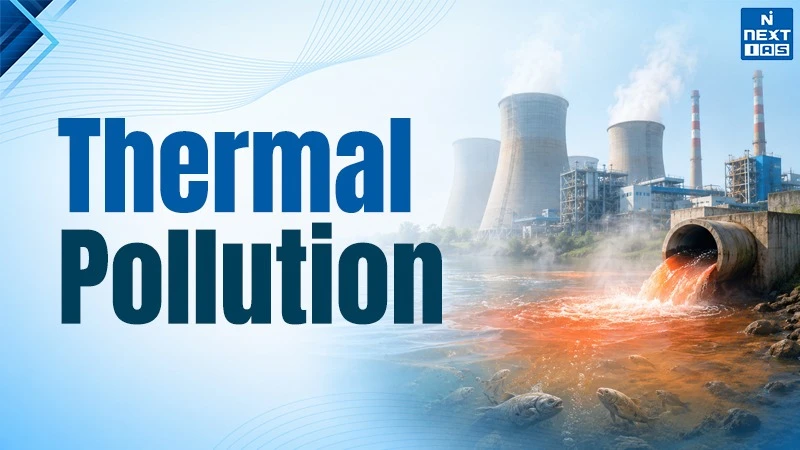
Thermal Pollution is the release of hot water from thermal and nuclear power stations into natural water sources. The change in water temperature due to human activities causes a reduction in the amount of dissolved oxygen which disrupts the ecosystem. It results in death of fish, algal blooms, disruption of breeding seasons and low biodiversity.
Urban runoff and deforestation may lead to thermal pollution due to changes in water temperature of natural sources. Some of the major methods of control include the use of cooling towers, cooling ponds, heat exchangers and recycling of hot water. Having vegetation cover on banks of rivers helps in regulation of temperature of water.
What is Thermal Pollution?
- Thermal pollution is defined as a sudden increase or decrease in the temperature of a natural body of water, which may be ocean, lake, river or pond.
- This sudden change in water temperature is mainly due to anthropogenic activities. For example, a power plant takes water from a source, e.g., a river, as a coolant and then discharges the warm water back into the water body.
Environmental Pollution refers to the introduction of harmful materials into the environment. In other words, it is the contamination of the physical and biological components of the environment to such an extent that normal environmental processes are adversely affected. Based on the nature of the pollutants and the media they affect, Environmental pollution can be categorised into several types, including Air Pollution, Soil Pollution, Water Pollution, etc.
Causes of Thermal Pollution
Some of the prominent causes and sources of thermal pollution can be seen as follows:
- Power, Manufacturing and Industrial Plants: These plants draw water from nearby sources as a coolant and then release warmer water back to the source.
- Soil Erosion: Consistent soil erosion causes water bodies to rise, which makes them more exposed to sunlight.
- Deforestation: Trees and plants prevent sunlight from falling directly
on water bodies.
- With deforestation, these water bodies are directly exposed to more sunlight, thus absorbing more heat and raising the temperature of water bodies.
- Runoff from Paved Surfaces: During summer seasons, Urban pavement gets quite hot, which creates warm runoff that gets into the sewer systems and water bodies, increasing their temperature.
- Natural Causes: Volcanoes and geothermal activity beneath the oceans
and seas can release warm lava to raise the temperature of water bodies.
- Lightning is another natural cause that can introduce heat into the oceans.
Effects of Heat Pollution
Varies effects of thermal pollution can be seen as follows:
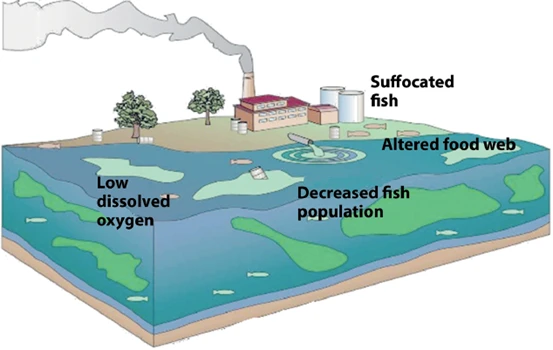
- Decrease in Dissolved Oxygen Levels: The warm temperature decreases
the levels of DO (Dissolved Oxygen) in water.
- The decrease in oxygen may give rise to anaerobic conditions by suffocating plants and animals.
- Growth of Algae: Warmer water allows algae to flourish on surface of water and over the long term growing algae can decrease oxygen levels in the water.
- Surge in Toxins: Constant flow of high-temperature water discharge from
industries leads to an increase in toxins in the natural water body.
- These toxins may contain chemicals or radiation that may have a harmful impact on aquatic organisms.
- Biodiversity Loss: Changes in the temperature of water bodies may lead to migration to more adaptable surrounding leading to more clash for limited resources leading to death of many organisms.
- Ecological Impact: A sudden thermal shock can result in mass killings
of organisms.
- Little increase in water temperature may increase activity level of some organisms while higher increase in water temperature may decrease the activity level of some.
- Reproductive Systems: As reproduction better happens within a certain range of temperature. Higher temperature can cause release of immature eggs or can prevent normal development of certain eggs.
- Metabolic Rate: Thermal pollution increases the metabolic rate of
organisms.
- It may also disrupt the stability of the food chain and change the composition of species.
Thermal Pollution Control Measures
The following are some of the thermal pollution control measures:
- Storing hot water in cooling ponds and allowing the water to cool before releasing it into any water body or back to the plant.
- Warm effluents can be passed through a cooling tower after it leaves the condenser.
- The heat is dissipated into the air and the water can then be discharged into the river or pumped back to the plant to be reused for cooling.
- Create storm water management facilities to absorb runoff or direct it into groundwater, such as infiltration basins and bio-retention systems.
- Dams can be designed such that instead of releasing cold water at the bottom of the reservoir, they release water from the top.
Potential Uses
Though an environmental hazard, thermal pollution can be used to reap economic benefits. Some of the potential uses of thermal pollution can be seen as follows:
- Industrial and space heating.
- Soil warming -- biological application.
- Heating greenhouses.
FAQs about Thermal Impact
What is thermal pollution?
It is the contamination of the natural temperature of water bodies as a result of hot water discharged by industries and power plants.
What are the main sources of thermal pollution?
They include thermal and nuclear power plants, industrial cooling towers, oil refineries, urban runoff, and clearance of riverside plants.
What is the effect of thermal pollution on living things in water?
Thermal pollution leads to decreased levels of dissolved oxygen, interference with reproduction, increased levels of stress and mortality among others.
