
 80813-00200


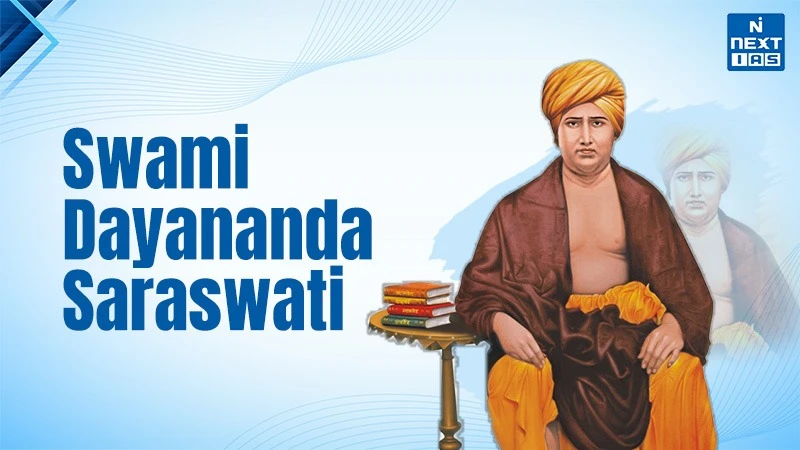
Swami Dayanand Saraswati (1824–1883) was a visionary Hindu reformer and the founder of Arya Samaj (1875). He rejected idol worship after watching a mouse (rodent) eating offerings on Lord Shiva’s idol, doubting the omnipotence of God. Without creating a new religion, he just wanted to purify the existing religion & believed the Vedas were the only purest form of knowledge & later, the Puranas have polluted it. His Satyarth Prakash book was originally written in hindi . It is among the influential books of Vedic philosophy & social reform.
Dayanand Saraswati was the first person to use the word ‘Swaraj’ long before Gandhiji & Tilak. He is also known for the introduction of ‘Shudhi Movement’ to bring back the earlier converted people. The radical views of Dayanand regarding superstitions earned him many enemies. It is said that in 1883 during his stay at the court of the Maharaja of Jodhpur, he was poisoned.
Biography of Dayananda Saraswati
- Swami Dayananda Saraswati was born on 12th February 1824 as Mool Shankar in Tankara in Gujarat. He was a Hindu religious reformer, scholar and founder of the Arya Samaj. He worked to revive the original ethical and rational teachings of the vedas.
- He was born in a shaivite brahmin family but his experiences led him to question idol worship and ritual practices. He left home in search of spiritual truth and became a sanyasi. Later, he studied Sanskrit and vedic scriptures under Swami Virjanand at Mathura. His guru urged him to spread vedic knowledge and challenge ignorance in society.
- Swami Dayananda Saraswati gave the slogan ‘Back to the Vedas’ and rejected idolatry, superstition, hereditary caste discrimination and blind ritualism. He promoted rational enquiry, truthfulness and one formless God.
- In 1875, he founded the Arya Samaj in Bombay which later became a popular reform movement. The movement worked in the direction of women's education, widow remarriage and opposition to child marriage.
- His book ‘Satyarth Prakash’ presented his interpretation of vedic religion and criticised the unjustified practices in society and religion.
- Swami Dayananda died in Ajmer on 30th October 1883. His ideas influenced social reform, modern education and nationalist consciousness in India.
Swami Dayananda Saraswati Jayanti
- Swami Dayananda Saraswati Jayanti is celebrated in honor of the birthday of Maharishi Dayananda Saraswati.
- He was born on 12 February 1824 in the Gujarat region in Tankara.
- He is a founder of the Arya Samaj religious organization and one of the leaders of the Indian social and religious reformation movement of the 19th century.
- His Jayanti is celebrated on Falgun Krishna Paksha Dashami, usually in February.
- He was a proponent of Vedas and against idol worship, child marriages, and discrimination on the grounds of caste.
- He emphasized the importance of education for women and the Shuddhi movement.
- He also established the Arya Samaj in 1875 at Bombay.
Early Life & Mission
- He was born on 12 February 1824 in Tankara in Gujarat and was deeply influenced by his traditional Hindu upbringing.
- He was deeply influenced by his traditional Hindu upbringing.
- His curiosity for spiritual enlightenment led him to question the existing religious practices and social customs.
- This quest reflected in his mission to rejuvenate Hinduism based on Vedic principles because he regarded vedas as the ultimate source of knowledge and truth.
Ideological Framework of Swami Dayananda Saraswati
- Swami Dayanand Saraswati’s ideology was rooted in the principles of the Vedas.
- He had faith in the infallible nature and scientific truths of the Vedas.
- He claimed that Hindu religion includes great thoughts along with scientific principles. His motto of "Back to Vedas" acted as a call for the revival of ancient wisdom.
- The perspective of Dayanand Saraswati on Idol worship was that he strongly condemned idol worship, polytheism, and Brahminical domination.
- Swami Dayanand Saraswati condemned the caste system because it degraded the lower castes.
- However, he appreciated the Chaturvarna system because he believed that was the egalitarian basis of society.
Reformist Stance of Dayananda Saraswati
Swami Dayanand Saraswati was a critic of several social evils:
- Critique of Ritualistic Religion: He strongly criticized rituals such as Sati, child marriages, purdah, polygamy and called for their abolishment.
- Promotion of Widow Re-marriages: He encouraged widow re-marriages along with improving the social status of women.
- Educate the Nation: Swami Dayanand Saraswati emphasized the need for education in the revival of Indian society. He was of the view that Sanskrit should be available to everyone regardless of caste or gender.
Swami Dayananda Saraswati & Arya Samaj
- The Arya Samaj was founded by Dayanand Saraswati in 1875 and it was based on the philosophy of Vedas.
- The social reforms of Arya Samaj became a guiding light for others, particularly in the regions of North India and Punjab.
- The organization worked to get rid of discrimination based on caste system, protect the rights of women, and promote national consciousness amongst Indians.
- Dayanand Anglo-Vedic (DAV) institutions were founded under his supervision which included elements of both modern and Vedic education.
Contributions to Indian Society
The contributions of Swami Dayanand Saraswati were beyond religious reforms:
- Social Equality: He worked for the temple-entry of all castes and fought against untouchability.
- Educational Reforms: He worked in the direction of widespread educational reforms.
- Nationalism and Self-Respect: He infused the sense of pride, unity, and nationalism among Indian people. He also glorified vedic knowledge.
Influence on Freedom Movement
- Dayanand Saraswati’s ideas and the work of the Arya Samaj played a crucial role in inspiring early nationalistic movements in India.
- He emphasized on self-reliance, education, and social unity and also sowed the seeds of resistance against colonial rule and cultural subjugation.
Dayanand Saraswati as a Social Reformer
- The Arya Samaj Founder Swami Dayanand Saraswati was regarded as a notable social reformer who questioned orthodox practices.
- Dayanand Saraswati child marriage opposition stemmed from the Vedic principles and supported minimum age at marriage and consent.
- He supported girl’s education through Vedic education and stressed upon equal status to girls in education.
- Through Arya Samaj, Dayanand Saraswati cow protection campaigns promoted cows as sacred, a source of livelihood and emphasized on its economical importance in agriculture.
- Moreover, he established goshalas and advocated for laws against cow slaughter.
- He also established the Arya Samaj Punjab branch in Dayanand Saraswati Lahore 1877, and initiated the Shuddhi movement & widow remarriage campaign.
- He opposed the caste-based system, idol worship and superstitious practices. His book ‘Satyarth Prakash’ led the way for many societal reforms.
- Through his ideas and support for women education and revival of Vedic practices, he became a transformational reformer of the 19th century.
Conclusion
Swami Dayanand Saraswati was a visionary leader who challenged the traditional socio-religious evils of his time. He reformed and redefined Hinduism and also addressed the issues such as caste discrimination and gender inequality. The formation of Arya Samaj and the emphasis on vedic ideals helped transform the Indian society.
FAQs about Swami Dayanand
Who is Swami Dayanand Saraswati?
Swami Dayanand Saraswati was a prominent 19th-century social reformer and founder of the Arya Samaj which was a movement associated with reforms in Hinduism.
What is the Significance of Satyarth Prakash book?
Dayanand Saraswati’s Satyarth Prakash book relates to Vedic monotheism, criticizes idolatry & other religions and outlines social reforms.
