
 80813-00200


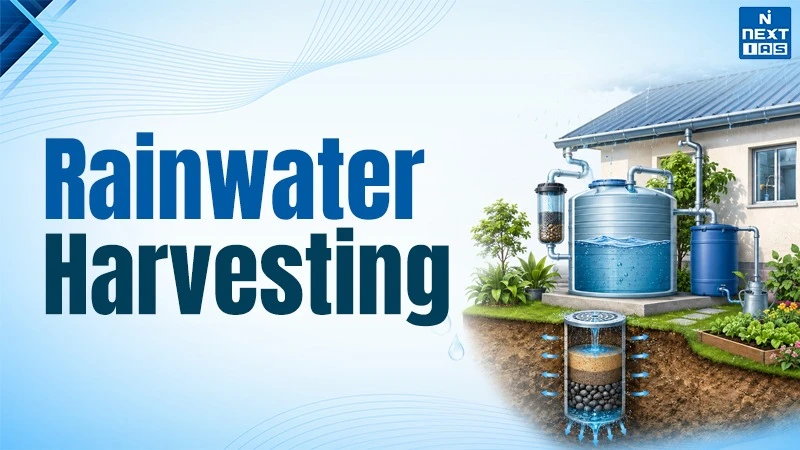
Rainwater Harvesting is the collection and storage of runoff water from rooftop, roads, and mountains for its reuse. It is an ancient practice where a simple rooftop system can reduce water dependence on borewells and municipal water supply. The recharge pits allow water to percolate into aquifers, reduce surface runoff and help in minimizing waterlogging in urban regions. The rainwater harvesting is drought resilience, small scale irrigation and water security at the times of irregular monsoon rainfall period. Tamil Nadu is the 1st Indian state to make rooftop rainwater harvesting compulsory for all buildings in 2001. It significantly recharges the depleting urban groundwater table.
What is Rainwater Harvesting?
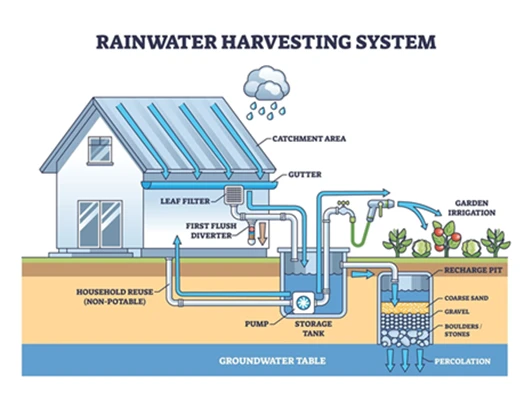
Rainwater Harvesting is the collection and storage of rainwater from rooftops, elevated surfaces, and open land. The collected water is stored in a tank, pond or reservoir for its domestic use, irrigation, and other non-potable requirements. The collected rainwater can be directed into recharge pits, trenches, wells, or borewells to replenish groundwater aquifers. The practice of rainwater harvesting reduces urban flooding, helps prevent soil erosion, minimizes the use of municipal water, and secures freshwater during dry season.
Methods of Rainwater Harvesting
Various methods or techniques have been used in rainwater harvesting in rural and urban areas which are as follows:
In Urban Areas
Roof Top Rainwater/Storm Runoff Harvesting through urban areas:
- Recharge Pit – A recharge pit allows the rainwater to replenish groundwater by recharging the underground aquifers. It can be built to recharge a borewell or just to help the water infiltration in an area.
- Recharge Trench – It is a trench excavated on the ground and refilled with porous media like pebbles, boulders, or brickbats to harvest the surface runoff.
- Tubewell – In areas where the shallow aquifers have dried up and existing tubewells are tapping deeper aquifers, rainwater harvesting through existing tubewells can be adopted to recharge the deeper aquifers.
In Rural Areas
Roof Top Rainwater/Storm Runoff Harvesting through in rural areas:
- Gully Plug – Gully plugs are built using local stones, clay, and bushes across small gullies and streams running downhill slopes.
- They help capture drainage and create tiny catchments during the rainy season.
- Contour Bund – Contour bunds are effective for conserving soil moisture in a watershed.
- They are constructed on sloping ground along the contour lines to impound monsoon runoff, intercepting water before it gains erosive velocity.
- They are suitable for low rainfall areas.
- Dugwell Recharge – After cleaning and de-silting, existing and abandoned dug wells can be used as recharge structures.
- Percolation Tank – A percolation tank is an artificially created surface water body that submerges highly permeable land, allowing surface runoff to percolate and recharge groundwater storage.
- It is best constructed on second—to third-order streams with highly fractured and weathered rocks.
- Check Dam/Cement Plug/Nala Bund – Check dams are built across small streams with gentle slopes.
- They store water mostly within the stream course and are usually less than 2 meters high, allowing excess water to flow over the wall.
- Recharge Shaft – This technique recharges unconfined aquifers overlain by poorly permeable strata.
- It helps recharge groundwater from village tanks during the rainy season while maintaining sufficient water in the tank for domestic use.
Importance Rain Harvesting
The importance or advantages of implementing rain-water harvesting techniques is as follows:
- To Reduce Runoff Loss – More than 3/4th of the precipitation in India comes during four months (monsoon period). A significant part of this is lost in runoff and evaporation. Rainwater harvesting can control this.
- To Meet Rising Demand – Rapid urbanisation and industrial development demand a lot of water, so a severe water crunch can be solved by water harvesting.
- For Agriculture & Food Security – Modern hybrid crops & fertilisers depend on continuous irrigation water supply. More than 60% of the net sown area is unirrigated (rising cases of drought in the dry belt of India).
- Women’s Issues – In dry and hilly areas, women face hardships in fetching water. Rainwater harvesting can provide a decentralised source of water.
- To Reduce Soil Erosion and Flood Hazards – Collecting rainwater and reducing stormwater flow to prevent urban flooding.
- Rise in Groundwater Levels – The overall groundwater level increase occurs by successfully implementing water harvesting.
Traditional Water Harvesting Methods in India
- Zing – Tanks for collecting water from melted ice in Ladakh.
- Kul – Water channels in mountain areas of Jammu, Himachal Pradesh.
- Naula – Small ponds in Uttarakhand.
- Apatani – Terraced plots connected by inlet and outlet channels in Arunachal Pradesh.
- Zabo/Ruza – Impounding runoff in Nagaland.
- Bamboo Drip Irrigation – Water from streams in the hills is brought to the plains via bamboo pipes for drip irrigation in Meghalaya.
- Dongs- Ponds in Assam.
- Dungs or Jampois – Small irrigation channels linking rice fields to streams in the Jalpaiguri district of West Bengal.
- Dighis – Small square or circular reservoirs fed by canals from rivers in Delhi.
- Baolis – Secular structured step-wells from which everyone could draw water and use it for washing and bathing.
- Ahar Pynes – These are traditional floodwater harvesting systems indigenous to South Bihar. They are reservoirs with embankments on three sides built at the end of diversion channels like pines.
- Baoris/Bers – Community wells in Rajasthan.
- Tankas – Underground tanks in Bikaner in Rajasthan.
- Kund – A circular underground well with a saucer-shaped catchment area that slopes towards the centre where the well is situated.
- Johads – Earthen check dams in Alwar district, Rajasthan.
- Eri – Tamil Nadu’s water conservation system makes tanks that act as flood-control systems, prevent soil erosion and runoff waste, and recharge groundwater.
- Surangams – A traditional water management system that provides a reliable water supply for human settlements and irrigation in Kerala and parts of Karnataka.
- Bhandara Phad: This is a community-managed irrigation system in Maharashtra. A Bhandara (check dam) was built across a river, from which calves (canals) branch out to carry water into the fields in the phad (agricultural block).
- Pat System – This is a traditional water harvesting system of Madhya Pradesh, where water is diverted from hill streams into irrigation channels by diversion bunds made of stones, teak leaves, and mud.
FAQs Harvesting
What is Rainwater Harvesting?
Rainwater Harvesting is the collection and storage of runoff water for its reuse in the form of irrigation, and percolation.
