
 80813-00200


Art & Architecture of the Mauryan Period was an important phase in the evolution of the art of ancient India, especially during the era of King Ashoka. This phase was characterized by monumental pillars, stupas, rock-cut caves, polished stone sculptures, and architectural palaces.
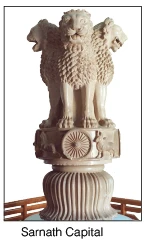
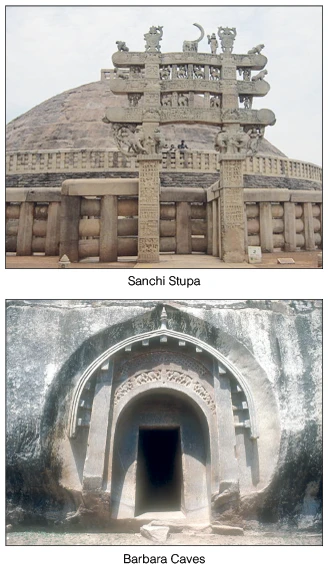
The Pillars of Maurya are known to be made of sandstone, and they are known for their polished surface and animal capitals, including the well-known Lion Capital of Sarnath that is the national symbol of India. The King Ashoka built several stupas such as Sanchi Stupa.
About Mauryan Empire
- The Mauryan Empire was a geographically extensive Iron Age historical power in ancient India, which was ruled by the Mauryan dynasty from 321 to 185 BCE.
- The empire originated from the kingdom of Magadha in the Indo-Gangetic plains (modern Bihar, eastern Uttar Pradesh, and Bengal) on the east side of the Indian subcontinent.
- Its capital city was Pataliputra (modern Patna).
- The empire was the largest ever in the Indian subcontinent and reached its zenith under Asoka.
Mauryan Art and Architecture
- The Mauryans made a remarkable contribution to art and architecture. They introduced stone masonry on a wide scale.
- Megasthenes stated that the Mauryan palace at Pataliputra was as splendid as the capital of Iran.
- Fragments of stone pillars and stumps, indicating the existence of 80 pillared halls, have been discovered at Kumrahar on the outskirts of modern-day Patna.
- The capitals of these pillars were realistically modelled and consisted of groups of animals.
- The finest extant example is that of Sarnath. It consists of four lions, which initially supported a dharma chakra.
- These rest on an abacus bearing an elephant, horse, bull, and lion in relief, separated by four minor chakras (with 24 spokes).
- Mauryan artisans attained high technical skills in polishing the stone pillars, which shined like northern black polished ware.
- Transporting the enormous stone blocks from the quarries and polishing and embellishing them when erected required a great feat of engineering.
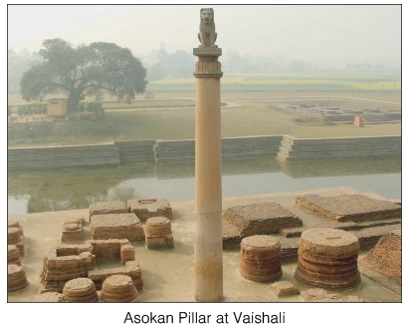
- Each pillar is made of a single piece of buff-coloured sandstone. Only their capitals, beautiful sculptures of lions and bulls, are joined with the pillars on top.
- These polished pillars were set up throughout the country, which shows the technical knowledge involved in their polishing and transport had spread far and wide.
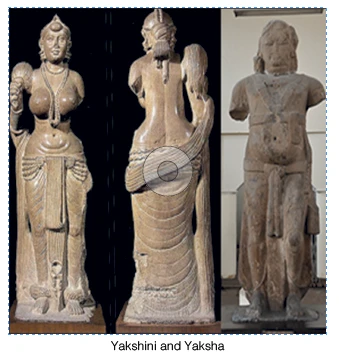
- Two free-standing stone figures—a Yaksha image from Parkham and a Yakshini sculpture from Besnagar—are the best examples of Indigenous art. A larger female is a perfect example of this style.
- The Mauryan artisans also started hewing caves from rocks for the monks to live in. The earliest example is the Barabar Caves, 30 km from Gaya. Later, this practice spread to western and southern India.
Features
The significant features of the Mauryan Art and Architecture are as follows:
- Pillars of Ashoka: The Ashokan pillars are monumental columns erected
by Emperor Ashoka across his empire. They showcase intricate designs and inscriptions that
convey his Dhamma.
- Notable for their polished sandstone and lion capitals, such as the Sarnath Lion Capital, which now serves as India's national emblem, these pillars reflect the influence of Greco-Persian architectural styles.
- The pillars were intended to mark important sites and propagate Ashoka's messages of peace and Buddhism.
- Stupas: Stupas are dome-shaped structures that serve as repositories
for relics and sacred objects, symbolising the Buddha's presence.
- Mauryan stupas, including the famed Sanchi Stupa, were central to Buddhist worship and pilgrimage.
- The architectural design of these stupas emphasised their spiritual significance, as they served as focal points for meditation and communal rituals.
- Rock-cut Architecture: Mauryan rock-cut architecture includes early
examples like the Barabar Caves, which were carved into solid rock and functioned as
retreats for monks and places of worship.
- These caves are significant for their architectural innovation and simplicity, reflecting the Buddhist emphasis on meditation and asceticism.
- The rock-cut technique allowed for durable and monastic spaces, integral to religious practice during the Mauryan period.
Categories
There are two categories of Mauryan Art and Architecture, which are as follows:
- Secular Architecture
- Religious Architecture
Both types have been discussed in detail in the following section.
Secular Mauryan Architecture
- Palaces: The Mauryan period saw the construction of elaborate royal
palaces, with notable examples including the grand structures at Pataliputra.
- These palaces were characterised by their vast size, intricate design, and luxurious features, reflecting the empire's wealth and sophistication.
- Fortifications: Mauryan fortifications included impressive walls and
gates designed for defence.
- These fortifications were influenced by Persian and Achaemenid architectural styles, showcasing advanced military engineering and urban planning to protect the empire's cities.
Religious Mauryan Architecture
- Stupas: The Great Stupa at Sanchi is a prime example of Mauryan
religious architecture.
- These dome-shaped structures were built to house relics of the Buddha and served as focal points for Buddhist worship and pilgrimage.
- Chaityas and Viharas: Early Buddhist religious structures, such as
chaityas (prayer halls) and viharas (monastic residences), were established during the
Mauryan period.
- These structures provided spaces for meditation, communal activities, and monastic life.
- Monolithic Pillars: Ashoka's monolithic pillars, with their inscriptions and symbolic carvings, are significant in Mauryan art. Made primarily from stone, these pillars were erected across the empire to disseminate Ashoka's messages of Dhamma and Buddhism, reflecting both artistic and ideological aspects of Mauryan rule.
Sculpture in Mauryan Art and Architecture
Mauryan art and architecture sculpture is marked by its polished stone craftsmanship, exemplified by the lion and elephant capitals. These sculptures served both as decorative elements and symbols of imperial power. The prominent two have been discussed below.
Polished Stone Sculptures
- Mauryan sculpture is renowned for its polished stone carvings, including the lion and elephant capitals.
- These sculptures were characterised by their smooth surfaces and intricate details, showcasing the high craftsmanship achieved during this period.
- The lion capital from Sarnath is particularly notable for its grandeur and symbolic significance, representing power and authority.
Yaksha and Yakshi Statues
- Yaksha and Yakshi statues were important religious and fertility symbols during the Mauryan period.
- These figures, often depicted in naturalistic poses, were believed to embody prosperity and fertility.
- The Didarganj Yakshi is a prominent example, illustrating the fusion of artistic skill
and religious symbolism.
- These statues reflected the influence of folk art and indigenous traditions, integrating local beliefs with broader religious practices.
Material Culture in Mauryan Art and Architecture
- The Mauryan conquest opened doors for trading and missionary activities. The contacts established by administrators, traders, Jaina, and Buddhist monks led to the spread of material culture in the Gangetic basin.
- Plenty of iron implements were used during Mauryas, including the spoked wheel.
- Although arms and weapons were the monopoly of the Maurayan state, the use of other iron tools was not restricted to any class.
- Burnt bricks were first used in northeastern India during the Mauryas. Mauryan constructions of brunt bricks have been found in Bihar and Uttar Pradesh.
- Houses were made of bricks and timber, which was plentiful because of the thick vegetation in ancient times. Magasthenese spoke of the wooden structure at the Mauryan capital, Pataliputra. Logs of wood were used to defend against floods and foreign invasions.
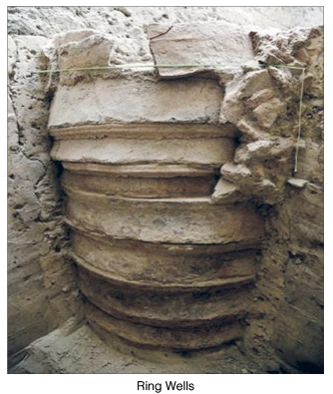
- Ring wells first appeared during Maurayan rule and spread to different parts of the country.
- Since ring wells supplied water to people for domestic use, it was no longer imperative to find settlements on the banks of rivers. Ring wells also served as soak pits in congested settlements.

Ashoka's Contribution
Ashoka's contribution to Mauryan art and architecture is profound, as he played a pivotal role in promoting Buddhist art and building monumental structures, which can be seen as follows:
- Role in Buddhist Art: Emperor Ashoka played a crucial role in
developing and spreading Buddhist art and architecture.
- Ashoka promoted the construction of stupas, pillars, and rock-cut caves, which became central to Buddhist worship and culture.
- Inscriptions and Edicts: Ashoka utilised art as a medium for
communicating his dhamma, inscribing his edicts on pillars and rocks to propagate his
message of non-violence, tolerance, and religious unity.
- These inscriptions were political statements and artistic expressions of his philosophical ideals.
FAQs
What are the prominent characteristics of Mauryan art and architecture?
The prominent characteristics of Mauryan art include polished stone pillars, stupas, rock-cut architecture, sculptures, and architecture.
What is the most popular sculpture of Maurya period?
The most popular sculpture of the Maurya period is Lion Capital of Sarnath, commissioned by Emperor Ashoka. This sculpture acts as the national emblem of India.
What are Ashokan pillars?
Ashokan pillars are sandstone pillars raised by the rulers of the Mauryan dynasty, which had inscriptions and animal capitals.
What are the representative caves of the rock-cut architecture of Maurya?
The representative caves of Mauryan rock-cut architecture include the Barabar Caves in Bihar.
What is the contribution of Ashoka to Mauryan architecture?
Ashoka encouraged the building of stupas, pillars, monasteries, and rock-cut monuments.
