
 80813-00200



Marsupials are a unique group of mammals primarily distinguished by their reproductive method as they give birth in 12 to 33 days. They give birth to relatively undeveloped young ones, known as 'Joeys'. These typically complete their development inside a protective abdominal pouch called a marsupium. There are some examples of Marsupials include Kangaroo, Koala, and Opossum.
They have a short gestation period. They also lack a well-developed placenta, and show adaptations to diverse habitats. They are generally nocturnal and use scent marking for communication. They majorly found in Australia, New Guinea, and the Americas. They are not native to India.
Prominent Marsupial Animals
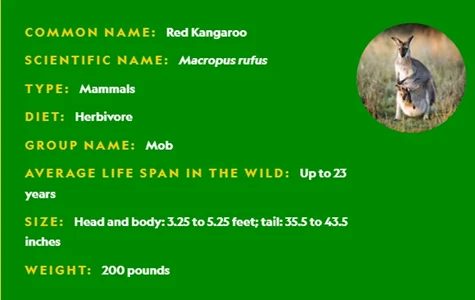
Kangaroos
Kangaroos are herbivorous mammals. They inhabit a variety of habitats, from forests to grasslands. They mainly native to Australia.
Koalas
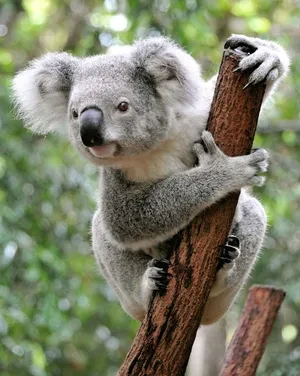
Koalas are herbivorous mammals. They feed on eucalyptus leaves. They are native to Australia.
Opossums
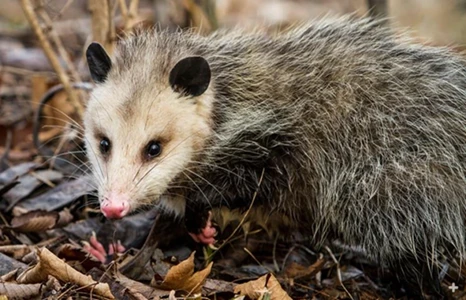
Opossums are herbivorous mammals who are known for their distinctive long, hairless tails and their ability to play dead when threatened, which is known as "playing possum". They are found primarily in America.
Tasmanian Tiger
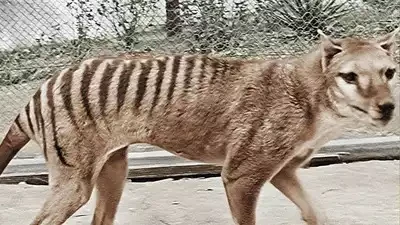
The Tasmanian tiger is also known as the Tasmanian wolf. The species was a carnivorous marsupial that is believed to be extinct.
- The Tasmanian tiger looked similar to a dog. It has dark stripes extending from its back to its stiff tail and abdominal pouch.
Australian Marsupials
- Australian Marsupials are a diverse group of mammals unique to Australia and nearby islands.
- These animals are unique because they give birth to immature babies which further develop inside a pouch.
- Some famous examples of marsupials include kangaroos, wallabies, koalas, wombats, bandicoots, quolls, and Tasmanian devil.
- There are 200 species of marsupials found in Australia which include tiny marsupial mice and sugar gliders to large macropods such as the Red Kangaroo.
- Marsupials can be herbivores such as kangaroos, koalas, wombats, insectivores, or carnivores such as numbat, quolls, Tasmanian devil.
Key Characteristics of the Marsupials
| Viviparous | Female marsupials give birth to living young instead of laying eggs. |
| Short Gestation | Marsupials have a short gestation period as the young ones are born at a very early stage of development. |
| Pouched Young | The offspring born out of a female marsupial is relatively underdeveloped young and is called Joeys. After getting born, these joeys crawl into the mother's pouch to continue their development, as it provides a protected environment for the young to grow and suckle. |
| Lacks Placenta | Marsupials lack placenta. Instead, the young get their nourishment in the pouch attached to their mother's belly. |
| Dietary Adaptations | Some are herbivores, like kangaroos, while others are carnivorous, like the Tasmanian devil. |
Peculiar Behavior
- As the young marsupial grows within the pouch, there comes a point in their development when they start venturing out of the pouch to explore the external world and then return to the pouch for safety and nourishment. This stage is referred to as "pouch-emergent" or "pouch-exiting."
- They have a distinctive dentition. For example, many species possess sharp, chisel-like incisors for gnawing and cutting vegetation.
Distribution
- Australia - Marsupials are found in Australia. This continent is home to the greatest number of marsupials species. They are endemic to this continent.
- New Guinea - Tree kangaroos are one type of marsupials that can be found in the rainforests of New Guinea, situated to the north of Australia.
- Americas - There are also marsupials in the Americas. Opossums are the only family of marsupials found in North and South America.
- India - Marsupials are not indigenous to India.
Major Threats
- Habitat Loss - Loss of their natural habitat due to human intervention including deforestation, urban development, and agricultural expansion.
- Introduction of Species - Introduction of non-native species such as foxes and feral cats, which can feed on and compete with marsupials for resources.
- Diseases - Like any other wild animals, they may become vulnerable to diseases especially if they are introduced by humans or invasive species and this can be devastating to the marsupial population.
- Climate Change - Change in temperature, rain patterns and food sources may affect the distribution and behavior of marsupials.
- Road Kills - These marsupials, especially those living in urban or suburbia, are vulnerable to road deaths when moving from one place to another to find food and mates and places to nest.
- Poaching - In certain regions of the world, marsupials are hunted for reasons such as diseases, ur, meat or even body parts, which is a great threat to them.
- Human-Wildlife Conflict - For marsupials living around human settlement, they may experience human-wildlife conflict such as crop destruction.
Related Prelims PYQ about Marsupials
UPSC Prelims 2023 Question
Consider the Following Statements:
Statement I: Marsupials are not naturally found in India.
Statement II: Marsupials can thrive only in montane grasslands with no
predators.
Which one of the Following is Correct in Respect of the above Statements?
(a) Both Statement-I and Statement-II are correct and Statement-II is the
correct explanation for Statement-I
(b) Both Statement-I and Statement-II are correct and Statement-II is not
the correct explanation for Statement-I
(c) Statement-I is correct but Statement-II is incorrect
(d) Statement-I is incorrect but Statement-II is correct
Correct Answer: Option (c)
FAQ about Marsupial
What is marsupial?
A marsupial is a mammal which gives birth to immature offspring who then develop further inside a pouch attached to the abdomen of the mother.
What is marsupialization?
Marsupialization is a process of surgically opening up a cyst or an abscess and attaching its borders to create a permanent drainage pouch.
What animals are marsupials?
Examples of marsupials include kangaroos, wallabies, koalas, wombats, Tasmanian devils, and opossums.
