
 80813-00200


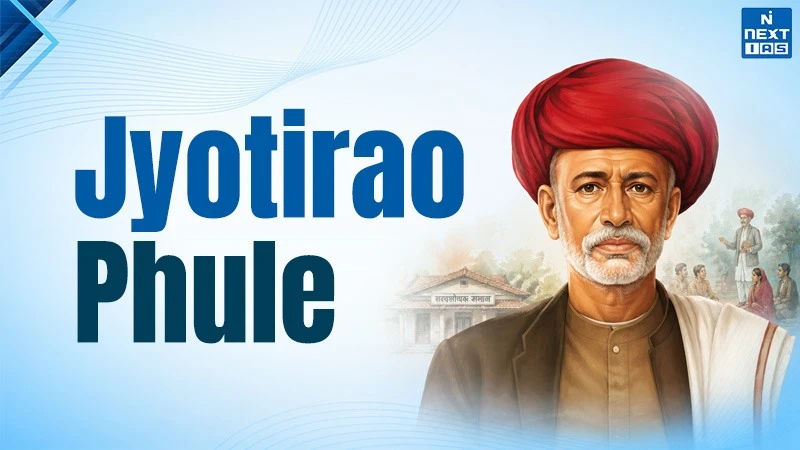
Jyotiba Phule was born as Jyotirao Govinrao Phule in 11th april 1827 in satara district of Mahaharashtra in India. He was a visionary social reformer, rational thinker, and an anti-caste activist who advocated for gender equality and universal education. In 1840, He married Savitribai Phule who supported his life journey of anti-caste reforms and women education. In 1848, Jyotiba and Savitribai established the 1st indigenous school for girls at Bhide Wada in Pune. He founded the Satyasodhak Samaj in 1873 for reforming the lives of marginalized caste people. His famous book ‘Gulamgiri’ emphasized on issues related to caste system, slavery, and urged for social reform.
Biography of Jyotirao Govindrao Phule
- Jyotirao Phule was born on 11th April 1827 in present day Maharashtra and belonged to the Mali community. He faced many incidents of caste discrimination in his early life and thereon, he took a resolution against social inequality.
- Jyotiba Phule and his wife Savitribai Phule together opened a modern girl school at Bhide Wada in Pune on 1st January 1848. This happened at the time when women’s education was denied or opposed by the then people of society. They worked for the children’s education of Dalit communities as well.
- Jyotiba Phule opposed the dominance of brahmanism, hereditary caste inequality, untouchability, and child marriage. He founded the Satyasodhak Samaj to promote truth, equality in society, and social reform without priestly control.
- He supported widow remarriage, raised voice against female infanticide and the dignity of labourers and peasants. In 1888, Vithalrao Krishnaji Vandekar gave him the title ‘Mahatma’. Jyotiba Phule died on 28th November 1890 in Pune.
Timeline of Mahatma Jyotiba Phule
| S.No. | Timeline | Event | Brief significance |
|---|---|---|---|
| 1 | 11 April 1827 |
|
|
| 2 | 1840 |
|
|
| 3 | 1848 |
|
|
| 4 | 1848 onwards |
|
|
| 5 | 1850s |
|
|
| 6 | 1863 |
|
|
| 7 | 1873 |
|
|
| 8 | 24 September 1873 |
|
|
| 9 | 11 May 1888 |
|
|
| 10 | 28 November 1890 |
|
|
Satyashodhak Samaj
Jyotirao Phule founded the Satyashodhak Samaj also known as the ‘Society of Truth Seekers’ in Pune on 24th September 1873. The main purpose of its formation was to liberate shudras, women and other oppressed caste groups from caste hierarchy, priestly dominance and social exclusion. It rejected the idea of Brahminical religious superiority and encouraged people to seek truth through rational thinking, education and ethical conduct. It urged people to pursue simple marriages without a brahmin priest. It opposed untouchability and worked in the promotion of women's education, widow remarriage and welfare of labourers.
Ideology of Jyotiba Phule
| S.No. | Core Principle | Ideology |
|---|---|---|
| 1 | Social Equality |
|
| 2 | Anti-Brahminical dominance |
|
| 3 | Education for Liberation |
|
| 4 | Rights of Women |
|
| 5 | Rationalism and Truth |
|
Major Contributions of Jyotiba Phule
- Education for Girls: Jyotiba Phule established the 1st school for girls in India in 1848 with the help of his wife Savitribai Phule.
- Founder of Satyashodhak Samaj: He formed the ‘Truth Seeker’s Society’ in 1873 to liberate the marginalized communities from caste oppression and the exploitation of people of unnecessary rituals.
- Social Reform for Women: He favoured widow remarriage and established care centres for pregnant widows. He launched many campaigns against child marriages.
- Contribution to Literature: Jyotiba Phule literary works include ‘Gulamgiri’ and ‘Shetkaryacha Asud’ to raise social and political consciousness among the people of India.
Major Contributions of Savitribai Phule
- The contributions made by Savitribai Phule revolutionized Indian society through education, anti-caste movements, and women empowerment. After opening a girl's school in 1848 in Pune, she established 18 more schools by the year 1851.
- After one year, Savitribai Phule with her husband Jyotirao Phule established the Mahila Seva Mandal in 1852 to fight against the women's suicides and child marriages.
- Although she was not a professional Lawyer, she provided free legal assistance to marginalized groups and women in her own capacity. She imparted necessary skills and provided training to the needy people.
- Savitribai Phule inaugurated a ‘public well’ for dalit people in 1868 during her anti-untouchability campaigns. After a few years, she founded about 52 orphanages at the time of famine from 1876 to 1878 which ultimately supported the feeding of thousands of children.
- Her book titled 'kavya phule' was written in 1854. It opposed patriarchy and advocated widow re-marriage through her editorials which used to be published in the deenbandhu journal.
- The historic events and work led by Savitribai Phule motivated other later social reformers such as Periyar and Ambedkar.
FAQs about Jyotirao Phule
Who was Jyotiba Phule?
Jyotiba Govindrao Phule was an anti-caste social reformer and a pioneer of women education in India.
When was Jyotiba Phule born?
Jyotiba Phule was born on 11th april 1827 in satara district of Maharashtra in India.
Who gave the mahatma title to Jyotiba Phule?
The social reformer Vithalrao Krishnaji Vandekar gave the mahatma title to Jyotiba Phule in 1888.
What social ideas did Jyotirao Phule support?
Jyotirao Phule supported caste equality, women’s education, widow remarriage, rights of the peasants, rational thinking and social justice.
