
 80813-00200


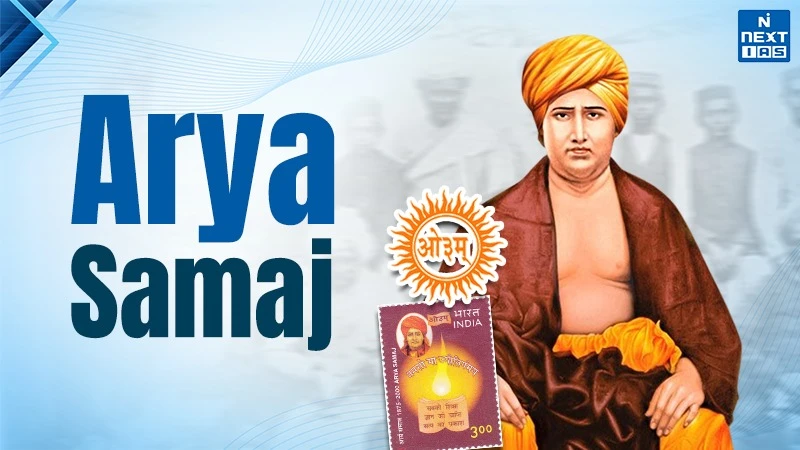
Arya Samaj is a monotheistic hindu reform movement which strictly emphasizes on vedic principles and social reform. It was founded by Swami Dayanand Sarawati in Bombay on 10th April 1875. However, it was particularly influenced in Punjab and Northern India. It rejected Idol worship, untouchability, child marriage, hereditary caste hierarchy but supported women’s education, widow remarriage, and inter caste marriages. It established Dayanand Anglo-Vedic (DAV) institutions at many places in India.
History of Arya Samaj (आर्य समाज की स्थापना)
| S.No. | Period | Event | Brief description |
|---|---|---|---|
| 1 | 1824 |
|
|
| 2 | 1860s to 1870s |
|
|
| 3 | 1875 |
|
|
| 4 | 10 April 1875 |
|
|
| 5 | 1877 |
|
|
| 6 | 1883 |
|
|
| 7 | 1886 onwards |
|
|
Missions of Arya Samaj
- Spread of Vedic Knowledge: Arya Samaj propagates the original teachings of the vedas and removes ignorance, superstition, and ritualism from the society.
- Promotion of Universal Welfare: The central mission of Arya Samaj was Krinvanto Vishwamaryam. It means to make the world noble by improving people's physical, spiritual, and social well-being.
- Eradication of Social Evils: It emphasized to eliminate poverty, injustice, caste discrimination, and child marriage.
- Modern Education and Reform: It promoted education for all the people of the society particularly women. It includes truth, justice, equality, and social reform as well.
Contributions of Arya Samaj
| S.No. | Area | Contributions |
|---|---|---|
| 1 | Religious reform |
|
| 2 | Social reform |
|
| 3 | Welfare of women |
|
| 4 | Education |
|
| 5 | Shuddhi movement |
|
| 6 | Nationalism |
|
| 7 | Social service |
|
Principles of Arya Samaj
Arya Samaj is a social reform movement which is guided by 10 principles. It accepted one formless, omniscient, and merciful God for worship. It considered the Vedas as the true knowledge and promoted their reading, listening, and preaching. It urged people to accept truth and reject falsehood. One should act as per the dharma and promote the physical, spiritual, and social welfare of all humanity.
It focuses on justice, equality, rational inquiry, and learning. Arya samaj rejected idolatry, practice of blind faith and rituals, untouchability and other social evils prevailing in the society which violate the dignity of human beings.
The Shuddhi Movement
It was a re-conversion and social reform movement of Arya Samaj. It brought the hindu converted people back to Hinduism from other religions such as Christianity and Islam using purification and vedic rituals. The shuddhi movement became famous in northern India during the early 20th century with Swami Shraddhananda as its important leader. It became a means to strengthen the hindu society, challenge the exclusion of caste and integrate the re-converted people. However, the movement later became a source of communal controversy in colonial India.
Major Leaders
| S.No. | Leader | Role in Arya Samaj | Brief description |
|---|---|---|---|
| 1 | Swami Dayanand Saraswati (1824 to 1883) | Founder |
|
| 2 | Mahatma Hansraj (1864 to 1938) | Educationist and DAV leader |
|
| 3 | Swami Shraddhanand (Munshi Ram Vij) (1856 to 1926) | Gurukul leader and social reformer |
|
| 4 | Lala Lajpat Rai (1865 to 1928) | Nationalist and DAV supporter |
|
| 5 | Pandit Gurudatta Vidyarthi (1864 to 1890) | Scholar and educationist |
|
| 6 | Pandit Lekh Ram (1858 to 1897) | Preacher and reformer |
|
| 7 | Bhai Parmanand (1876 to 1947) | Nationalist and revolutionary |
|
| 8 | Shyamji Krishna Varma (1857 to 1930) | Nationalist influenced by Arya Samaj |
|
| 9 | Lala Munshi Ram or Swami Shraddhanand | - |
|
Arya Samaj Mandir (Temple)
The Arya Samaj temple is a place for vedic worship, learning, community service and social ceremonial gatherings. The temple does not perform idol or image worship rather practice rituals like yajna or havan. The offerings are made into a sacred fire with the chanting of vedic mantras such as the gayatri mantra.
The arya samaj mandir conducts satsang, bhajans, programmes related to learning and education including the social service activities. The marriage rituals according to the Arya Samaj emphasises on simplicity, mutual consent, and equality. Their focus is on one formless god, ethical conduct, learning and welfare of the society.
FAQs
Who is the Founder of Arya Samaj?
The founder of Arya Samaj is Swami Dayanand Saraswati who was a Hindu social reformer.
What is Arya Samaj?
Arya Samaj is a Hindu reform movement founded in 1875. It emphasized on the teachings of the Vedas and established the organization to promote Vedic principles and reform Hindu society.
