
 80813-00200


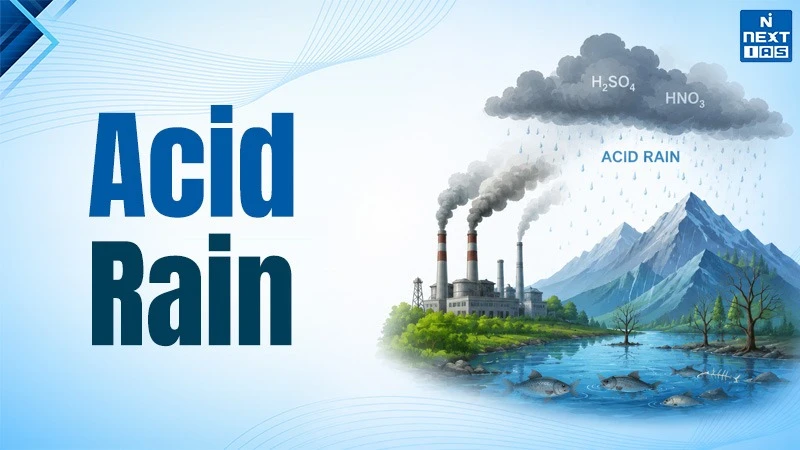
Acid Rain is majorly caused by Fossil fuel burning releasing harmful gases which react with water present in the air. The normal rain has a pH of 5.6 which means slightly acidic whereas acid Rain has a pH between 4 to 5. It includes precipitation forms like Snow, Fog, Raining with high levels of Nitric and Sulphuric acid flows into streams and lakes killing fishes and other aquatic organisms.
Acid Rain usually washes away essential nutrients such as calcium and magnesium, important for the growth of trees. It damages the waxy leaves coating which further exposes trees to insects and vulnerable diseases. In the 1980s, a major part of Black Forest in Germany was damaged due to this reason.
It often acts as a cross-border polluter. Numerous factories built tall chimneys to release smoke high into the atmosphere in order to keep the local air clean. As a result, winds carry these pollutants to far distances, for example the pollution from Britain and Germany caused massive 'acidification' of lakes in Sweden and Norway.
What is Acid Rain?
Definition
Acid Rain is any form of precipitation such as rain, snow, fog, or dry deposition which is more acidic than normal rainfall. This acidity is caused by carbonic acid (H2CO3) according to the following reactions:
H2O + CO2 ⇌ H2CO3
H2O + H2CO3 ⇌ HCO3− + H3O+
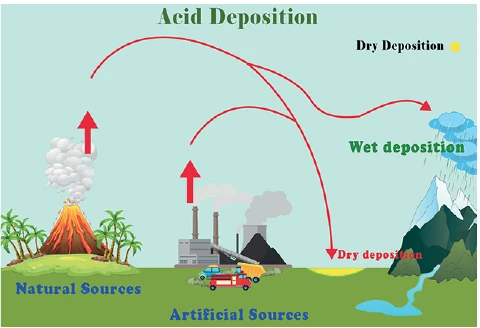
Normal rain is mildly acidic because it dissolves carbon dioxide. The Acid Rain forms primarily when the sulfur dioxide (SO2) and nitrogen oxides (NOx) from fossil-fuel combustion react with atmospheric water vapour and oxygen. These chemical reactions produce sulfuric and nitric acids which may travel long distances before returning to Earth as wet or dry deposition. Acid Rain can acidify soil and water bodies, damage forests and aquatic ecosystems, corrode buildings and monuments. It can also result in worsening the fine particles air pollution.
Major Causes
| S.No. | Cause or Source | Major pollutant | How it causes acid rain |
|---|---|---|---|
| 1 | Coal-based thermal power plants | Sulfur dioxide (SO₂) and nitrogen oxides (NOₓ) |
|
| 2 | Industrial boilers and factories | Mainly SO₂ but also NOₓ |
|
| 3 | Motor vehicles | Mainly NOₓ |
|
| 4 | Oil refineries and diesel generators | SO₂ and NOₓ |
|
| 5 | Domestic fuel burning | SO₂ and NOₓ |
|
| 6 | Volcanic eruptions | Sulfur gases |
|
| 7 | Decomposing vegetation | Nitrogen containing compounds |
|
Effects
- The Acid Rain can harm the ecosystems, human health, agriculture, and infrastructure. It lowers the pH of various water bodies such as lakes, ponds, streams, and soils which makes them unsuitable for fishes, amphibians and aquatic plants.
- The phenomena of acidification can release toxic aluminium from soil into water, damaging fish gills and plants roots. It leaches important nutrients such as magnesium and calcium from soil which reduces the fertility and weakens the forests and crops. Acid Rain also damages the leaves which make trees vulnerable to diseases, drought, frost, and pests.
- Acid Rain can corrode the metals and worsen limestone, sandstone, paints, and building surfaces. Thus, the monuments, bridges, statues, and heritage structures are at risk.
- Sulfur dioxide and nitrogen oxides form fine sulfate and nitrate particles which can lead to asthma and other respiratory and cardiovascular problems. The acid rain does not normally burn the skin of humans but the pollutants and particulate matter can harm health.
- Acid deposition may occur far from emission sources because wind carries pollutants over long distances.
Measures to Control Acid Rain
An important measure to control Acid Rain is to reduce the emissions of two primary precursors of acid rain namely sulfur dioxide and nitrogen oxide.
- Thermal power plants and industries need to shift from high sulphur coal to low sulphur fuels, natural gas, and renewable energy.
- The installation of flue-gas desulphurisation units can remove sulphur dioxide from industrial exhaustion. Low Nitrogen oxide burners and selective catalytic reduction systems can reduce the emissions of nitrogen oxides from combustion units.
- The vehicles need to use the catalytic converters, complying with the emissions standards, undergo regular maintenance, and shift toward public transport, electric mobility, cycling, and walking.
- The energy efficiency at homes, buildings, and industries reduces fossil-fuel consumption at source.
- Governments should establish emission limits, constant monitoring, cleaner production standards, and coordinated action where pollution travels across the political boundaries of the state or nation. The prevention of Acid Rain requires controlling emissions at their origin or source.
Major Monuments in the World Affected by Acid Rain
| S.No. | Monument | Location | Primary material | Effect of Acid Rain |
|---|---|---|---|---|
| 1 | Taj Mahal | Agra, India | White marble |
|
| 2 | Parthenon (Acropolis) | Athens, Greece | Marble |
|
| 3 | Colosseum | Rome, Italy | Limestone |
|
| 4 | Statue of Liberty | New York, USA | Copper |
|
| 5 | Angkor Wat | Siem Reap, Cambodia | Sandstone |
|
FAQs about Acid Rain
What is Acid Rain?
Acid Rain is the precipitation with a low pH which contains sulfuric and nitric acids.
What causes Acid Rain?
The burning of fossil fuels in power plants, industries, and vehicles which releases the sulfur dioxide and nitrogen oxides causes the Acid Rain.
How Acid Rain is formed?
The acid rain is formed when the sulfur dioxide reacts with water and oxygen to form acids which fall in the form of precipitation.
Which gas is responsible for Acid Rain?
The sulfur dioxide and Nitrogen dioxide are the major gases responsible for acid rain.
What are the harmful effects of Acid Rain?
Acid Rain can make soils and lakes acidic, harm forest and aquatic life, corrode the buildings, and produce the harmful fine particles.
How can we prevent acid rain?
We can prevent acid rain can be prevented by reducing the emissions of sulfur dioxide and nitrogen oxide through clean energy, emission control, cleaner fuel, and public transport.
