
 80813-00200

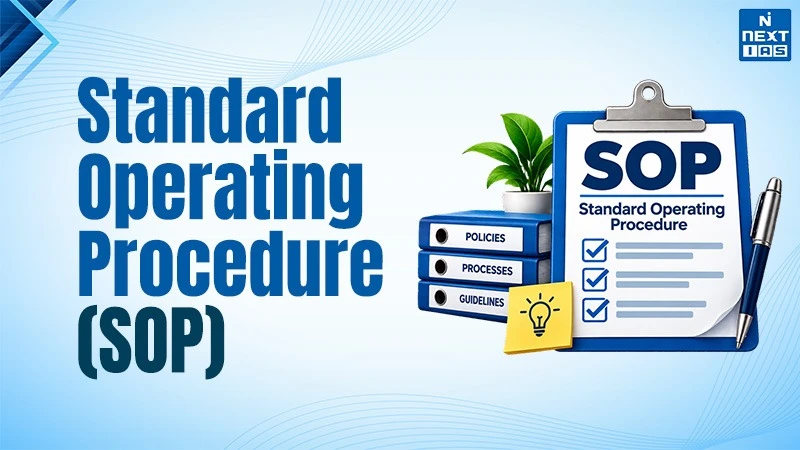
The full form of SOP is Standard Operating Procedures (मानक संचालन प्रक्रिया). These are the standard set of processes with important steps that specify exactly how a routine or critical task should be performed so that the result is consistent and safe. These procedures are adopted by companies or businesses to reduce errors, scale production and train new workers in a short period of time. The term SOP was first introduced in the military for the field manuals before world war II. They ensured that the soldiers must follow daily crucial tasks such as vehicle inspection, radio checks and artillery fire in a safe and consistent manner.
Nowadays, SOPs are essential in manufacturing, healthcare, finance, Information technology, food safety, among others. For example, the food quality department uses SOPs to certify that the companies meet its standards or not. The industry reports have shown that the Standard Operating Procedures (SOPs) can boost productivity by about 40% and reduce errors by up to 60%. Currently, the SOPs include videos, QR codes and interactive checklists for better understanding and work compliance.
Major Types of Standard Operating Procedures
| S.No. | Types of SOP | Focus | Example |
|---|---|---|---|
| 1 | Technical SOP |
|
|
| 2 | Administrative or Management SOP |
|
|
| 3 | Operational SOP |
|
|
| 4 | Quality SOP |
|
|
| 5 | Safety & Environmental SOP |
|
|
| 6 | Laboratory SOP |
|
|
| 7 | IT & Security SOP |
|
|
| 8 | Step-by-Step SOP |
|
|
| 9 | Hierarchical SOP |
|
|
| 10 | Checklist SOP |
|
|
| 11 | Flowchart or Decision Tree SOP |
|
|
| 12 | Emergency SOP |
|
|
How to make SOP?
- Firstly, we need to to clearly define the scope and purpose of the Standard Operating Procedure or SOP. It means who will use the SOP and where it will be applied. Afterwards, look for people who actually perform such tasks as supervision, operation and quality control. These steps are necessary to be aware of the actual steps and practical problems.
- Secondly, we need to map the present process and look after how the work is done, note down the inputs, outputs and decision points. We need to decide the format of SOP step-by-step, hierarchical, checklist or flowchart which is based on complexity and audience.
- Thirdly, write down the SOP in simple and action oriented language. Also try to include sections such as title, objective, scope, responsibilities, required materials, safety precautions, detailed steps, quality checks, references and revision history.
- Fourthly, allot the numbers for the steps and use action verbs and specify the settings or limit wherever required. Also, add verification points after critical actions.
- Fifthly, the draft should be reviewed by users and managers for clarity, completeness and safety. Also, try to test these procedures on the floor and let a new employee follow only the SOP and see if they can complete the task correctly.
- Finally, set up a review cycle such as quarterly, half yearly or yearly to update the SOP when processes, equipment or regulations change.
SOP Meaning in the Business
- In Business, the Standard Operating Procedure or SOP is in the form of a written or step-by-step comprehensive guide. It explains the routine tasks and processes should be performed consistently, safely and efficiently. The SOP meaning in business is the transformation of complex operations into a clear set of instructions which are expected to be followed by any trained employee.
- These SOPs introduce consistency and quality among all the departments. They can reduce errors and dependence on individual memory, particularly at the time of staff change or scaling up the business.
- In regulated businesses, the standard operating procedures also demonstrate compliance with legal requirements, safety and quality standards during timely audits. For example, an SOP in sales may define how leads are captured, qualified and handed over. Moreover, a finance SOP may provide detailed machine setup, in-process checks and shutdown procedures.
- By aligning with the same method, SOPs can improve productivity and training, customer experience and risk management which supports sustainable growth.
Applications of Standard Operating Procedure in an Organisation
- In a company, the standard operating procedures or SOP is an organisational document that elaborate the specific activities that must be carried out to meet the standards for quality, safety and efficiency.
- The company often uses SOPs for processes such as manufacturing, quality control, procurement, Human Resource, Information Technology, Customer Service and Safety. Each SOP provides information about the objectives, scope, roles, essential resources, accurate steps, checks and records to be maintained. This ensures that the work is uniformly done in all shifts, locations and teams.
- Let us understand with an example:
- A factory which works on SOP for machine operation, maintenance and incident reporting.
- A software company has SOPs for code review, deployment and data backup.
FAQs about SOP
What is the full form of SOP?
The SOP full form is Standard Operating Procedure.
What is SOP?
The SOP or the standard operating procedures are written guidelines to ensure the work or daily tasks are completed efficiently, consistently and safely.
