
 80813-00200


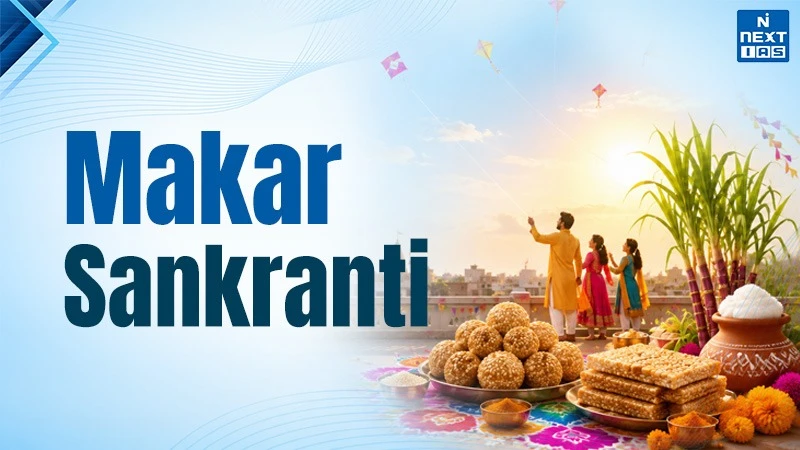
Makar Sankranti is a Hindu festival which is celebrated every year in the month of January. The festival celebrates the entrance of the Sun into the astrological sign of ‘makara’ (zodiac sign-Capricorn) and the beginning of the Sun’s ‘uttarayana’ (northward journey). The festival of Makar Sankranti usually falls on 14th January or 15th January in the leap year. Many people fly kites, take holy dips, offer food, and consume sesame-jaggery sweets. It is celebrated as Uttrayan in Gujarat, Pongal in Tamil Nadu, and Magh Bihu in Assam.
History of Makar Sankranti
- Vedic Origin: The festival of Makar Sankranti is mentioned in the ancient historical scriptures as Puranas. It marks Uttarayan which is the 6 month northern journey of sun god into the Capricorn sign (makar).
- Story of Mythological Victory: Lord Vishnu defeated the demons or asuras on the day of Makar Sankranti which symbolise the victory of Right over Wrong.
- Time period of Bhishma Pitamah: According to the Mahabharata, Bhisma Pitamah chose the sacred day of Makar Sankranti to leave his physical body. It is believed that if a person dies at the time of Uttarayana, he or she attains liberation or Moksha from the cycle of rebirth.
- Agriculture: The festival is celebrated by the farmer communities in India. The day signifies the end of winter and the arrival of the spring harvest season all over India.
Significance of Makar Sankranti
On the Basis of Scientific Lines:
In the astrological term, every month there is a ‘sankranti’ meaning the transition of the Sun into a new astrological sign. The entrance of the Sun into the sign of ‘makara’ (a mythological creature which looks like a crocodile), which is approximately related to the sign of Capricorn. It is considered advantageous or optimistic because it is popularly regarded as the marking of the beginning of the Sun’s northward course.
Equinox: It is a scenario where-in the Sun is exactly above the Equator and day & night are of equal length.
On the Cultural Lines
Makar Sankranti is celebrated across India with different names according to local traditions and languages. Eating sweets, bathing in water bodies such as rivers and ponds, and making beautiful rangolis are some of the practices for Makar Sankranti throughout the country.
- Because of the popular association of the festival with the northward course of the Sun, the name Uttarayan (northward journey) is used for the holiday in Gujarat, where it is widely celebrated by flying kites.
- In-fact, every year, the city of Ahmedabad in Gujarat hosts the International Kite Festival to mark the occasion. Kite makers and fliers, nationally and worldwide, gather at the kite festival to showcase their visually astonishing kites and their kite-flying techniques.
- In the Deccan part, the Makar sankranti is associated with ‘til’ , which are used in sweets preparation with jaggery, thus the festival is also known by the name ‘Til Sankranti’ in many regions.
- In Maharashtra, people greet each other by exchanging ‘tilgul’, a sweet made with til and jaggery. A custom that inspires people to spread compassion in the society. ‘Til’ is also a big part of the festival in eastern Bihar, where ‘tilkut’, a local sweet, are made particularly for the festival.
- Makar Sankranti is a popular festival in West Bengal, where it is known as Poush Sankranti. Poush is the 10th month of the Hindu calendar. A host of sweet dishes that use ‘nabanna’ (new grain which refers to newly harvested rice) as the main ingredient, such as patishapta, pithe, and dudh puli, are made on that day.
- In Punjab, Lohri is celebrated one day before Makar Sankranti. People sing and dance around bonfires offering food items such as popcorn, rewri (another sweet made with til and jaggery), and groundnuts to the fire as an act of gratitude toward the gods.
- In Tamil Nadu, Makar Sankranti is called Pongal. It is celebrated by heating a mixture of rice, sugar, and other ingredients in a pot until it boils over.
- In Kerala, devotees of the god Ayyappan observe Makaravilakku with a pilgrimage to the Sabarimala temple.
| S.No. | State or Region | Festival Name |
|---|---|---|
| 1 | Gujarat | Uttarayan |
| 2 | Tamil Nadu | Pongal |
| 3 | Andhra Pradesh & Telangana | Sankranti or Peddha Panduga |
| 4 | Assam | Magh Bihu |
| 5 | Punjab | Lohri or Maghi |
| 6 | Maharashtra | Makar Sankranti |
| 7 | Karnataka | Makara Sankramana or Suggi |
| 8 | Odisha | Makara Sankranti |
| 9 | West Bengal | Poush Sankranti |
| 10 | Bihar & Jharkhand | Khichdi or Tila Sankranti |
| 11 | Rajasthan | Makar Sankranti |
Other Rituals and Practices
- Taking a dip in rivers or ponds is an important practice for Hindus on Makar Sankranti. The Ganges River is considered a sacred place to take a bath on this day, particularly in West Bengal, where the River Ganga drains into the Bay of Bengal.
- Another important site for pilgrims to take a ritual bath on Makar Sankranti is in Prayagraj, where the River Ganga meets the River Yamuna, as part of the annual Magh Mela festival.
Makar Sankranti at Prayagraj also inaugurates the ritual bathing for the Kumbh Mela festival, which takes place every 12 years.
Difference Between Sankranti and Makar Sankranti
FAQs about Makar Sankranti
Why is makar sankranti celebrated in India ?
Makar Sankranti is celebrated on the occasion marking the transition of the sun from the zodiac of Sagittarius (dhanu) to Capricorn (makar).
What is the scientific reason for Makar Sankranti ?
The scientific reason for Makar Sankranti is the entrance of the Sun into the astrological sign of ‘makara’ (zodiac sign-Capricorn) and the beginning of the Sun’s ‘uttarayana’ (northward journey).
Makar sankranti is celebrated in which state ?
Makar Sankranti is celebrated in the states of Maharashtra, Gujarat, West Bengal, Telangana, Tamil Nadu and others.
