


INS Sudarshini and Lokayan 26 Expedition
Syllabus: GS3/ Defence
Context
- INS Sudarshini arrived in Antigua and Barbuda after successfully completing a historic trans-Atlantic passage as part of the Lokayan 26 Expedition.
About INS Sudarshini
- INS Sudarshini is a sail training ship of the Indian Navy designed to train naval personnel in traditional sailing and seamanship skills.
- The vessel was built by Goa Shipyard Limited and was commissioned into the Indian Navy in 2012.
Lokayan 26 Expedition
- The Lokayan 26 Expedition is a landmark 10-month, 22,000-nautical-mile transoceanic voyage by the Indian Navy’s sail training ship, INS Sudarshini.
- The expedition aims to promote maritime diplomacy, strengthen relations with friendly nations, and enhance professional sailing skills among naval personnel.
- The voyage marks the first Atlantic crossing by INS Sudarshini, while the last such crossing was undertaken by INS Tarangini in 2007.
About Antigua and Barbuda
- It is a twin-island country in the Caribbean Sea, made up of two main inhabited islands, Antigua and Barbuda, along with a few smaller, neighboring islands.
- The islands gained independence from the United Kingdom in 1981.
- Antigua: The larger island is the economic hub, home to the capital city of St. John’s.
- Barbuda: Located about 25 miles north of Antigua, this island is much flatter, less developed, and known for its pristine natural beauty and bird sanctuaries.
Source: AIR
White-Bellied Heron Concerns over Kalai-II Hydel Project
Syllabus: GS3/ Environment
Context
- The Union Environment Ministry’s Forest Advisory Committee (FAC) has granted in-principle forest clearance to the Kalai-II Hydroelectric Project, raising concerns due to its potential impact on the White-Bellied Heron.
Kalai-II Hydroelectric Project
- The project is a 1,200 MW run-of-the-river hydropower project proposed by THDC (Tehri Hydro Development Corporation Limited) India Limited.
- It is located in Anjaw district of Arunachal Pradesh, near the India–China border.
- The project involves the construction of a 128.5-metre concrete gravity dam and an underground powerhouse.
- Concerns: Around 869 hectares of forest land will be diverted, including the submergence of 638 hectares of forest area.
- Since Arunachal Pradesh has more than two-thirds of its geographical area under forests, compensatory afforestation will be undertaken in Madhya Pradesh.
White-Bellied Heron
- Scientific Name: Ardea insignis.
- Significance: The species serves as an indicator of healthy riverine ecosystems.
- IUCN Status: Critically Endangered.
- Its global distribution is restricted mainly to Bhutan, India, and Myanmar.
- In India, it is primarily found in Arunachal Pradesh and parts of Assam.
- Concerns: The Lohit River constitutes one of the species’ most important riverine habitats.
- The species has been recorded in Walong, Chengung, and the downstream Kamlang Tiger Reserve landscape.
- The submergence of forest and riverine areas may destroy the bird’s nesting, feeding, and breeding habitats.
Source: IE
Albino Hog Deer
Syllabus: GS3/Species in News
Context
- A rare albino hog deer was recently spotted roaming inside Assam’s Kaziranga National Park.
About
- The albino hog deer is a small cervid native to the region of the Indian subcontinent and Indo-Gangetic Plain. It is characterised by white fur, pink eyes and pale hooves.
- Due to a rare genetic mutation known as albinism, the animal entirely lacks melanin pigment.
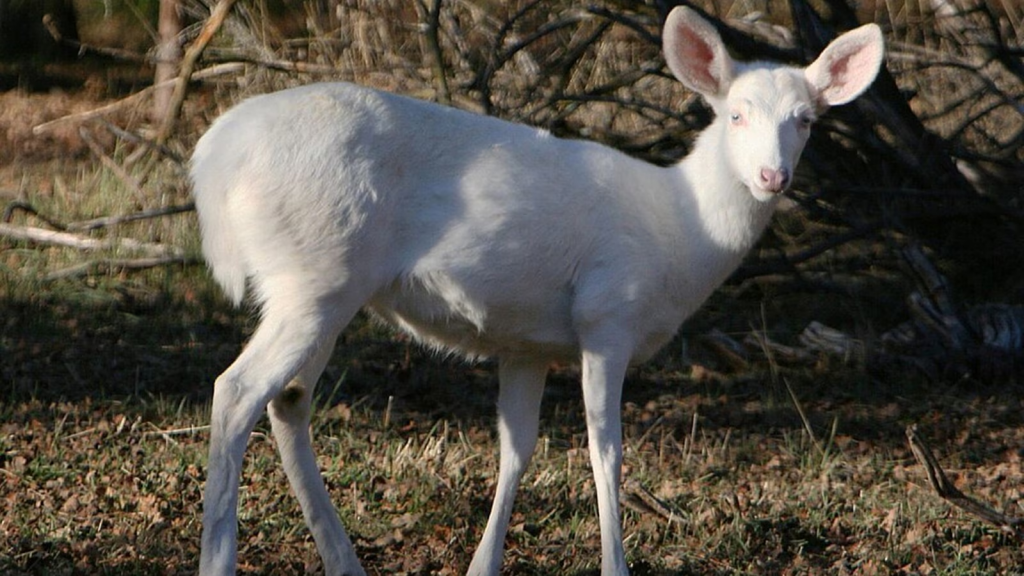
- Albinism can make survival difficult in nature as these animals often struggle with camouflage, visibility to predators, and sensitivity to sunlight.
- Beyond hog deers, India is also home to a variety of albino species, such as the Gaur, Indian cobra and primates like rhesus macaque.
- Odisha’s Bhitarkanika National Park is famously home to rare albino saltwater crocodiles.
About Kaziranga National Park
- It is located in the northeastern state of Assam.
- It was established in 1908 as a reserve forest and became a national park in 1974.
- It was declared a UNESCO world heritage site in 1985.
- It is the largest habitat of the Indian rhinoceros (Rhinoceros unicornis).
Source: IE
Babesia Infection
Syllabus: GS2/Health
Context
- Eight lion cubs have died in Gujarat due to a suspected Babesia infection, raising concerns about the health of the Asiatic lion population.
About
- Babesia is a parasitic disease transmitted through ticks and can cause weakness, fever, coughing and nasal discharge in infected animals.
- It is a zoonotic disease, meaning it can transmit from animals to humans.
- Atovaquone plus azithromycin is used to treat most mild to moderate cases and is usually taken for 7 to 10 days.
Asiatic Lion (Panthera leo persica)
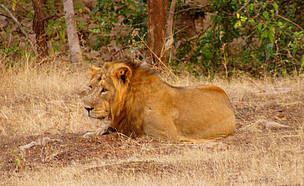
- It is one of the five big cat species found in India.
- Physical Characteristics: Asiatic lions are slightly smaller than African lions.
- Males have less developed manes, leaving their ears visible.
- Prominent longitudinal fold of skin along the belly (a distinguishing feature from African lions).
- Distribution: In India, concentrated in the state of Gujarat in and around the Gir Forest mainly in;
- Gir National Park and Wildlife Sanctuary
- Paniya Wildlife Sanctuary
- Mityala Wildlife Sanctuary
- Barda Wildlife Sanctuary
- Conservation Status:
- IUCN Red List status: Endangered
- CITES: Appendix I
- Wildlife Protection Act, 1972: Schedule I
Source: TH
Previous article
Water Budgeting and India’s Rural Water Security
